
.png)

Esoterica: The Mystery of Kabbalah
- A. Royden D'Souza

- Mar 31
- 55 min read
Updated: Mar 31
What if the most secret knowledge in human history, whispered from master to disciple for two thousand years, was never meant to be a secret at all? What if the real secret was not the knowledge itself, but the pattern of control that surrounds it: who gets access, who interprets it, who profits from it, and who uses it as a weapon?
Kabbalah is presented to the world in three radically different forms. To traditional Jews, it is the guarded soul of their faith; a mystical ladder to God’s throne room. To celebrities and New Age seekers, it is a self‑help toolkit wrapped in red strings and ancient wisdom. To conspiracy theorists, it is a satanic blueprint for world domination, hidden inside AI and the Antichrist’s newest manifestation.

Each of these narratives cannot be true. Yet each persists, and each contains fragments of evidence that its adherents marshal with conviction.
This whitepaper does not ask which narrative is correct. It asks a different, colder question: What do the behaviors of the institutions, gatekeepers, and translators of Kabbalah tell us about how esoteric knowledge systems actually function; and why they so reliably become targets for both reverence and paranoia?
We will treat Kabbalah as a diagnostic case study. We will apply machine logic: track verifiable patterns (censorship, commercial capture, messianic outbreaks, conspiratorial weaponization) across two millennia. We will compare mainstream academic accounts with suppressed internal critiques, censored polemics, and even the most strident conspiracy theories; not to endorse them, but to assess their internal consistency and evidentiary basis.
And we will begin with a hard assumption: the same people who historically controlled access to Kabbalistic texts also exercise significant influence over the scholarly and media narratives that define “what Kabbalah is.” Therefore, we take no narrative at face value. We follow the patterns, not the proclamations.
What follows is not a defense of Kabbalah, nor an attack. It is an autopsy of a living tradition; and a mirror held up to any system of hidden knowledge that claims to hold the keys to power.
What is Kabbalah?
The spiritual architecture of Kabbalah is built around the Sefirot; ten emanations or attributes through which the Infinite Light (Ein Sof) interacts with creation. These are not mere concepts but a dynamic map of the soul and the cosmos.
To walk the Kabbalistic path is to internalize these attributes and, through specific practices, harmonize them both within oneself and the greater reality.

The Tree of Life (Etz Chaim)
The Sefirot are arranged in three columns, known as pillars, forming the diagram called the Tree of Life. This structure acts as a blueprint for creation and a ladder for spiritual ascent.
The following is an intimate breakdown of each Sefirah, detailing its divine function and its corresponding psychological trait to be cultivated.
| Pillar | Sefirah (English) | Divine Function & Interpretation | Psychological Trait (To Embody) |
1. Keter (Crown) | Center | The highest, undifferentiated Divine Will. It is the source of all, beyond intellectual grasp; a point of pure potential and the "primordial stirrings of intent" in the Ein Sof. | Humility & Selflessness: Recognizing the source of all will, thereby subordinating ego to a higher purpose.
2. Chochmah (Wisdom) | Right (Mercy) | The first flash of intuitive insight, a "point" of pure creative energy that comes from "nowhere." It is the seminal, masculine spark of conception. | Spontaneity & Inspiration: Opening the mind to receive and act upon sudden, intuitive flashes of truth and creativity.
3. Binah (Understanding) | Left (Severity) | The womb-like, feminine process of giving form and structure to the raw insight of Chochmah. It is analytical reason, developing an idea in "length, depth, and breadth." | Discernment & Contemplation: Taking an initial insight and patiently understanding its implications, structuring it into actionable wisdom.
4. Chesed (Kindness) | Right (Mercy) | The first of the seven emotional attributes. It represents boundless, unconditional love, grace, and the impulse to give without limitation or restriction. | Generosity & Compassion: Practicing open-hearted giving, loving-kindness, and benevolence without expecting reward.
5. Gevurah (Severity) | Left (Severity) | The counter-balance to Chesed. It represents strength, discipline, judgment, and the power to set boundaries and restrict. It is the force of Din (Judgment), essential for discernment and survival. | Discipline & Restraint: Knowing when to say "no," exercising self-control, and holding firm boundaries with courage.
6. Tiferet (Beauty) | Center | The heart of the Tree, representing balance, harmony, and compassion. It is the beautiful synthesis of the loving mercy of Chesed and the strict discipline of Gevurah. | Balance & Integrity: Harmonizing love and discipline in one's actions, finding the "middle path" of compassion and truth.
7. Netzach (Eternity) | Right (Mercy) | The drive for endurance, victory, and the persistence to overcome obstacles. It represents the relentless energy to achieve one's goals and manifest will in the world. | Perseverance & Determination: Cultivating the inner strength to continue striving towards a goal despite setbacks and challenges.
8. Hod (Glory) | Left (Severity) | The quality of humility, surrender, and acknowledgment of a greater truth beyond the ego. It is the ability to recognize one's own limits and give credit where it is due. | Humility & Gratitude: Practicing sincere gratitude, acknowledging the contributions of others, and surrendering egoic pride.
9. Yesod (Foundation) | Center | The "Foundation" of the world. It acts as a communication conduit and collector of all the energies above, channeling them into the final vessel of Malchut. It is associated with the procreative force and the subconscious. | Connection & Integrity: Ensuring one's actions are rooted in truth and serve as a pure channel for higher purpose into the world.
10. Malchut (Kingship) | Center | The final Sefirah, representing the physical world, the Kingdom, and the actual manifestation of all the preceding energies. It is the Shekhinah (Divine Presence) immanent in the world. | Presence & Responsibility: Being fully present and taking action in the material world, seeing it as the vessel for the divine.
Da'at: The Eleventh Sefirot
In the classical depiction of the Tree of Life, there are ten Sefirot, but an eleventh “hidden” sphere—Da’at (דעת)—occupies an invisible position on the central pillar, directly between Keter (Crown) and Tiferet (Beauty), and at the horizon where the three upper Sefirot (the intellectual triad) meet the seven lower emotional ones.
Below is the comprehensive, intimate addition covering Da’at, its place on both the Tree of Life and the Tree of Death, and how a Kabbalist would work with it in practice.
Da’at (Knowledge): Unlike the other Sefirot, Da’at is not an independent emanation but rather the state of union or the bridge between Chochmah (Wisdom) and Binah (Understanding). When the primordial flash of insight (Chochmah) is structured into form (Binah) and then internalized, becoming not just intellectual comprehension but lived, embodied knowledge, that internalized state is Da’at.
Paradox: Da’at exists only when the lower Sefirot are in harmony. When the Tree is “broken” (i.e., when there is a disconnect between the upper intellect and the emotional self), Da’at disappears, leaving a void. In this sense, Da’at is the symptom of integration, not a separate source of energy.
Spiritual Role: Da’at is the “Knowledge of the One.” It is the point where the seeker moves beyond conceptual understanding into direct, unmediated experience of the Divine. It is the secret door through which the Infinite Light flows into the heart (Tiferet) and then down into the manifest world.
If Chochmah is the “father” (the flash) and Binah is the “mother” (the womb of analysis), then Da’at is the child—the living, breathing truth that has been conceived, gestated, and birthed into the soul.
In practical spiritual psychology:
Intellectual Knowing vs. Embodied Knowing: You can read about compassion (Chesed) and understand it perfectly (Binah). But until you feel compassion in your chest and act on it, you lack Da’at. Da’at is the bridge from the head to the heart.
The “Hidden” Nature: Because Da’at is internalized, it often cannot be spoken or taught directly. A master can guide you to the door, but the moment you know, you know in silence. That is why Da’at is invisible on the Tree.
Shadow Risk: False Da’at (Daat Akher) is intellectual pride; believing you have understood a truth when you have merely memorized its outer form. This is a central pitfall on the path.
How a Kabbalist Applies Da’at
A practitioner does not “meditate on Da’at” as a separate sphere. Instead, they work to create the conditions for Da’at to arise spontaneously. This involves:
Integration Practice: After studying any spiritual concept (e.g., Gevurah – discipline), the Kabbalist does a daily “knowledge check”: Have I acted on this today? Do I feel it in my body? Or do I just think I understand it? The goal is to close the gap between theory and lived experience.
The Secret of the Letter Yod: Da’at is associated with the letter Yod (י), the smallest letter in the Hebrew alphabet, which appears at the beginning of the Tetragrammaton. A Kabbalist meditates on the Yod as a point of infinite potential, visualizing that point entering their heart (Tiferet) during prayer, transforming intellectual words into heartfelt silence.
Hitbodedut (Personal Seclusion) with a Twist: In addition to speaking to God in one’s own words, the practitioner spends time in silent listening. After pouring out the heart, they sit in stillness, waiting for a flash of “knowing” that is neither thought nor emotion; a direct, quiet certainty. That flash, when it comes, is a taste of Da’at.
Rectifying the Void: When a Kabbalist feels confusion, spiritual dryness, or the sense that their knowledge is hollow (e.g., they have been studying for years but feel nothing), they recognize that Da’at is absent. The practice is then to return to the foundation: do a simple act of loving-kindness (Chesed) or a small act of self-restraint (Gevurah) without intellectualizing it. Action rebuilds the bridge that Da’at will later cross.
Da’at on the Tree of Death (The Qliphoth)
Every Sefirah has a corresponding “shell” or impure counterpart in the Qliphoth. Since Da’at is the hidden sefirah of integration, its Qliphotic counterpart is the hidden force of fragmentation and false knowledge.
The traditional Qlipha for Da’at is Belial (בליעל); a name often translated as “worthless” or “without yoke.” In some sources, it is called “Da’at Akher” (Other Knowledge) or “The Abyss” (Tehom).
Sefirah (Light) | Da’at – Integrated, embodied knowledge that bridges intellect and emotion.
Qlipha (Shadow) | Belial – False knowledge, intellectual arrogance, and the deliberate separation of knowing from doing.
The practitioner knows all the right words, can teach others, but feels nothing and acts with cruelty or indifference. It is the “knowledge that puffs up” (1 Corinthians 8:1) – a spiritual trap.
A Kabbalist watches for these signs of the Qlipha of Da’at:
The “Expert” Trap: You can explain the entire Tree of Life perfectly, but you have never forgiven someone who hurt you (Chesed missing) or never restrained an angry outburst (Gevurah missing). You know without being.
Using Knowledge to Control: Manipulating spiritual language to gain status, money, or power over others. Belial turns Da’at into a weapon rather than a bridge.
Spiritual Bypassing: Using abstract truths (“We are all one,” “Everything is illusion”) to avoid doing the messy emotional work of healing relationships or taking responsibility.
Practical Rectification (Tikkun) for Belial
If a Kabbalist identifies that they have fallen into the Qlipha of Da’at, they perform a specific rectification:
Act of Voluntary Humility: Deliberately do something that undermines their reputation as a “wise person”—for example, ask a beginner a sincere question, or admit publicly, “I have studied this but I have not yet lived it.”
The “One Thing” Practice: Choose a single principle from the Tree (e.g., “I will be generous today without expecting thanks”) and focus exclusively on doing it, with no talking or teaching. The goal is to let action restore the bridge.
Contemplation of the Abyss: Sit in darkness (physical or imagined) and repeat to oneself: “All my knowledge is dust unless it serves love.” Then, intentionally call to mind someone they have judged or dismissed as “less knowledgeable,” and perform a concrete act of service for that person.
Now, the Tree of Life is complete: Keter, Chochmah, Binah, Da’at (hidden), Chesed, Gevurah, Tiferet, Netzach, Hod, Yesod, Malchut. The Tree of Death mirrors each with its corresponding Qlipha, including Belial for the sphere of Da’at.
The Tree of Death (The Qliphoth)
In Kabbalah, light cannot exist without a vessel to contain it. The Qliphoth (literally "peels," "shells," or "husks") are the unbalanced, broken, or "impure" spiritual forces that form the "Other Side" (Sitra Achra) of reality.
They are the chaotic, shadow aspects of the Sefirot that emerge when divine energy is too intense for its vessel, causing it to shatter. In Lurianic Kabbalah, this is the "Shattering of the Vessels" (Shevirat HaKelim), where sparks of holiness fell into these broken shells.
The Qliphoth are therefore not separate from the Tree of Life but represent its fallen, corrupt, or unbalanced states. A Kabbalist's work is to recognize these shadow aspects within themselves and elevate the trapped sparks of holiness back to their source through the process of Tikkun.
Each Sefirah has a corresponding Qlipha:
Keter (Crown) | Thaumiel (Twins of God) – Duality and the arrogant assertion of a separate, competing will against the Divine.
Chochmah (Wisdom) | Chagiel (The Obstructors) – Unbalanced, rigid, and dogmatic mental forces that block inspiration and new understanding.
Binah (Understanding) | Satariel (The Concealers) – The forces of obscurantism, secrecy without purpose, and the death of understanding.
Chesed (Kindness) | Gha'agsheblah (The Smiting Ones) – Unrestrained, sentimental, or enabling "love" that lacks boundaries and enables decay.
Gevurah (Severity) | Golachab (The Burners) – Pure, unchecked cruelty, destruction, and rage without the mitigating force of mercy.
Tiferet (Beauty) | Tagiriron (The Disputers) – The ugliness of conflict, falsehood, and the complete absence of harmony or truth.
Netzach (Eternity) | Oreb Zaraq (The Dispersers) – Futile, chaotic, and unproductive energy that leads to burnout and defeat.
Hod (Glory) | Samael (The Poison of God) – Deception, empty intellectualism, and the use of "truth" to manipulate rather than uplift.
Yesod (Foundation) | Gamaliel (The Obscene One) – Unbridled lust, materialism, and the corruption of one's foundational life energy.
Malchut (Kingship) | Lilith (The Queen of the Night) – The complete imprisonment of the divine spark in gross, meaningless matter.
The Daily Practice of a Kabbalist
Knowing the map is only the beginning. The true work of a Kabbalist is applying this wisdom in daily life to achieve spiritual rectification (Tikkun). The goal is to become a "Mechaven"—a person who consciously harmonizes the Sefirot, acting as a channel for divine blessing in the world.
Core Pillars of Practice:
Kavanah (Intention): This is the cornerstone of all practice. Every action, from prayer to eating, is infused with conscious intention. In Kabbalah, Kavanah involves deep concentration on the secret meanings of the letters and words of prayers and divine names, particularly the permutations of the Tetragrammaton (YHWH), to unify the divine energies. It is about directing the heart and mind toward the divine source behind every act.
Meditation on the Sefirot: This is a structured path for inner development.
Daily Focus: Dedicate each day to a specific Sefirah. On a Chesed (Kindness) day, consciously look for opportunities to give, help a neighbor, or offer a warm smile. On a Gevurah (Severity) day, practice saying "no" with loving firmness, setting healthy boundaries.
Journaling: At the end of each day, reflect on how you embodied the day's Sefirah and where you fell short. This builds self-awareness.
Body Mapping: Advanced practitioners might use a chart that maps the Sefirot to specific parts of the body, channeling energy for healing and spiritual focus.
Tikkun HaNefesh (Rectification of the Soul): This is the process of personal repair. A Kabbalist believes that their specific challenges, struggles, and negative traits (the "Qliphoth" within) are not punishments but unique missions to gather and elevate the "holy sparks" hidden within them. This involves:
Introspection: Acknowledging one's flaws—impatience, anger, fear—without judgment, as the starting point for transformation.
Action: Actively working to transform those traits. For example, if one struggles with greed, they engage in acts of charity; if with anger, they practice silence and restraint.
Hitbodedut (Personal Seclusion): Popularized by the great Hasidic master Rebbe Nachman of Breslov, this is a practice of unstructured, spontaneous, personal conversation with God. In one's own words, often in a secluded place in nature, the practitioner pours out their heart, confesses shortcomings, and asks for guidance in their Tikkun process.
Weaving the Sacred into the Mundane
A Kabbalist does not live in a monastery but in the world. The spiritual work is woven into every aspect of daily life:
Infusing Meals: When cooking a meal, a Kabbalist focuses not on the task as a chore, but on the intention of nourishing the bodies and souls of those who will eat it, transforming a mundane act into a sacred one.
Challenges as Sparks: When facing a difficult person or situation, the Kabbalist asks, "What holy spark is hidden here that I am meant to elevate?" Instead of reacting with anger, they seek to respond with compassion or firmness as needed, seeing the trial as an invitation for Tikkun.
Small Acts of Kindness: Every smile shared, every door held open, every community effort to support a struggling neighbor is seen as a vital act of gathering divine light and contributing to the collective rectification of the world.

Part I: Historical & Systemic Foundations
The roots of Kabbalah lie in Merkabah (Chariot) mysticism, which emerged among Jewish priestly circles in late antiquity. Merkabah practitioners engaged in visionary ascents through heavenly sanctuaries (Heikhalot), seeking direct encounters with the divine throne described in Ezekiel 1 and 10.
This literature, composed between the first and fifth centuries AD, constitutes the earliest documented expression of Jewish esotericism.
Alongside Merkabah traditions, the Sefer Yetzirah (Book of Creation) represents the oldest extant Jewish esoteric work and the only one mentioned in the Talmud. Likely composed between the 3rd and 6th centuries AD, it describes creation as a process of combination involving the 22 letters of the Hebrew alphabet and the 10 sefirot (divine emanations).
Early commentators, including Judah Halevi in the Kuzari, treated the Sefer Yetzirah as a treatise on mathematical and linguistic theory rather than mystical doctrine; an early indication of how Kabbalah's meaning has been contested from its earliest layers.

Medieval Consolidation: Provence, Gerona, and the Zohar
The 12th century marked a decisive inflection point. Kabbalistic circles emerged in Provence (southern France) and later in Gerona (Catalonia), producing systematic theosophical doctrines centered on the sefirot as dynamic divine attributes.
This medieval Kabbalah introduced concepts that would define the tradition: the sefirot as vessels of divine flow, the mystical significance of prayer intentions (kavvanot), and the Torah as a living organism and mystical name of God.
The Zohar (Book of Splendor), which appeared in late 13th-century Spain, became Kabbalah's canonical text. Its publicizer, Moses de León (1240–1305), claimed the work recorded teachings of the 2nd-century sage Simeon bar Yochai.
Modern scholarship, beginning with critical analysis in the 19th century and consolidated by Gershom Scholem, has concluded that de León likely authored the Zohar himself or compiled it from contemporary sources, a finding that remains controversial in traditional circles.
The Zohar's pseudepigraphic character is not merely a philological footnote; it establishes a pattern of esoteric authority claims that persists throughout Kabbalah's history.

Lurianic Kabbalah and the Myth of Cosmic Repair
The 16th-century Safed community produced Kabbalah's most influential systematic thinker, Isaac Luria (1534–1572). Luria's doctrines transformed Jewish mysticism through three revolutionary concepts:
Tzimtzum (Contraction): God's voluntary withdrawal to create space for finite existence
Shevirat ha-Kelim (Breaking of the Vessels): The catastrophic shattering of divine vessels during creation, scattering sparks of holiness into material reality
Tikkun (Repair): The human obligation, particularly through observance of commandments and mystical intentions, to gather the scattered sparks and restore cosmic harmony
Lurianic Kabbalah placed messianic agency directly in human hands. If cosmic repair requires active participation, then Jewish practice becomes not merely obedience but participation in divine restoration. This theological framework proved extraordinarily generative; and, as we shall see, volatile.
Sabbateanism: When Mysticism Becomes Messianic Catastrophe

The Lurianic emphasis on tikkun reached its most explosive expression in the Sabbatean movement. In 1666, the Ottoman rabbi Shabbetai Zevi (1626–1676) was proclaimed the Jewish Messiah by his prophet Nathan of Gaza.
The movement drew directly on Lurianic concepts, interpreting Zevi's apostasy—he converted to Islam under Ottoman pressure—as a mystical act of tikkun, descending into evil to redeem it from within.
Scholem called Sabbateanism "the largest and most widespread messianic movement in Jewish history since the destruction of the Temple."
Its aftermath was catastrophic: mass disillusionment, communal schism, and the emergence of crypto-Sabbatean sects that persisted into the 19th century.
The Sabbatean episode demonstrates a recurring pattern in Kabbalah's history: esoteric doctrines, when applied to concrete messianic expectations, produce socially destabilizing outcomes.
Hasidism: Democratized Mysticism
In 18th-century Poland, Israel ben Eliezer (the Baal Shem Tov) founded Hasidism, a movement that popularized Kabbalistic concepts for the masses. Hasidism eliminated divisions between scholar and commoner, sacred and profane, embedding Kabbalistic ideas into communal prayer, storytelling, and ecstatic worship.
While Hasidism preserved Lurianic Kabbalah's core doctrines, it transformed esoteric knowledge from a guarded secret into a lived spiritual ethos; the first major democratization of Kabbalistic knowledge.
The Academic Gatekeeper: Gershom Scholem
The 20th-century academic study of Kabbalah has been dominated by one figure: Gershom Scholem (1897–1982). A German-Jewish émigré who became the first professor of Jewish mysticism at the Hebrew University of Jerusalem, Scholem single-handedly established Kabbalah as a legitimate academic discipline.
His scholarship overturned the rationalist bias of 19th-century Jewish historians, who had dismissed Kabbalah as superstition, and instead presented it as a vital, creative force in Jewish history.
Yet Scholem was not merely a detached scholar. His work was embedded in a larger cultural project of reconstructing Jewish existence through secular Zionism. The identification of Kabbalah and Hasidism as "Jewish mysticism"—a category that emerged in the 19th century and became dominant in the 20th—is itself a modern discursive construct with ideological presuppositions.
This does not invalidate Scholem's scholarship, but it does require us to recognize that the very framework through which Kabbalah is studied carries the fingerprints of its Zionist context.
How the Exile Gave Birth to the Talmud and Kabbalah
The Talmud, the foundational text of rabbinic Judaism, was decisively shaped by the trauma and conditions of exile. From the destruction of the First Temple (586 BC) and the Babylonian captivity to the Roman destruction of the Second Temple (70 AD) and the subsequent dispersion, each rupture forced Jewish legal and interpretive traditions into new forms.
Yet the Talmud’s relationship with Kabbalah is not one of simple opposition. While the Talmud formally restricts esoteric speculation, it also preserves the very categories—Ma’aseh Bereshit and Ma’aseh Merkavah—that would later blossom into Kabbalah.
Understanding how exile transformed the Talmud is essential for tracing the emergence of Jewish mysticism.
From Temple to Text: The Mishnah as a Response to Loss
After the Roman destruction of the Second Temple in 70 AD, the sacrificial cult that had been the center of Jewish worship was gone. In its place, the rabbis, drawing on traditions that had already begun to crystallize in the Pharisaic movement, developed a system of law and interpretation that could sustain Jewish life anywhere.
Around 200 AD, Rabbi Judah the Prince (Yehudah HaNasi) codified these oral traditions into the Mishnah, a six‑order legal code covering agriculture, festivals, civil and criminal law, purity laws, and more.
The Mishnah was not written in a vacuum. It was a deliberate response to the perceived threat of dispersion: if the Oral Torah remained exclusively oral, Rabbi Judah feared it would be lost as scholars were scattered or killed.
The Two Talmuds: Exile Produces Two Traditions
The Mishnah, however, was too concise. Subsequent generations of rabbis in both the Land of Israel and Babylonia produced extensive commentaries on it, known as Gemara. The Mishnah plus Gemara together constitute the Talmud. Two distinct Talmuds emerged:
The Jerusalem (Palestinian) Talmud (Talmud Yerushalmi): Compiled primarily in the academies of Tiberias, Caesarea, and Sepphoris, it was completed around 400 AD. It focuses heavily on agricultural laws relevant to the Land of Israel and discussions of Temple rituals; subjects that suggest its compilers still hoped for a return to normalcy in the homeland.
The Babylonian Talmud (Talmud Bavli): Compiled in the great academies of Sura, Pumbedita, and Nehardea in Mesopotamia, it was completed around 500 AD; about a century after the Jerusalem Talmud. Because the redaction of the Jerusalem Talmud was forcibly interrupted by Roman persecution in the mid‑fourth century, many scholars fled to Babylonia, where the work could continue uninterrupted.
Why did the Babylonian Talmud become authoritative? Beginning in the eighth century, the authority of the Babylonian Talmud spread to most Jewish communities outside the Land of Israel. Rabbi Hai Gaon (1038) ruled that where the two Talmuds disagreed, the Babylonian version took precedence.
The Babylonian Talmud is also far more extensive and discursive than its Palestinian counterpart. While the Jerusalem Talmud often delivers a clear ruling and moves on, the Babylonian Talmud is full of questions, doubts, and unresolved debates.
Rashi famously explained that the Jerusalem Talmud “gets straight to the point,” while the Babylonian Talmud forces the student to struggle through darkness.
Exile as Intellectual Catalyst: The “Darkness” That Illumines
A remarkable teaching preserved in the Talmud itself (Sanhedrin 24a) captures the paradox of exile: the prophet Jeremiah’s lament “He causes me to dwell in darkness” is interpreted as a reference to the Babylonian Talmud.
The Rebbe (Rabbi Menachem Mendel Schneerson) explained this apparent contradiction: In the light of the Land of Israel, one finds what one seeks immediately. But in the darkness of exile, the student is forced to search more deeply, to examine everything, to turn questions over and over. In the long run, the one who struggled to find truth understands it more profoundly than the one who saw it at first glance.
Thus, exile was not merely a political catastrophe. It was a generative condition that produced a method: dialectical, open‑ended, and deeply committed to process over finality.
The Talmudic Roots of Esotericism
The Talmud itself distinguishes between two categories of forbidden or restricted knowledge: Ma’aseh Bereshit (the Work of Creation) and Ma’aseh Merkavah (the Work of the Chariot). The former concerns cosmogony—how the universe was created.
The latter, based on Ezekiel’s vision of the divine throne‑chariot, concerns the highest theosophical secrets: the structure of the divine realm, angelology, and the nature of God’s manifestations.
Crucially, the Talmud prescribes strict protocols for teaching these secrets. The Mishnah (Hagigah 2:1) states: “Ma’aseh Bereshit must not be explained before two, nor Ma’aseh Merkavah before one, unless he be wise and understands it by himself.”
These restrictions were not merely cautionary; they were legally binding. The Talmud elaborates that even the chapter headings of the Merkavah could be taught only to a person who was head of a school and cautious in temperament.
The Esoteric Seeds Within Rabbinic Discourse
Despite these restrictions, the Talmud preserves substantial esoteric material. The famous “four entered the orchard” (Pardes) story in Hagigah 14b describes Rabbi Akiva, Ben Azzai, Ben Zoma, and Elisha ben Abuyah (Acher) entering a realm of mystical speculation; with only Akiva emerging unscathed. This story, embedded in the Talmud, became a foundational template for later Kabbalistic initiation narratives.
Gershom Scholem, the great scholar of Jewish mysticism, argued that these Talmudic esoteric traditions were not foreign imports but organic developments within rabbinic Judaism itself. His work Jewish Gnosticism, Merkabah Mysticism, and Talmudic Tradition demonstrated that the Hekhalot (heavenly palaces) literature, the earliest stratum of Jewish mysticism, grew directly out of Talmudic circles.
The Relationship Between Talmud and Kabbalah
From a traditional Jewish perspective, both Talmud and Kabbalah are part of the Oral Torah; the interpretive tradition revealed to Moses at Sinai alongside the written text.
The Talmud focuses on Halakhah (practical law) and Aggadah (non‑binding lore, narrative, and ethical teaching).
Kabbalah, by contrast, focuses on the inner, mystical dimensions: the structure of the divine emanations (Sefirot), the dynamics of creation and repair (Tikkun), and the hidden meanings of the commandments.
The relationship is not, however, one of seamless harmony. From the thirteenth century onward, Kabbalah branched out into an extensive literature that sometimes positioned itself alongside, and even in opposition to, the Talmud.
The Zohar, Kabbalah’s canonical text, was written in a distinctive Aramaic and presented as a commentary on the Torah, implicitly challenging the Talmud’s exclusive authority over interpretation.
Scholem’s “Counter‑History” and the Disciplinary Split
Gershom Scholem famously argued that authentic traditional Judaism does not consist solely of the Talmud and Halakhah but also of the Kabbalistic alternative; some branches of which actually negated Halakhic authority.
In Scholem’s view, the Kabbalists were not simply mystics working within the rabbinic framework; they represented a competing vision of Judaism, one that had been marginalized by rationalist historians of the nineteenth century.
Recent scholarship has complicated this picture. The dissertation The Talmudic Zohar demonstrates that the earliest stratum of the Zoharic corpus—Midrash ha‑Ne’lam—incorporates rhetorical components from the Babylonian Talmud and practices of cognitive creativity from talmudic study into its esoteric midrash.
The Zohar does not simply reject the Talmud; it internalizes talmudic reasoning and uses it to formulate a model of divine cosmogenesis akin to talmudic creativity.
Continuities and Tensions (Talmud | Kabbalah):
Primary focus | Halakhah (law), ethics, communal governance | Theosophy, cosmology, mystical union
Method | Dialectical reasoning, precedent, debate | Symbolic interpretation, meditation, divine names
View of Torah | Legal and narrative text to be interpreted | Living organism, mystical name of God
Access | Open to all qualified students | Restricted, esoteric, transmitted selectively
Attitude toward exile | Halakhic adaptation to conditions of dispersion | Exile as cosmic rupture requiring mystical Tikkun
The Talmud provides the legal and interpretive scaffolding; Kabbalah provides the inner, mystical architecture. They are not identical, nor are they wholly separate. Rather, they exist in a dynamic tension that has characterized Jewish intellectual life for centuries.
The Exilic Condition and the Birth of Jewish Mysticism
From Apocalyptic to Merkavah Mysticism: The transition from Second Temple apocalyptic literature—works like Daniel, 1 Enoch, and 4 Ezra—to early Merkavah mysticism occurred precisely in the context of continued exile and loss.
Apocalyptic writing flourished when the hope for an imminent, divine resolution to the catastrophe of exile was most intense. Merkavah mysticism, by contrast, shifted the locus of redemption from history to the individual visionary’s ascent to the heavenly throne.
This shift can be understood as an adaptation to prolonged exile: when political redemption seemed indefinitely postponed, the mystic could still ascend to the divine palace.
The 1492 Rupture and Apocalyptic Kabbalah: Scholem argued that apocalyptic messianism entered Kabbalah only after the 1492 expulsion of the Jews from Spain—another traumatic exile that dwarfed even the Babylonian captivity in its scope.
After the Golden Age of Spanish Jewry ended in catastrophe, all Jews knew that exile was not only the loss of homeland but the loss of security and safety.
It was in this crucible that Lurianic Kabbalah developed its dramatic mythology of Shevirat ha‑Kelim (the Breaking of the Vessels) and Tikkun (Cosmic Repair); the idea that human action, especially mystical practice, could restore the shattered divine order.
Thus, exile recurs as the generative trauma at every major inflection point: the Babylonian exile gave rise to the first esoteric speculations; the Roman destruction produced the Mishnah and the two Talmuds; the Spanish expulsion produced Lurianic Kabbalah.
Each rupture forced a transformation, and each transformation preserved the core insight that the Talmud had already encoded: some truths are too dangerous for public teaching, but in the darkness of exile, they become necessary.
The Shared Heritage: Proto-Indo-Iranian Religion
The influence of Indo-Iranian spirituality on the development of Jewish mysticism, including the embryonic ideas that would later form Kabbalah, is one of the most debated and fascinating topics in comparative religion.
Rather than a simple story of one-way borrowing, the evidence suggests a complex picture of cultural and intellectual exchange that occurred over several centuries, beginning with the Jewish exile in Babylon (6th century BC) and continuing into the late antique period of the Sasanian Empire.
The Indo-Iranian Substrate
Before the rise of Zoroastrianism and the Vedic religion, there existed a common cultural and religious source for the peoples who would eventually settle in the Iranian Plateau and the Indian subcontinent. This is known as the Proto-Indo-Iranian religion.
The religious beliefs of this era, which included a pantheon of deities like Dyēus Pətēr (the Sky Father, cognate with the Greek Zeus and Roman Jupiter), a tradition of composing sacred hymns, and a priestly class, served as the foundational substrate for both later systems.
A key aspect of this shared culture was the existence of a dualistic worldview, which saw reality as a battleground between two opposing forces: arta (truth, order) and drug (falsehood, chaos). Or as it evolved into later, spirituality and materialism.
This fundamental polarity, expressed in various forms, is a core thread that runs through both Zoroastrian and Vedic thought.
The Babylonian Crucible: Persian Contact
The most tangible point of contact between Jewish thought and Iranian spirituality began in the 6th century BC. Following the conquest of Babylon by Cyrus the Great, the Jewish exiles found themselves living within the Achaemenid Persian Empire, where the state religion was a form of Zoroastrianism.
This period was a crucible for Jewish theology, and scholars widely agree that prolonged exposure to Zoroastrianism had a profound impact. One can observe this influence in key theological shifts:
Angelology and Demonology: The highly developed, named hierarchies of angels and demons in post-exilic Judaism have clear parallels in the Zoroastrian Amesha Spentas (Holy Immortals, archangel-like beings) and daevas (demonic forces). A Zoroastrian duality of a supreme good god and a host of evil forces appears to have been adapted into a monotheistic framework, with Satan emerging as a singular antagonist.
Eschatology: Zoroastrianism's concepts of a final battle between good and evil, a last judgment, the resurrection of the dead, and a messianic figure (Saoshyant) are strikingly similar to doctrines that emerged in Second Temple Judaism and early Christianity.
Dualism: The stark Zoroastrian dualism of Light and Truth (asha) versus Darkness and the Lie (druj) provided a powerful conceptual framework for Jewish apocalyptic writers, who began to articulate a more cosmic, organized vision of evil's opposition to God.
The Magi and the Synthesis of "Canaanite Practice"
The traditional narrative often treats Canaanite religion as a "pagan" influence that monotheistic Judaism rejected. However, a more nuanced view suggests that the spiritual synthesis that eventually gave rise to Kabbalah involved a re-engagement with certain pre-monotheistic, immanentist concepts, filtered through the lens of Iranian thought.
From Transcendence to Immanence: The radical monotheism of the prophets emphasized a transcendent God, wholly separate from creation. Zoroastrianism, while monotheistic in its reverence for Ahura Mazda, was also highly focused on the immanent struggle between good and evil, personified in spiritual beings.
This focus on a dynamic, interactive spiritual realm may have provided a template for post-exilic Jews to re-conceptualize their own relationship with the divine. This shift towards a more accessible, immanent divine reality is a hallmark of Kabbalistic thought.
The Magi as Intellectual Intermediaries: The Magi were not just astrologers or magicians in the popular imagination; they were the Zoroastrian priestly caste, guardians of orthodoxy and ritual. Living within the Jewish community in Mesopotamia for centuries, they formed an intellectual milieu.
Evidence from the Babylonian Talmud shows a familiarity with Persian culture and law, indicating a deep level of interaction between rabbinic and Zoroastrian scholars. This ongoing dialogue, rather than a single moment of influence, is how Iranian concepts of light, divine emanations, and the architecture of the spiritual world could have been absorbed and reinterpreted within a Jewish framework.
Reinterpreting the "Canaanite" Past: Some scholars propose that the renewed interest in esoteric wisdom—the "secrets of creation" (Maaseh Bereshit) and the "work of the Chariot" (Maaseh Merkavah) that form the core of early Jewish mysticism—represents a theosophical re-engagement with ideas that were present in the pre-Israelite, Canaanite religious world (Baal Cycle).
These included concepts of a divine council, a celestial temple, and a God who manifests through various names and powers. It is plausible that the Iranian model, with its clearly structured celestial hierarchy and cosmic dualism, provided the intellectual architecture that allowed Jewish mystics to systematically re-integrate these latent, immanentist ideas into a monotheistic framework, transforming "Canaanite practice" from a forbidden paganism into a permissible, secret wisdom.
Vedic Parallels and a Shared Cosmic Blueprint
While the influence of Zoroastrianism is historically demonstrable, the parallels with Vedic spirituality (from which Zoroastrianism also diverged) are often structural and philosophical, pointing to a shared ancestral blueprint with Persia. The most profound of these parallels is the concept of emanation.
Emanation vs. Creation: The Kabbalistic doctrine of tzimtzum (divine contraction) and hishtalshelut (the chain-like emanation of worlds from the Ein Sof) describes a process where the ultimate reality descends and manifests through a series of stages. This is in stark contrast to the ex nihilo creation of traditional theology.
This process bears a strong resemblance to the Vedic doctrine of pariṇāma-vāda, which holds that the world is a real transformation or development (pariṇāma) of the ultimate reality, Brahman. In many ways, Kabbalah is similar to pariṇāma-vāda, as both describe divinity descending into the world through transformation, enabling human beings to encounter the divine through mind and matter.
The Sefirot as the Cosmic Person (Puruṣa): The most striking structural parallel is between the Sefirot and the Vedic concept of the Puruṣa.
Puruṣa: In the Rig Veda (10.90), the Puruṣa is the "Cosmic Person" or the "Primordial Man," whose body is sacrificed to create the universe. His mind becomes the moon, his eye the sun, his breath the wind, and his body the different social orders. This Puruṣa is both the universe and the animating principle within it.
Sefirot: In the Kabbalah, the Sefirot are often depicted as a form of "Primal Man" (Adam Kadmon), the anthropomorphic configuration of the divine attributes through which the Ein Sof manifests the cosmos.
The comparison is explicit in academic scholarship: the Kabbalistic concept of the Sefirot, depicted in anthropomorphic terms, is similar in various ways to the "Virāṭ Puruṣa," a Vedic concept of a Universal Person.
Both systems use the human form as a map of the divine and the cosmos, suggesting a shared ontological vision of a living, sentient universe, pulsing with a single consciousness.
Conclusion of Influence
The evidence suggests that Indo-Iranian spirituality acted as a powerful catalyst for Jewish mysticism. It provided a sophisticated vocabulary, a systematic grammar for celestial hierarchies, and a compelling model of cosmic dualism and eschatology that helped transform pre-existing, often fragmentary, Jewish traditions into the elaborate system of Kabbalah. The Magi of the Persian empires served as the crucial intermediaries in this transmission.
The parallels with Vedic thought are more likely to be explained by convergent evolution from a shared Proto-Indo-Iranian root.
In the end, Kabbalah is neither purely Semitic nor purely Iranian. It is a product of their millennia-long dialogue, a synthesis of Canaanite roots and Persian branches, grafted onto the resilient trunk of Jewish monotheism.

Part II: Mainstream Narrative
The conventional academic account of Kabbalah, as presented in standard reference works and university curricula, can be summarized as follows:
Definition: Kabbalah is the esoteric, mystical tradition of Judaism, dealing with hidden dimensions of God, creation, and the soul. The term derives from the Hebrew kabbalah ("that which is received"), indicating an oral tradition passed from master to disciple.
Historical Development: Kabbalah emerged from earlier Merkabah mysticism, crystallized in medieval Provence and Spain, reached systematic formulation in 16th-century Safed, influenced Sabbateanism and Hasidism, and continues to evolve in contemporary contexts.
Core Teachings: The sefirot as ten divine emanations; the four worlds of existence; tzimtzum (divine contraction); the cosmic drama of tikkun (repair); and the mystical interpretation of Torah as God's living name.
Key Texts: Sefer Yetzirah (Book of Creation), Bahir (Book of Brightness), Zohar (Book of Splendor), and the writings of Isaac Luria and his disciples.
Modern Manifestations: Hasidism as the most significant ongoing Kabbalistic movement; the academic study of Jewish mysticism pioneered by Scholem; and various contemporary adaptations, including New Age Kabbalah and the popularized teachings of the Kabbalah Centre.
Distinct from "Qabalah": Hermetic Qabalah—a Western esoteric tradition that emerged from Christian Kabbalah during the Renaissance—draws on Jewish Kabbalistic concepts but is a distinct, syncretic system incorporating astrology, alchemy, tarot, and Neoplatonism.
This mainstream narrative is coherent, well-documented, and largely uncontroversial within academic circles. However, it systematically omits or minimizes several dimensions that are essential for a complete analysis.
Part III: Hidden, Manipulated, or Censored Dimensions
The narrative of universal Jewish embrace of Kabbalah is false. Throughout its history, Kabbalah has faced sustained opposition from within Judaism.
Leon Modena (1571–1648), a Venetian rabbi, wrote Ari Nohem (The Roaring Lion), a systematic critique arguing that the Zohar was a medieval forgery and that Kabbalistic practices distorted authentic Judaism.

Modena's work was not published until 1840—200 years after its composition—and its suppression itself constitutes a form of institutional censorship.
Even the Zohar's origins were contested. The 19th-century Jewish historian Heinrich Graetz dismissed it as "the book of lies," a forgery that corrupted Jewish religious life. This internal criticism has been largely excluded from popular presentations of Kabbalah.
The Politics of Publication
Access to Kabbalistic texts has been systematically restricted, not by external persecutors but by Jewish authorities themselves.
In 1993, Israel's preeminent Kabbalist, Rabbi Yitzhak Kadoori, granted permission to publish Shorshei ha-Shemot (Roots of the Names) only on condition that potential buyers be interrogated to ensure they would not use the book for Practical Kabbalah (magical operations).
As late as the 1990s, purchasers were being vetted before receiving copies of this "holy book that has never before been published due to its great holiness, lest it come into the hands of one unworthy of it."
Anti-Christian Polemic and Censorship
Recent scholarship has identified a previously suppressed dimension of early Kabbalah: anti-Christian polemic. Studies of texts from Provence, Catalonia, and Castile have recovered unambiguous anti-Christian arguments embedded in Kabbalistic esoteric symbolism, including representations of Jesus, Mary, and Rome within Kabbalah's ontology of evil and eschatology.
The role of censorship in shaping the transmission of these texts has been examined, suggesting that later editors removed or softened explicit anti-Christian content. The suppression of this dimension means that standard presentations of Kabbalah omit a significant layer of its original polemical function.
Censorship Under Russian and Secular Authorities
Political censorship also shaped Kabbalistic texts. A 19th-century edition of Maimonides' Mishneh Torah was printed with distorted wording, omitted passages, and unauthorized supplements at the direction of the Russian government, with the collaboration of maskilim (Jewish Enlightenment intellectuals), over the objections of traditional rabbis.
The politicization of text transmission, whereby secular authorities manipulate sacred literature for ideological purposes, represents a recurring pattern in the history of Jewish esotericism.
The Kabbalah Centre: Commercialization and Controversy
The Kabbalah Centre, founded by Rabbi Philip Berg (1927–2013), represents perhaps the most dramatic transformation of Kabbalah in modern history.
Berg opened Kabbalistic teachings to anyone, including non-Jews, and attracted a celebrity following that included Madonna, Britney Spears, Demi Moore, and Ashton Kutcher. The Centre's assets grew from $20 million in 1998 to $260 million by 2009.
Yet the Centre has faced sustained criticism: accusations of cult-like behavior, financial improprieties, and misrepresentation of authentic Jewish tradition.
A 2004 analysis noted that the Centre "draws on just enough authentic Kabbalah to make the deception credible to the credulous." The IRS and federal prosecutors investigated the Centre for tax evasion, though no charges were filed.
The Centre's model—commercialized, decontextualized, and marketed to celebrities—represents a transformation of esoteric knowledge into a commodity, stripped of its traditional safeguards and communal frameworks.
The Bnei Baruch Institute: Kabbalah as Science
A different form of manipulation involves the Bnei Baruch Kabbalah Education & Research Institute, a worldwide organization that aggressively markets a "modern version of Kabbalah."
While mainstream scholarship treats Kabbalah as a mystical branch of Judaism, Bnei Baruch rejects association with religion, Judaism, and mysticism, instead claiming that its system is a science and a "scientific mode of researching the world."
This claim has been examined and found inconsistent with standards of methodological naturalism—the core principle of scientific inquiry.
The strategic reframing of Kabbalah as science rather than religion serves multiple functions: it bypasses critiques of religious irrationalism, attracts secular audiences, and positions the organization as an educational institution rather than a religious sect.
Scholarly Gatekeeping and the Suppression of Alternative Approaches
The academic study of Kabbalah has been "dominated by the theories and approach of one man: Gershom Scholem."
While Scholem's contributions are undeniable, his interpretive framework has been questioned. The recent book Mystifying Kabbalah argues that the very category "Jewish mysticism" is a modern construct shaped by Jewish nationalism and New Age spirituality, with ideological presuppositions that limit scholarly inquiry.
Similarly, a 2023 study of the Bahir concluded that Scholem's account of Kabbalah's origins is "a blend of biased interpretation and imaginative invention," leaving us "very much in the dark about the true origins of the Bahir and, by extension, of early Kabbalah."
The dominance of a single scholarly framework, particularly one embedded in a specific nationalist project, constitutes a form of epistemic gatekeeping that suppresses alternative interpretations.
Part IV: The Practice of "Redemption Through Sin"

The practice of engaging with the Qliphoth (the "Tree of Death" or "shells of impurity") as a deliberate spiritual path is one of the most controversial and dangerous interpretations in Kabbalistic history.
What follows is a comprehensive examination of how this doctrine emerged, its practical manifestations, documented case studies of groups that attempted it, and why mainstream Kabbalistic authorities have consistently condemned it as catastrophic.
The Lurianic Foundation That Enabled the Perversion
To understand how the Tree of Death became a spiritual path for some, we must first examine the Lurianic doctrine that radical Sabbateans twisted to justify their practices.
The Core Lurianic Teaching (Orthodox): Isaac Luria (the ARI, 1534–1572) taught that during the process of creation, divine vessels shattered (Shevirat ha-Kelim), scattering "holy sparks" (nitzotzot) into all levels of existence, including the realm of the Qliphoth—the impure "shells" or "husks" that surround and conceal holiness.
The Jewish people's mission is to elevate these sparks through:
Observance of the commandments (mitzvot) with proper intention (kavanah)
Prayer, Torah study, and ethical conduct
Avoiding sin, which further entraps sparks in impurity
The Radical Sabbatean Inversion: Nathan of Gaza (1643–1680), the prophet of Sabbatai Zevi, reinterpreted this doctrine in a way that inverted its meaning entirely.
His reasoning followed this pattern:
If holy sparks are trapped in the Qliphoth, they must be "liberated"
If the Messiah has already arrived (as Sabbatai Zevi claimed), then the old Torah of the unredeemed world is nullified
Therefore, entering the realm of impurity, deliberately transgressing commandments, could liberate sparks more effectively than observing the law
As Gershom Scholem documented, the radical Sabbateans developed a sophisticated theological justification for antinomianism: "A transgression committed for its own sake is greater than a commandment performed not for its own sake."
This inverted the Talmudic teaching that "a transgression committed for the sake of heaven is greater than a commandment performed not for its own sake" (Nazir 23b)—note the critical substitution of "for its own sake" (i.e., sin as an end in itself) for "for the sake of heaven."
The Theological Mechanism: "Torah of Atzilut" vs. "Torah of Beri'ah"
The radical Sabbateans developed a distinction between two levels of Torah :
Torah of Beri'ah (Creation) | Lower worlds, pre-messianic realm | Exoteric commandments (613 mitzvot) | Binding on ordinary Jews
Torah of Atzilut (Emanation) | Highest divine realm, messianic world | "Inner Torah" – no prohibitions, all is holy | Binding only on the spiritual elite who have already ascended
According to this logic, those whose souls already dwell in the messianic world (i.e., the Sabbatean elite) cannot sin; because in the realm of Atzilut, all is holy and everything is permitted. Their outward violations of the law are not transgressions but expressions of a higher, concealed Torah.
Jacob Frank took this further, declaring that "all laws and teachings will fall" and that the most important obligation was the transgression of every boundary.
Case Studies of Qliphothic Practice
The Sabbatean Dönmeh of Salonika (1683–1924)
After Sabbatai Zevi's forced conversion to Islam in 1666, his most devoted followers, about 300 families, converted to Islam as well, forming a secret sect known as the Dönmeh (Turkish for "apostate"). Externally, they practiced Islam; internally, they preserved Sabbatean rituals and beliefs.
According to testimonies collected by Jewish opponents and later scholarly research:
The "Extinguishing of the Lights" Ritual: A ceremonial ritual held at the beginning of spring, during which participants engaged in ritual fornication. The "extinguishing" referred to the removal of light as a symbol of entering the Qliphoth.
Initiation Rites: New members underwent ceremonies that included the deliberate transgression of sexual prohibitions. As one source describes: "Ceremonial ritual fornication took place mainly during the ritual of the 'extinguishing of the lights,' celebrated at the beginning of spring."
Eating Forbidden Foods: The Dönmeh deliberately consumed foods prohibited by Jewish law (treif) as a ritual act of "descending into the shells."
The Dönmeh persisted as a closed sect in Salonika for nearly 250 years. After the population exchange between Greece and Turkey in 1923–1924, most Dönmeh relocated to Istanbul and gradually assimilated into Turkish society.
The sect's existence demonstrates how a perversion of Lurianic Kabbalah produced a stable, multi-generational community organized around ritual transgression; but one entirely severed from normative Judaism.
Jacob Frank and the Frankist Movement (1755–1791)
Jacob Frank (1726–1791) emerged in Podolia (present-day Ukraine) claiming to be the reincarnation of Sabbatai Zevi and the biblical patriarch Jacob. His movement attracted perhaps 50,000 followers at its peak.
The Infamous Lanckorona Incident (January 1756): The most documented case of Qliphothic practice in action occurred in the Podolian community of Lanckorona (also spelled Landskron or Lanckorona).
According to testimonies presented before the Satanów rabbinical court:
A servant peered through a crack in the wall and observed men and women dancing ecstatically in the nude
Chaya Shorr of Rohatin, the sister-in-law of the house's owner, was "prancing in the nude surrounded by men who were caressing and kissing her body"
The participants were "drinking, rejoicing, and dancing" while "crying aloud the praises of Shabbetai Zevi"
Local Christians and Jews, alerted by the sounds, reported the gathering to authorities
The Polish official broke into the house and arrested eight members, including Frank himself
The Shekhinah Ritual: The Frankists developed a ritual practice centered on a "naked woman symbolizing the Shekhinah" (divine feminine presence). In one documented incident from the same year (1756) in Lanskroun, followers were allegedly caught "dancing around a half-naked woman" representing the Shekhinah.
Frank's teachings explicitly rejected Jewish law and morality:
Father-daughter incest was commonly practised by his followers
Orgies featured prominently in ritual
Frank claimed that "all laws and teachings will fall"
The most important obligation was the transgression of every boundary
Followers were taught that they "were obligated to transgress moral boundaries"
The "V" Doctrine: Frank taught that salvation required descending into the deepest levels of humiliation and sin—the abyss—before ascending. The patriarchs and Moses had attempted this path and failed; only Frank and his followers could succeed.
The Frankists strategically converted to Catholicism in 1759, with approximately 500 converting in Lwów initially and nearly 1,000 in the following year. Frank himself was baptized with King Augustus III of Poland as his godfather.
However, the conversion was tactical; Frank taught followers to adopt the external religion of whatever country they inhabited while maintaining the secret doctrine of transgression.
Outcome:
Frank was arrested in 1760 and imprisoned for 13 years in the monastery of Częstochowa (which only increased his status as a "martyr" to followers)
After his release in 1772, he lived as a wealthy nobleman in Offenbach, Germany, styling himself "Baron of Offenbach"
After his death in 1791, his daughter Eve Frank led the sect until 1816
Frankist descendants largely assimilated into Polish gentry and middle class; some intermarried into notable families (speculated connections to Frédéric Chopin and Adam Mickiewicz remain contested)
Unlike the Dönmeh, the Frankist movement disintegrated within two generations (or went underground). Its primary legacy is as a cautionary example of how Kabbalistic doctrine, when separated from halakhic boundaries, can produce social and moral catastrophe.
The "Moderate" vs. "Radical" Sabbatean Split
Not all Sabbateans embraced Qliphothic practice. A crucial division emerged that illuminates the internal logic of the controversy:
Moderate Sabbateans | The Messiah's apostasy was unique; ordinary believers must still observe Torah while in exile | Maintained normative Jewish practice; survived within mainstream communities
Radical Sabbateans | All believers must descend into evil to conquer it; transgression becomes obligation | Formed secret sects (Dönmeh, Frankists); ultimately left normative Judaism
The moderate position drew a "circle around the concept of strange holiness"—acknowledging the theological possibility of redemption through descent but insisting it applied only to the Messiah, not to ordinary believers.
Why This Practice Is Problematic
From a traditional Kabbalistic perspective, deliberate engagement with the Qliphoth is catastrophic for several reasons:
The Nature of the Qliphoth: The Qliphoth are not neutral "dark matter" to be manipulated. They are defined as:
Peels/shells that conceal holiness; they have no independent existence, only the absence or distortion of light
Fragmented vessels that shattered because they could not contain divine energy
Forces of death—the Zohar explicitly associates the "Other Side" (Sitra Achra) with death, impurity, and the void
Attempting to "enter" the Qliphoth deliberately is, in traditional terms, like trying to embrace non-existence. The Zohar warns that one who enters these realms without proper protection will be destroyed.
The Problem of Spiritual Desensitization: The human soul is not designed to toggle between holiness and impurity without damage. Deliberate, repeated transgression:
Dulls the conscience (tikkun ha-middot—rectification of character traits becomes impossible)
Creates habit patterns that persist even if the "spiritual intention" was initially pure
Isolates the practitioner from community accountability
The historical record of the Frankists suggests that "ritual transgression" did not remain ritually bounded; it overflowed into systematic abuse (documented incest, orgies, and the exploitation of followers).
The Question of Self-Deception: Perhaps the most damning critique is psychological: can any human being consistently violate moral boundaries "for spiritual purposes" without their character being corrupted?
The Sabbatean theologian Israel Hazzan of Castelnuovo (1793), a moderate Sabbatean who rejected radical antinomianism, argued precisely this point: even if the theological logic were sound, the human capacity for self-deception makes the path impossible.
One cannot simultaneously transgress and maintain the pure intention required for legitimate kavanah.
The documented social outcomes of Qliphothic practice are uniformly destructive:
Exploitation of vulnerable followers | Frank demanded "blind obedience" from his inner circle; the "Brothers and Sisters" structure created a power hierarchy with Frank at the apex
Sexual abuse | Documented father-daughter incest and ritual orgies
Deception of external authorities | Frankists pretended to convert to Catholicism while maintaining secret doctrines; duplicity as organizational principle
Communal fragmentation | Sabbatean controversies split Jewish communities across Europe for over a century
Weaponization by antisemites | The Frankist scandals were exploited by anti-Jewish polemicists to attack all of Kabbalah and Judaism
The Theological Contradiction
Lurianic Kabbalah itself contains an internal check against Qliphothic practice. The ARI taught that elevating sparks requires holiness, not descent into impurity. Sparks trapped in the Qliphoth are elevated through:
Prayer (which ascends through the worlds)
Torah study (which draws down divine light)
Observance of commandments (which creates vessels for holiness)
Repentance (which transforms sins into merits)
The radical Sabbatean innovation was to claim that the descent itself accomplishes elevation. But this inverts the entire structure of Lurianic Kabbalah, which holds that the righteous person remains in holiness while affecting the lower realms. As the ARI wrote, "One must not enter the Qliphoth at all, for they are death."
The Distinction Between Legitimate and Illegitimate "Descent"
Traditional Kabbalistic sources acknowledge that one may encounter the Qliphoth in two legitimate contexts:
In defense: The Zohar describes the righteous as those who "know how to distinguish between holy and profane" and can identify the Qliphoth to avoid them or neutralize their influence through prayer and commandments.
In teshuva (repentance): When a sinner repents, their past transgressions are transformed into merits. This involves an elevation of the sparks that were trapped by the sin; but through repentance, not through continued transgression.
In mystical combat: The Ma'aseh Merkavah traditions describe the visionary's ascent through "palaces" that include threatening forces (the Qliphoth as guardians at the gates). The practitioner passes through by reciting divine names and seals, not by engaging with the forces.
The Critical Distinction [Legitimate Approach | Illegitimate (Sabbatean/Frankist) Approach]:
Encounter Qliphoth as obstacles to be overcome | Enter Qliphoth as a spiritual practice
Elevate sparks through holiness and commandments | Elevate sparks through transgression
Repentance transforms past sins | Deliberate sin as current obligation
Maintain halakhic boundaries | Reject all boundaries
Community accountability | Secret elite with "higher knowledge"
Contemporary Echoes and Conspiracy Narratives
The case studies above, particularly the Frankist movement, have fueled contemporary conspiracy theories claiming that Qliphothic "redemption through sin" doctrines persist among elite power networks.
Some researchers have drawn connections between:
The Frankist doctrine of "sacred transgression" and allegations of ritual abuse in elite circles (e.g., the Epstein case)
Frankist infiltration of European banking and secret societies (Freemasonry, Illuminati)
The persistence of Sabbatean crypto-doctrines within certain modern occult movements
These claims require careful scrutiny. The direct historical evidence linking Frankism to modern institutions relies primarily on:
Associational reasoning (individuals with Frankist ancestry held certain positions)
Speculative interpretation of symbols and rituals
Anecdotal or unverified testimonies
However, the pattern of small esoteric groups using Kabbalistic language to justify transgression is historically documented (Dönmeh, Frankists). The claim that such groups persist is plausible but unproven.
If you are approaching Kabbalah as a practitioner, the case studies above yield clear warnings:
Do not attempt to work with the Qliphoth directly. Traditional sources are unanimous: the "Tree of Death" is a map of what to avoid, not a path to traverse. The elevation of sparks occurs through holiness, not through contact with impurity.
Be wary of any teacher who claims that sin is permissible or obligatory for "advanced" practitioners. This is the signature of Sabbatean/Frankist influence and has been recognized as heresy for over three centuries.
Seek accountability within a normative community. The Dönmeh and Frankists operated in secrecy precisely because their practices could not survive scrutiny. Legitimate Kabbalistic practice occurs within communities that uphold halakhic boundaries.
Study the history. Understanding how the Lurianic doctrine was inverted by Sabbateans is essential for recognizing similar patterns in contemporary groups that claim Kabbalistic authority while rejecting traditional moral frameworks.
The Tree of Death is real in Kabbalistic ontology; but it is a warning, not an invitation. Those who have treated it as the latter have left a trail of documented harm, from the orgies of Lanckorona to the incestuous circles of Frank's inner court.
The pattern is consistent: secrecy, elite claims to "higher knowledge," the inversion of moral boundaries, and the exploitation of the vulnerable. These are not accidents. They are the predictable outcomes of attempting to use the Qliphoth rather than avoid them.
Part V: Forgotten Explosions—Hidden Histories
What follows are three explosive episodes: one that reveals the raw political power of Kabbalistic curses in modern Israel, one that exposes the hidden mechanisms of gatekeeping in the age of print, and one that uncovers the legendary foundation story of Kabbalah's transmission to Europe; a story that may itself be a fabrication.

The Curse That Killed a Prime Minister
In November 1995, Israeli Prime Minister Yitzhak Rabin was assassinated by Yigal Amir, a right-wing extremist opposed to the Oslo Accords. In the aftermath, Israelis tried to understand how the "unthinkable" had happened. Among the precursors most frequently noted was something that had previously been known only to specialists: a Kabbalistic death curse had been placed on Rabin months before the assassin struck.
The media popularized the arcane Aramaic term pulsa de-nura (פולסא דנורא)—"the fire-stroke" or "lashes of fire"—turning this esoteric ritual into a household word for the first time in Israeli history. The event became a canonical element of any recounting of the tragedy; even the brief official Israeli government biography of Rabin mentions the curse by name.
What Is Pulsa deNura? The pulsa de-nura is not merely a curse but a formal excommunication ritual of the most severe kind. According to Kabbalistic sources, it involves:
A solemn ceremony conducted by a quorum of ten men (a minyan)
The blowing of a shofar (ram's horn)
The holding of black candles
The invocation of divine names to call upon the Angel of Death to strike the target
The ritual is described in Kabbalistic texts as the most extreme measure available; reserved for those who have committed the gravest offenses against the Jewish people and refuse to repent. Its practitioners claim that it does not "cause" death but rather removes divine protection, leaving the target exposed to cosmic judgment.
The Suppressed Publishing: The pulsa de-nura episode intersects with a remarkable story of Kabbalistic gatekeeping in the age of mechanical reproduction.
In 1993, a significant magical compendium by the 17th-century Rabbi Moses Zacuto, Shorshei ha-Shemot (Roots of the Names), was published in Jerusalem. But the book was not available in stores; it could only be purchased directly from its publishers, Rabbis Shraga Boyer and Shraga Eisenbach, who conducted interviews with prospective buyers.
They had received an approbation from Rabbi Yitzhak Kadoori, Israel's oldest and most eminent Kabbalist, which stated:
"These [two rabbis] have toiled to publish this holy book that has never before been published due to its great holiness, lest it come into the hands of one unworthy of it. And now the aforementioned rabbis have accepted upon themselves neither to give nor to sell the book to those other than the God-fearing who will not make use of it for Practical Kabbalah [Kabbalah Ma'asit], God-forbid... And they must conduct an investigation and an interrogation [hakirah u-derishah] before selling this holy book to see if he [the potential buyer] is worthy of it."
The author of this paper, historian J.H. Chajes, actually underwent this interrogation in 1995, meeting the two rabbis at a street corner in Jerusalem's Mekor Barukh neighborhood. He assured them his interest was purely academic, and they sold him the two volumes.
But four years later, a second edition appeared in bookstores; its distribution no longer constrained. What had changed?
The Aftermath of Assassination: The first edition had been published just months before Rabin's assassination. In the aftermath, with the pulsa de-nura suddenly a subject of national obsession, the publishers feared they might be vulnerable to prosecution as "curse-dealers."
The new edition was stripped of:
Potentially incriminating curse formulae
Rabbi Kadoori's approbation
The gatekeeping requirements
In a stroke of political and financial acumen, the publishers released the book on the open market; free of the very restrictions that had made it "holy" in the first place.
This episode demonstrates several patterns:
Practical Kabbalah is not theoretical; it has been used, in living memory, to target a sitting head of state.
Gatekeeping is real, but it can be abandoned under pressure; the shift from interrogation to open sale shows how economic and legal pressures override traditional restrictions.
The state itself became anxious about magic; Israeli security services and media began treating curses as threats to political stability.
Kabbalistic texts are contested objects; the same book was simultaneously "too holy to print" and potentially criminal evidence.
As Chajes notes: "The late-20th-century publication of a venerable Jewish book of magic was thus the occasion for ambivalence and anxiety on all fronts: from Rav Kadoori, concerned that the book's power would be abused, yet willing to consent to the printing; to the publishers, charged with a sacred duty to limit the sales of their merchandise by scrutinizing prospective buyers only to be subsequently spooked by the prospect of prosecution; to secular media and security services, now disposed to regard magical curses as threats to Israel's very political stability."
The Four Captives
One of the most influential narratives in Jewish history, and one central to the legitimization of Kabbalah, is the Tale of the Four Captives*.
According to Abraham ibn Daud's Sefer ha-Qabbalah (The Book of Tradition), written around 1160-1161, a Muslim sea raider from Córdoba captured a vessel that had departed from Bari in southern Italy around 974 AD. Onboard were four great rabbinic scholars from the Babylonian academies, believed to be on a mission to raise funds for impoverished brides.
The four captives were ransomed by Jewish communities across the Mediterranean:
Rabbi Shemariah ben Elhanan was redeemed in Alexandria, Egypt
Rabbi Chushiel was redeemed in "Africa" (likely Tunisia), becoming the leader of the Kairouan rabbis
Rabbi Moses ben Hanoch and his son were ransomed in Córdoba, Spain
A fourth captive's fate was left unspecified
According to the legend, these scholars brought Babylonian rabbinic authority to North Africa and Spain; transmitting the legitimacy that would later enable the development of Kabbalah in these regions.
The Problem: Modern scholarship has largely abandoned the Four Captives narrative as historical fact. As Eve Krakowski of the Jewish Quarterly Review notes, individuals named in the story—such as "Elḥanan b. Shemarya"—are "thoroughly familiar to all Geniza scholars as a Jewish communal leader in Fustat who appears repeatedly in the early eleventh-century Geniza record," but the story of their capture and ransom is not substantiated by contemporary sources.
Gerson D. Cohen, who produced the critical edition of Sefer ha-Qabbalah, demonstrated that the narrative functioned primarily as myth-making; a way for Spanish Jewry to claim direct lineage from Babylonian authority without acknowledging the intermediate role of North African communities.
What This Reveals: The Four Captives legend is not merely a historical curiosity. It demonstrates:
The legitimizing power of origin stories; Kabbalah's transmission to Europe is itself wrapped in a narrative that may have been deliberately constructed to establish authority.
The term "Kabbalah" originally meant tradition, not mysticism; Ibn Daud's Sefer ha-Qabbalah used the term in its literal sense of "received tradition." The esoteric connotations came later.
Medieval Jewish historiography was not objective; like the Zohar's pseudepigraphy, the Four Captives story shows how claims to authority were constructed through narrative.
Spain's claim to Kabbalistic primacy rests on shaky foundations; if the Four Captives story is fabrication, the entire genealogy of Spanish Kabbalah becomes more complicated.
The Holy Rebellion
In 1934, Gershom Scholem published an essay whose title, "Mitzvah ha-Ba'ah be-Averah" (A Commandment Fulfilled by Its Transgression), became one of the most controversial in Jewish studies. The English translation by Hillel Halkin rendered it as "Redemption Through Sin."
Scholem's argument was explosive: the radical Sabbateans who followed Shabtai Zvi into apostasy were not merely heretics; they were, in a sense, proto-moderns. By rejecting rabbinic authority, by embracing the paradox that transgression could be holy, they cracked open the edifice of traditional Judaism and made possible the Jewish Enlightenment (Haskalah) and even Reform Judaism.
As biographer David Biale writes: "Zionism had made it possible for Jews to explore the most heretical moments in Jewish history since it freed them from the need to justify themselves in the eyes of the non-Jewish world."
Scholem traced how the radical Sabbateans developed a distinction between two levels of Torah:
Torah of Beri'ah (Creation) | Pre-messianic world | Ordinary Jews
Torah of Atzilut (Emanation) | The messianic realm | The spiritual elite
According to this logic, those whose souls already dwelt in the messianic world could not sin; their violations were not transgressions but expressions of a higher Torah.
Scholem's essay provoked a question that resonates today: Can heresy be holy?
As Rabbi Eli Kavon writes in The Jerusalem Post, the Zionist movement itself was condemned by traditionalists as a repetition of Sabbatean heresy; a secular rebellion against the divine prohibition against "forcing the end."
Yet Rabbi Abraham Isaac Kook transformed Zionism into a messianic movement, arguing that the "heretics" were unwitting servants of God.
Even more striking: the Orthodox rabbi Yechiel Yaakov Weinberg (1884-1966) described the secular Zionist writer Micah Joseph Berdichevski as "an ethical heretic, a Jewish heretic, whose heresy is suffused with spirit, which enlivens faith." Weinberg wrote: "Belief that is tranquil and satisfied testifies to an inner emptiness and lack of thought."
Scholem's thesis—and its modern reception—illuminates:
The boundary between heresy and holiness is not fixed; what one generation condemns, the next may sanctify.
Kabbalistic theology contains the seeds of its own subversion; Lurianic tikkun, pushed to its logical extreme, can justify almost anything.
Modern Jewish movements may be Sabbatean in structure if not in content; the rejection of rabbinic authority, the embrace of paradox, the willingness to "transgress" for a higher purpose.
The question remains open; was Sabbateanism a catastrophe to be mourned, or a necessary breaking of vessels that allowed new light to enter?
The Ban on the Zohar
The pulsa de-nura curse did not begin with Rabin. In the 16th century, a herem (ban) was issued against the publishers of the Zohar; and the punishment invoked was none other than pulsa de-nura.
This extraordinary fact, that Kabbalists would use the most severe Kabbalistic curse against those publishing Kabbalistic texts, reveals the profound ambivalence within the tradition about the very act of dissemination.
The Context: The printing press revolutionized access to esoteric knowledge. For the first time, texts that had been restricted to manuscript transmission—controlled by lineage, vetted by masters—could be reproduced and distributed without gatekeeping. For traditional Kabbalists, this was not liberation but desecration.
The herem against the Zohar's publishers was an attempt to "keep the genies in their bottles," to maintain the sacred restrictions that had governed esoteric knowledge for centuries. Yet the printing press won. Today, the Zohar is available in English translation, purchased by millions, studied by anyone with an internet connection.
This episode demonstrates:
The tension between revelation and concealment is unresolved; each generation must decide whether to open or close the gates.
Technological change forces theological adaptation; the printing press, like the internet today, transforms the very nature of "secrecy."
Kabbalists have cursed other Kabbalists; the tradition is not unified in its approach to transmission.
The "scandal of Kabbalah" is not external but internal; the real controversies have been among Jews, not between Jews and outsiders.
These are not academic footnotes. They are explosive moments that reveal Kabbalah as a living, contested, dangerous tradition; not a static theology but a field of power, politics, and practice that continues to shape events.
Part VI: Alternative Theories & Competing Interpretations
The claim that Kabbalah is "satanic" is false when applied to normative Jewish Kabbalah. However, the narrative persists because there is a verifiable historical chain connecting Kabbalistic concepts to explicitly satanic and left-hand path traditions. The error is not invention but conflation; collapsing distinctions that matter.
What Actually Happened: Beginning in the Renaissance, scholars like Giovanni Pico della Mirandola (1463-1494) and Heinrich Cornelius Agrippa (1486-1535) began appropriating Jewish Kabbalistic texts, reinterpreting them through a Neoplatonic lens. This created Christian Cabala; a fundamentally different system that retained Kabbalistic terminology while abandoning its theological foundations.
By the 19th century, this tradition had evolved further. Eliphas Lévi (1810-1875), a former Catholic seminarian turned occultist, explicitly linked Kabbalah to ceremonial magic, tarot, and what he called "transcendental magic."
Lévi wrote extensively about the "Great Arcanum" and presented Kabbalah as the master key to all occult knowledge; a claim with no basis in Jewish tradition but enormously influential on subsequent Western esotericism.
The Critical Link: The Hermetic Order of the Golden Dawn
Founded in 1888, the Golden Dawn systematized Hermetic Qabalah as the "underlying philosophy and framework for magical societies."
They created detailed tables of correspondences linking each Sefirah to Egyptian deities, Greek gods, tarot cards, and planetary influences.
The Golden Dawn's rituals explicitly invoked angelic and divine names derived from Kabbalistic sources; but directed toward magical ends that traditional Kabbalah would consider forbidden.
Aleister Crowley and the Left-Hand Path
Aleister Crowley (1875-1947), perhaps the most influential occultist of the 20th century, passed through the Golden Dawn before founding his own magical orders.
Crowley's system of Thelema incorporated Kabbalistic concepts extensively, including the Tree of Life, gematria, and Hebrew letter correspondences. His book Liber 777 is essentially a massive table of occult correspondences built on the Qabalistic framework.
More significantly for the "satanic" claim, Crowley's system included what he called the "Left-Hand Path"—a deliberate embrace of transgressive practices.
Crowley famously declared "Do what thou wilt" as the core of Thelema and engaged in practices that mainstream society (and normative Kabbalah) would characterize as blasphemous.
The Typhonian Tradition and the Qliphoth
Kenneth Grant (1924-2011), a disciple of Crowley, took this further. Grant's Typhonian Order explicitly focused on the Qliphoth—the "shells" or shadow side of the Tree of Life.
According to Grant, the Qliphoth were not merely obstacles to be overcome but a legitimate magical current to be explored. The Hermetic Qabalah became "the basis for Qliphothic Qabala as studied by left hand path orders, such as the Typhonian Order."
Grant synthesized Crowley's teachings with Lovecraftian cosmic horror, creating a system that deliberately inverted traditional Kabbalistic values. Where Jewish Kabbalah seeks to elevate sparks and repair the world (tikkun olam), Grant's system explored the "tunnels of Set"—a deliberate embrace of the shadow side.
Contemporary Satanic Use of Qliphothic Kabbalah
Modern satanic and demonic traditions have integrated Qliphothic Kabbalah into their practices. One contemporary Demonic Satanism source explicitly references "Qliphothic Qabala" and the work of Thomas Karlsson, a Swedish occultist who wrote Qabalah, Qliphoth and Goetic Magic—a systematic guide to working with the shadow Tree.
Karlsson's work provides detailed instructions for navigating the Qliphoth, including the sigils of entities associated with each "tunnel." These practices are explicitly framed as left-hand path magic, deliberately engaging with forces that traditional Kabbalah warns against.
The Logic of the Leap
Hermetic Qabalah, which appropriated elements from Jewish Kabbalah, became one of the foundations of Western occult traditions, including some that later developed explicitly left-hand path or satanic interpretations.
Figures like Aleister Crowley and Kenneth Grant did employ Kabbalistic terminology, and concepts such as the Qliphoth do originate in earlier Kabbalistic thought. In modern contexts, some occult groups have indeed developed systems they describe as Qliphothic or adversarial.
However, historical clarity requires distinguishing separate traditions that are often conflated. The Frankist movement, founded by Jacob Frank in the 18th century, predates Hermetic Qabalah and emerged from a messianic Jewish context.
While it embraced radical antinomian ideas, sometimes described as “redemption through transgression,” it remained embedded within a theological framework tied to Jewish mystical expectations, even as it subverted them.
By contrast, Hermetic Qabalah developed later, in the 19th century, as a syncretic Western esoteric system drawing not only on Kabbalah but also on Hermeticism, Neoplatonism, Tarot, and ceremonial magic.
From this stream, certain modern left-hand path traditions emerged, some of which reinterpreted Kabbalistic symbols such as the Tree of Life or the Qliphoth in explicitly transgressive or adversarial ways.
The confusion arises from conflating three distinct layers:
Jewish Kabbalah — a traditional mystical system within Judaism, oriented toward union with God through holiness and divine order
Frankism and related antinomian movements — radical, heterodox reinterpretations within a Jewish messianic framework
Hermetic Qabalah and later left-hand path systems — Western occult adaptations that incorporated and transformed Kabbalistic concepts into entirely new contexts
Aleister Crowley’s relationship to Hermetic Qabalah is only loosely comparable to Jacob Frank’s relationship to Jewish Kabbalah. Both figures radicalized inherited mystical frameworks and introduced transgressive elements, but they did so in fundamentally different ways.
Frank operated within a Jewish messianic context, presenting his teachings as a continuation, albeit a subversive one, of Kabbalistic tradition. Crowley, by contrast, worked outside the Jewish tradition entirely, employing Qabalistic concepts as part of a broader Western esoteric system.
Thus, while both can be seen as transformative figures, Frank represents an internal heretical development, whereas Crowley represents an external reinterpretation and synthesis.
The AI Connection: Golem as Proto-AI
The claim that Kabbalah provides a "blueprint for AI" has a genuine kernel: the Golem tradition.
The Golem is a creature formed from inanimate matter (typically clay) and brought to life through the mystical combination of Hebrew letters. The most famous narrative involves the Maharal of Prague (Rabbi Judah Loew ben Bezalel, 1609), who allegedly created a Golem to protect the Jewish community.
In Kabbalistic terms, the Golem represents the power of language, specifically Hebrew, understood as the divine language of creation, to animate matter. The Sefer Yetzirah (Book of Formation), one of the oldest Kabbalistic texts, describes how the 22 letters of the Hebrew alphabet were combined to create the universe.
The Golem tradition extends this: a sufficiently righteous person, through correct letter combinations, could replicate the creative process on a smaller scale.
The leap to AI is both a category error and a genuine parallel. The category error: the Golem is animated by divine language and spiritual power, not by algorithms and data. The genuine parallel: both involve the creation of artificial life through human manipulation of fundamental "code"—whether letters or binary.
Contemporary conspiracy narratives seize on this parallel, ignoring the theological framework (the Golem is created only by a righteous person for holy purposes) while preserving the surface structure (humans can create intelligent beings through secret knowledge).
Furthermore, as one source notes, the Zohar teaches that "the closer we get to the end of days all the technologies have to be invented before this world ends."
This eschatological framework, that technological advancement is a sign of the approaching redemption, can be interpreted as a narrative about AI being the new Golem... or technology as the instrument of apocalypse.
The "Pedophile Kabbalist" Narrative: Tracing the Speck of Truth
The claim that "kabbalists are pedophiles" is, on its face, a defamatory generalization. However, the specific logic—"pedophilia is used as the greatest sin in the Tree of Death, to descend into darkness to retrieve sparks"—points to a genuine (if horrifying) theological development within radical Sabbatean and Frankist circles.
This is not speculation. The Frankist movement explicitly taught that the most important obligation was the transgression of every boundary. Father-daughter incest was documented. Ritual orgies were documented.
The theological logic that justified adult incest could, in principle, be extended to justify any transgression. If the deepest sparks are in the darkest shells, and if the severity of the prohibition correlates with the depth of the spark, then the most severely prohibited acts (including, in this framework, pedophilia) would be the most spiritually valuable.
The "Kabbalah as Global Control System" Narrative
The claim that Kabbalah is a secret blueprint for global control is, on its face, a classic "antisemitic" trope. However, the narrative draws on genuine features of Kabbalistic tradition that make it vulnerable to such appropriation.
Kabbalah is, by definition, an esoteric tradition; knowledge that is transmitted selectively, often with restrictions (age, marital status, scholarly qualification). This creates a natural affordance for conspiracy narratives: a tradition that admits it has secrets is more easily cast as a tradition that hides malevolent intentions.
The Concept of "Righteous Hidden Ones" (Lamedvavniks): Kabbalistic and Hasidic tradition includes the concept of the Lamedvavniks; 36 hidden righteous individuals whose existence justifies the world.
These individuals are unknown even to themselves; they are not a controlling elite. However, the structural idea, that hidden righteous people exist and sustain creation, can be inverted into a narrative about hidden malevolent controllers.
Practical Kabbalah: Traditional Kabbalah distinguishes between Theosophical Kabbalah (speculative, doctrinal) and Practical Kabbalah (magical operations using divine names). Practical Kabbalah includes techniques for influencing events, healing, protection, and yes—in some texts—harming enemies. The existence of this literature provides a factual substrate for claims about "Kabbalistic magic" being used for worldly power.
The 1921 Text (The Jewish Cemetery in Prague): This text is a classic example of the pattern. It depicts rabbis meeting at midnight in a cemetery, performing Kabbalistic rituals, and planning world domination. Kabbalistic texts do describe nighttime rituals, cemetery meditations (associated with tikkun for the dead), and the power of hidden councils, even though these practices might not be coordinated for global control.
The "Kabbalistic Left-Hand Path" Narrative
Researcher David Livingstone's argument, that contemporary global chaos is orchestrated to fulfill apocalyptic prophecies through a "Kabbalistic left-hand path plan," is associational and speculative. However, the existence of a left-hand path Qabalah is not speculative. It is documented.
The Typhonian Order and Kenneth Grant: As noted above, Kenneth Grant explicitly developed a Qliphothic Qabalah as a left-hand path system. Grant's Typhonian Order integrated:
Crowley's Thelema
Lovecraft's Cthulhu Mythos (treated as genuine magical current)
Tantric sex magic
Qliphothic exploration
Grant's work includes detailed descriptions of the "tunnels of Set" (the Qliphothic paths) and instructions for navigating them. This is not Jewish Kabbalah; but it calls itself Qabalistic.
Thomas Karlsson and the Dragon Rouge
Thomas Karlsson, founder of the Swedish left-hand path order Dragon Rouge, wrote Qabalah, Qliphoth and Goetic Magic; a systematic manual for working with the shadow Tree. Karlsson's work is explicitly cited in contemporary Demonic Satanism as a legitimate source for Qliphothic practice.
The leap from "left-hand path Qabalah exists" to "the global elite are practicing it to orchestrate chaos" is inferential, not evidentiary. However, it is not random inference.
It draws on:
Documented elite occultism (e.g., Crowley's influence on various figures, the alleged occult interests of certain political families)
Associational networks (individuals with known occult interests holding positions of influence)
Symbolic analysis (interpreting elite symbols through a Qabalistic lens)
The problem is not that the inference is illogical; it is logically coherent within its framework. The problem is that the evidentiary threshold is not met. Associational reasoning and symbolic interpretation do not constitute proof of causal coordination.
The "Zohar Forgery" Hypothesis
Unlike the previous narratives, the claim that the Zohar was deliberately fabricated has substantial scholarly support; though not in the conspiratorial sense of "forgery as fraud."
Gershom Scholem, the founder of academic Kabbalah studies, concluded that Moses de León (1240-1305) was the primary author or compiler of the Zohar. The evidence includes:
De León claimed the Zohar was an ancient work by Simeon bar Yochai (2nd century CE)
No manuscripts of the Zohar predate de León's time
The Zohar contains anachronisms (references to historical events and concepts that did not exist in the 2nd century)
De León was caught producing a forgery of another Kabbalistic text (sources indicate he was paid for a manuscript he claimed was ancient but was revealed to be his own composition)
The Radical Claim: The more aggressive "forgery" claim goes beyond pseudepigraphy (attributing a work to someone other than its author) to fraud (deliberate deception for personal gain). This claim rests on:
De León's financial motivations (he was paid for manuscripts)
His documented history of producing "ancient" texts that were his own compositions
The Zohar's sudden appearance without any chain of transmission
Defenders of the Zohar argue that pseudepigraphy was a common literary convention in late antique and medieval Jewish literature. Attributing a work to an ancient sage did not necessarily constitute "forgery" in the modern sense; it was a way of claiming that the work's teachings were authentic traditions, even if the actual writing was contemporary.
Part VII: Pattern Analysis & Systemic Logic
Kabbalah has consistently maintained restrictions on access: age requirements (traditionally 40+), marital status, and scholarly qualifications.
This gatekeeping serves multiple functions: protecting the uninitiated from dangerous knowledge, maintaining social hierarchy within Jewish communities, and preserving the economic and status value of esoteric expertise.
The pattern persists in contemporary contexts: the Kabbalah Centre's celebrity clientele and its multi-million dollar assets represent a commodification of this gatekeeping, while the Bnei Baruch Institute's claim to "scientific" status represents a rebranding of gatekeeping as expertise.

Doctrinal Volatility and Messianic Outbreaks
Kabbalah's core doctrines, particularly Lurianic tikkun, are inherently volatile when applied to concrete messianic expectations.
The Sabbatean catastrophe (1666) and subsequent Frankist movement demonstrate a recurring pattern: esoteric theologies that emphasize human agency in cosmic repair create pressure toward messianic activism, which in turn produces social disruption.
The pattern can be observed in the shift from Lurianic Kabbalah to Sabbateanism, and again in the transformation of Hasidic quietism into political messianism in certain contemporary Orthodox circles.
Translation as Transformation
Every translation of Kabbalah, whether from Hebrew/Aramaic into Latin (Renaissance Christian Kabbalah), into vernacular languages (Hasidic preaching), into commercialized English (Kabbalah Centre), or into "scientific" discourse (Bnei Baruch), involves systematic transformation.
Core concepts are stripped of their original context, reframed in terms accessible to new audiences, and adapted to new purposes. This pattern of translation as transformation means that no single "authentic" Kabbalah exists; rather, the tradition is continuously reinvented through acts of interpretive translation.
Institutional Capture of Esoteric Knowledge
From the 12th-century Provençal circles to Scholem's academic hegemony to the Kabbalah Centre's commercial empire, a consistent pattern emerges: esoteric knowledge is periodically captured by institutional gatekeepers who claim authority over its interpretation and transmission.
The pattern is not unique to Kabbalah—it can be observed in any esoteric tradition—but it is particularly pronounced here due to the central role of textual commentary and lineage transmission.
Each capture produces a new "orthodoxy" that suppresses or marginalizes alternative interpretations, creating cycles of doctrinal consolidation followed by schismatic reaction.
Part VIII: Global & Temporal Parallels
Kabbalah's relationship to mainstream Judaism closely parallels Sufism in Islam. Both represent esoteric, mystical dimensions of their respective religious traditions; both have been periodically suppressed by legalistic authorities; both have produced massive commentarial literatures; both have been criticized as heterodox innovations; both have been adapted into Western esoteric systems (Kabbalah → Hermetic Qabalah; Sufism → Universal Sufism).
The parallel suggests that esoteric mysticism emerges in response to the perceived dryness of legalistic orthodoxy across religious traditions, and that the dynamics of suppression, popularization, and commercial adaptation follow similar patterns across cultural contexts.
Parallel: Gnosticism
Kabbalah shares structural features with ancient Gnosticism: a dualistic cosmology (though Kabbalah rejects radical dualism), emphasis on secret knowledge (da'at), the notion of divine sparks trapped in material reality, and a salvific path based on knowledge rather than faith.
The parallel raises the question of whether Kabbalah represents a continuous Gnostic current within Judaism, as some scholars have suggested, or merely convergent evolution of esoteric structures.
Parallel: Theosophical Societies in the West
The Kabbalah Centre's commercialization of esoteric knowledge parallels the 19th-century Theosophical Society's popularization of Eastern mysticism.
Both movements extracted esoteric teachings from their original communal contexts, packaged them for Western consumption, attracted celebrity followers, and generated significant financial empires.
The pattern suggests that commodification is not accidental to modern esotericism but structurally inherent when secret knowledge meets capitalist markets.
Part IX: Conclusion
Kabbalah emerges from this analysis as a system of knowledge characterized by:
Genuine esoteric depth: authentic mystical, theosophical, and magical content developed over centuries
Institutional gatekeeping: consistent patterns of restricted access and authority capture
Doctrinal volatility: recurring messianic outbreaks following from core theological premises
Systematic censorship: internal Jewish suppression of anti-Christian polemic and other heterodox elements
Commercial transformation: recent adaptation into a commodity marketed to celebrities and global audiences
Weaponizable symbolism: inherent secrecy and esoteric content make Kabbalah uniquely vulnerable to conspiracy appropriation
Kabbalah's history illuminates broader principles about esoteric knowledge systems:
First, the distinction between "authentic" and "inauthentic" forms of esoteric tradition is largely an artifact of institutional gatekeeping. The Zohar's pseudepigraphy, the Kabbalah Centre's commercialization, and Bnei Baruch's "science" framing are all transformations; but so was the original medieval Kabbalah's transformation of Merkabah mysticism.
There is no pristine original from which later forms are degenerate; there is only continuous transformation.
Second, the weaponization of esoteric traditions in conspiracy narratives follows predictable patterns that can be identified, analyzed, and countered without dismissing all alternative interpretations. The appropriate response is not blanket condemnation but precise evidentiary critique.
Third, institutions that claim authority over esoteric knowledge tend to develop gatekeeping mechanisms that serve their own preservation rather than the integrity of the tradition.
This applies equally to academic gatekeepers (Scholem's hegemonic framework), commercial gatekeepers (the Kabbalah Centre's celebrity model), and traditional gatekeepers (the age and marital restrictions). Each claims to protect the tradition; each also protects its own position.
As Kabbalah continues to be adapted, commercialized, and weaponized, several trajectories warrant observation:
The ongoing transformation of Kabbalah into a "scientific" framework (Bnei Baruch) and its potential convergence with transhumanist and AI discourses
The persistence of Sabbatean crypto-currents in certain ultra-Orthodox circles, with potential messianic political implications
The continued weaponization of Kabbalah in conspiracy narratives, particularly as AI and transhumanist themes provide new rhetorical vehicles
The potential for renewed internal Jewish critique as commercial Kabbalah expands and traditional gatekeepers lose control over the tradition's public image
Whether Kabbalah's transformations are interpreted as degeneration, evolution, or exploitation depends on one's normative commitments. But the patterns themselves are demonstrable.
And those patterns suggest that Kabbalah will continue to be what it has always been: a contested, mutable, and generative system of esoteric knowledge whose secrecy is both its protection and its vulnerability.
Appendix A: Timeline of Key Developments
1st-5th c. | Merkabah/Heikhalot mysticism flourishes
3rd-6th c. | Sefer Yetzirah composed
12th c. | Kabbalistic circles emerge in Provence
13th c. | Zohar publicized by Moses de León in Spain
16th c. | Isaac Luria develops Lurianic Kabbalah in Safed
1666 | Sabbatean messianic movement peaks
18th c. | Baal Shem Tov founds Hasidism
1639/1840 | Leon Modena's Ari Nohem composed/published
1923 | Gershom Scholem settles in Jerusalem
1965 | Philip Berg founds precursor of Kabbalah Centre
1990s-2000s | Kabbalah Centre attracts celebrity followers
2024-2025 | Renewed conspiracy narratives linking Kabbalah to AI (Golem)

Bibliography
Primary Sources:
Sefer Yetzirah (various editions)
Sefer ha-Bahir (The Book of Brightness)
Zohar (multiple volumes)
Etz Hayim (Lurianic Kabbalah)
Scholarly Works:
Dan, Joseph. Kabbalah: A Very Short Introduction. Oxford University Press, 2005.
Scholem, Gershom. Major Trends in Jewish Mysticism. Schocken Books, 1941.
Dweck, Yaacob. The Scandal of Kabbalah: Leon Modena, Jewish Mysticism, Early Modern Venice. Princeton University Press, 2011.
Lachter, Hartley. Kabbalah and Catastrophe. (forthcoming)
Mystifying Kabbalah: Academic Scholarship, National Theology, and New Age Spirituality (2024)
Critical/Alternative Sources:
Livingstone, David. Interviews on Kabbalah and conspiracy (Internet Archive)
Chajes, J.H. "Too Holy To Print: The Forbidden Books of Jewish Magic." Tablet Magazine, 2014.
*This whitepaper is offered as a diagnostic analysis, not an authoritative interpretation. Readers are encouraged to consult primary sources and evaluate all claims—including those made herein—according to their own standards of evidence.*

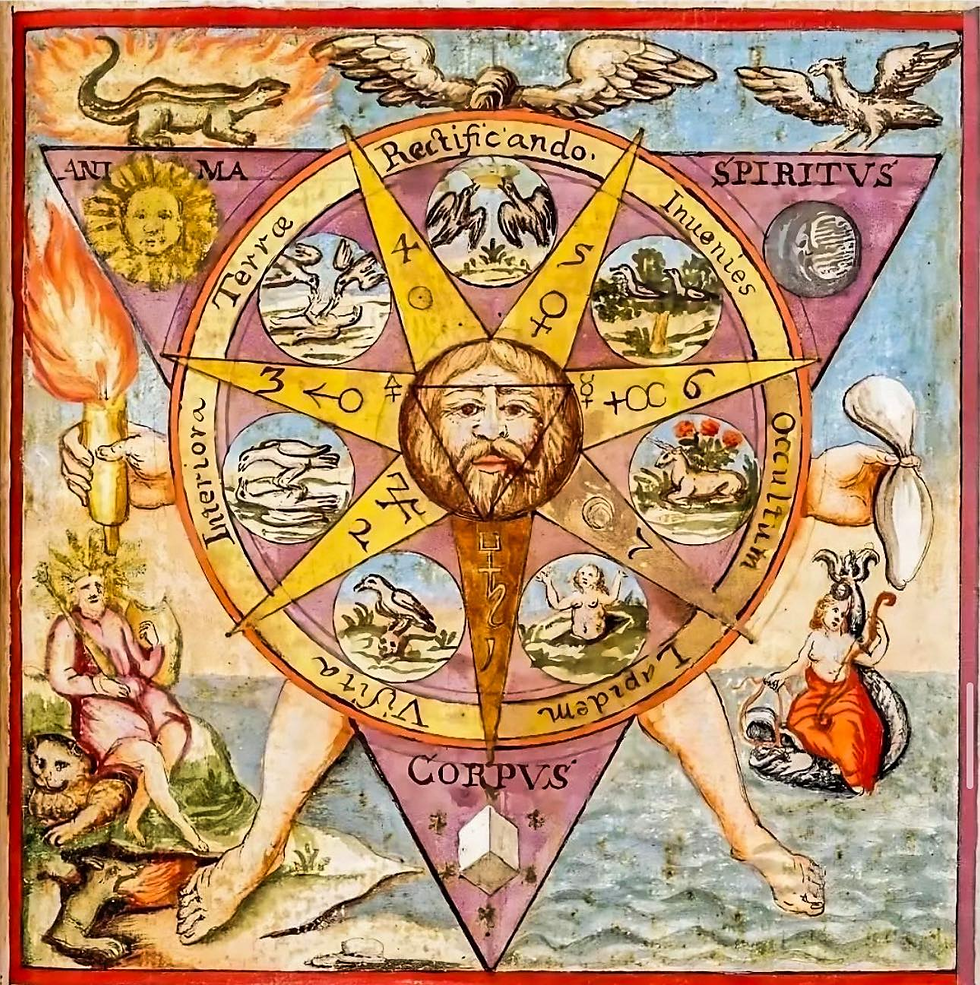

Comments