
.png)

Ancient World: Peopling of the Earth (Evolution Part 2)
- A. Royden D'Souza

- Mar 23
- 37 min read
Updated: Apr 4
The story of human evolution (according to the most prominent theory proposed by Darwin) traces our biological origins across seven million years, from the split with chimpanzees to the appearance of anatomically modern Homo sapiens around 300,000 years ago.
But that is only half the story. For roughly 250,000 years after their anatomical birth, modern humans are believed to have lived much as their ancestors had: making stone tools, hunting and gathering, leaving behind scattered campsites and occasional burials, but producing little that we would recognize as "culture" in the modern sense.

Then, around 70,000 to 50,000 years ago, something changed. Dramatically, suddenly, inexplicably. Humans began producing art; paintings of animals on cave walls, carved figurines, intricate beadwork.
They developed sophisticated tools made from bone and antler, not just stone. They buried their dead with grave goods, suggesting beliefs about an afterlife. They invented musical instruments, sewed tailored clothing, and began the great migration that would carry them across the globe; out of Africa, into Eurasia, Australia, and eventually the Americas.

This transformation, variously called the "Great Leap Forward," the "Cognitive Revolution," or the "Upper Paleolithic Revolution," is one of the most debated topics in human origins.
Why did it happen? Was it a sudden genetic mutation that rewired the human brain? A gradual accumulation of knowledge that reached a critical threshold? Or is the very idea of a "revolution" an illusion, a trick of archaeological preservation that makes earlier achievements invisible?
And then there are the deeper questions; the ones that mainstream science often avoids. Did the first artists and shamans use psychoactive plants to access other realms of consciousness? Are the cave paintings evidence of prehistoric contact with extraterrestrial beings? Was there a lost civilization, destroyed by a comet at the end of the last ice age, whose survivors taught agriculture and architecture to hunter-gatherers?
Let's examine all of it. The mainstream genetic and archaeological evidence. The alternative theories that challenge the standard narrative. The controversies over the peopling of the Americas, the extinction of the Neanderthals, and the role of altered states of consciousness in the birth of religion. And the persistent, and often compelling, claims that our past is far stranger, and far more complex, than textbooks admit.
We will begin with the standard timeline, then move into the debates, the alternative theories, and the deeper implications of the cognitive revolution that made us human.
Part I: From the Great Leap Forward to the First Humans

The concept of a "Great Leap Forward" was popularized by archaeologist Richard Klein in the 1990s to describe the sudden appearance, around 50,000 years ago, of behaviors that distinguish modern humans from their predecessors.
However, recent archaeological revelations from the African Middle Stone Age have transformed our picture of the timing of symbolic culture's emergence. Until the early 1990s, the prevailing view was notably Eurocentric, focused on the Upper Palaeolithic Revolution as humanity's definitive breakthrough.
Today, the debate has fractured into four main positions :
Position 1: The Multispecies Transition (Francesco D'Errico). D'Errico proposes that symbolic capacities were already in place with Homo heidelbergensis 300,000-400,000 years ago.
According to this model, we see sporadic behavioral expressions of symbolism among the ancestors of both Neanderthals and modern humans. The "revolution" is not a single event but a pattern of sporadic, discontinuous expressions of symbolic behavior across multiple hominin lineages.
Position 2: Gradual Accumulation (Sally McBrearty and Alison Brooks). In their landmark 2000 paper "The Revolution That Wasn't," McBrearty and Brooks argued that the African ancestors of modern humans underwent a gradual, sporadic build-up of modern cognition and behavior spanning 300,000 years.
Symbolism presents no special theoretical difficulties in this model, emerging as part of a package of modern, flexible, creative behaviors within Africa. They famously titled their paper to challenge the notion of a sudden "revolution."
Position 3: Speciation-Driven (Christopher Henshilwood and Ian Watts). This position holds that the human revolution occurred as part of modern human speciation in Africa. Evidence for symbolism in the form of cosmetics and personal ornamentation is the archaeological signature of this transition.
Symbolism was not an optional extra; life following the transition became fundamentally organized through symbols. The 2002 discovery of engraved ochre at Blombos Cave (75,000 years old) provided key evidence for this school.
Position 4: The Genetic Mutation (Richard Klein). Klein maintains that recent interpretations of the African Middle Stone Age record are wrong; the original "human revolution" theory remains correct. Middle Stone Age humans evolving in Africa may appear anatomically modern, but they did not become cognitively modern until the Later Stone Age/Upper Palaeolithic.
Symbolic culture emerged some 50,000 years ago, caused by a genetic mutation that rewired the brain; specifically, a change affecting the neural circuitry of the prefrontal cortex.
The behaviors that define this transition include:

Symbolic Art: The earliest known cave paintings, such as those in Chauvet Cave (France), dated to approximately 32,000 BCE, depict animals with sophisticated shading and perspective. Figurative sculptures, like the Venus of Willendorf (c. 25,000 BCE), represent the human form with stylistic exaggeration.

Personal Adornment: Perforated shells, animal teeth, and ivory beads appear in sites across Africa and Eurasia, indicating the use of body ornamentation to convey social status, group identity, or individual expression. The Blombos Cave beads date to approximately 100,000 years ago.

Complex Tools: The Upper Paleolithic saw the development of blade technology—long, thin flakes struck from prepared cores—that allowed more efficient use of stone. Bone, antler, and ivory were carved into projectile points, awls, fishhooks, and needles for sewing tailored clothing.

Burial Rituals: Intentional burials with grave goods—such as the 24,000-year-old burial of a child at Sungir (Russia) adorned with thousands of mammoth-ivory beads—suggest beliefs about an afterlife or the need to equip the deceased for another world.

Musical Instruments: Bone flutes dating to 40,000 years ago have been found in German caves, indicating the existence of music and, by extension, complex auditory communication.

Long-Distance Trade: Obsidian, seashells, and other exotic materials were transported hundreds of kilometers, indicating networks of exchange or travel.
Prior to 50,000 years ago, hominin populations were culturally conservative, maintaining simple technologies and foraging patterns over very long periods. After this threshold, artifacts such as fish hooks, buttons, and bone needles show signs of variation among different populations; novelty and innovation became characteristic of human culture.
The Genetic Story: Out of Africa and Beyond

The genetic evidence for the peopling of the world has undergone a revolution in the past decade. As of 2025, ancient DNA has been sequenced from hundreds of individuals spanning 45,000 years, revealing a far more complex picture than the simple "Out of Africa" model of the late 20th century.
The African Origin: All non-African populations carry approximately 2% Neanderthal DNA, derived from a single major episode of interbreeding that occurred around 50,000-60,000 years ago, likely in the Middle East. Present-day African populations have the highest genetic diversity, consistent with a longer period of evolution on that continent.
The European Settlement: Modern humans first attempted to settle Europe around 45,000 years ago, but these early dispersals were largely unsuccessful. A 2025 doctoral thesis from Trinity College Dublin analyzing 79 ancient human genomes spanning 20,000 years of European prehistory reveals the complexity of these migrations.
The research shows that the three known genetic clusters of post-glacial hunter-gatherers in western Europe were represented in a small region of southern France, suggesting multiple admixture events between populations carrying distinct strands of ancestry in the post-glacial period.
The Portuguese Continuity: A 3,000-year time transect of Portuguese prehistory from 56 ancient genomes spanning the Middle Neolithic to the Iron Age uncovered an extensive kinship network within a Bronze Age site, giving insight into the social structure of populations in this period.
Strikingly, the research shows a clear pattern of population continuity in the region, even during considerable upheavals caused by the Neolithic and Bronze Age migrations.
The Villanovan Culture: Two highly unusual Iron Age sites in Italy, connected to the enigmatic Villanovan culture—the Monumental Complex in Tarquinia and the necropoli of Fermo, Marche—revealed an extensive kinship network in an established, stable population. Analysis found signals of population continuity from the Iron Age to modern times.

The Coastal Hypothesis: A Southern African "Garden of Eden"
While the traditional "Out of Africa" model places the origin of modern humans in East Africa, a growing body of evidence points to the southern Cape coast of South Africa as a crucial center of human evolution and the launching point for the global diaspora.
The "Garden of Eden" Concept: The southern Cape, extending from Cape Agulhas to Cape St Francis, has been designated by the Western Cape government as the "Cradle of Human Culture" based on evidence that cultural and technological advances emerged earlier here than elsewhere in the world.
The Khoe and San populations of southern Africa currently exhibit the highest levels of genetic diversity among modern human populations, suggesting that this region may have been the source from which all other populations diverged.
Behavioral Complexity in the Southern Cape: Between 130,000 and 71,000 years ago, during Marine Isotope Stage 5 (MIS 5), the Middle Stone Age inhabitants of the southern Cape demonstrated remarkable behavioral sophistication.
They developed advanced stone tool technologies, engaged in systematic exploitation of marine resources (including shellfish, seals, and possibly marine mammals), and produced the earliest known symbolic artifacts, the engraved ochre and perforated shell beads of Blombos Cave.
The Toba Catalyst: One possible trigger for the coastal exodus was the Mount Toba super-eruption approximately 74,000 years ago. The eruption, one of the largest in the past 2.5 million years, may have devastated human populations in tropical eastern and northeastern Africa, creating a demographic vacuum that allowed southern African populations to expand northward along the coast, encountering abundant resources and limited competition.
The Coastal Migration Route: The coastal hypothesis proposes that a mobile and technologically advanced coastal group or groups from the southern Cape left the region around 70,000 years ago and exited the African continent between 50,000 and 40,000 years ago.
Multiple factors would have facilitated this rapid coastal expansion: consistent marine food supply along the entire route; limited physical obstacles compared to interior routes; adaptations to coastal existence that transferred easily to new shorelines; and the availability of the exposed continental shelf during periods of lower sea level.
The Peopling of the Americas: The Clovis-First Paradigm Overturned
For much of the 20th century, the "Clovis-first" model dominated American archaeology. This theory held that the first Americans were the makers of Clovis points, distinctive fluted spearpoints found across North America, who crossed the Bering land bridge from Siberia around 13,000 years ago and spread rapidly across the continent, hunting megafauna to extinction.
This model has been decisively overturned by archaeological discoveries over the past three decades.
Pre-Clovis Sites: Multiple sites now demonstrate human occupation of the Americas prior to 13,000 years ago:
Monte Verde, Chile: Dates to approximately 14,500 years ago, with well-preserved organic remains
Meadowcroft Rockshelter, Pennsylvania: Dates to 16,000 years ago, though contested by some
Paisley Caves, Oregon: Human coprolites dated to 14,400 years ago
White Sands, New Mexico: Human footprints dated to 21,000-23,000 years ago (controversial)
The Beringian Standstill Hypothesis: Genetic evidence suggests that ancestral Native Americans were isolated in Beringia (the exposed land bridge between Siberia and Alaska) for several thousand years before their rapid expansion southward.
This "standstill" allowed the development of distinct genetic and linguistic characteristics that differentiate Native Americans from their Asian ancestors.
The Extinction of the Neanderthals: Interbreeding and Replacement
The Neanderthals, our closest relatives, who inhabited Europe and western Asia for over 300,000 years, disappeared from the fossil record approximately 40,000 years ago, shortly after the arrival of Homo sapiens. The reasons for their extinction remain debated.
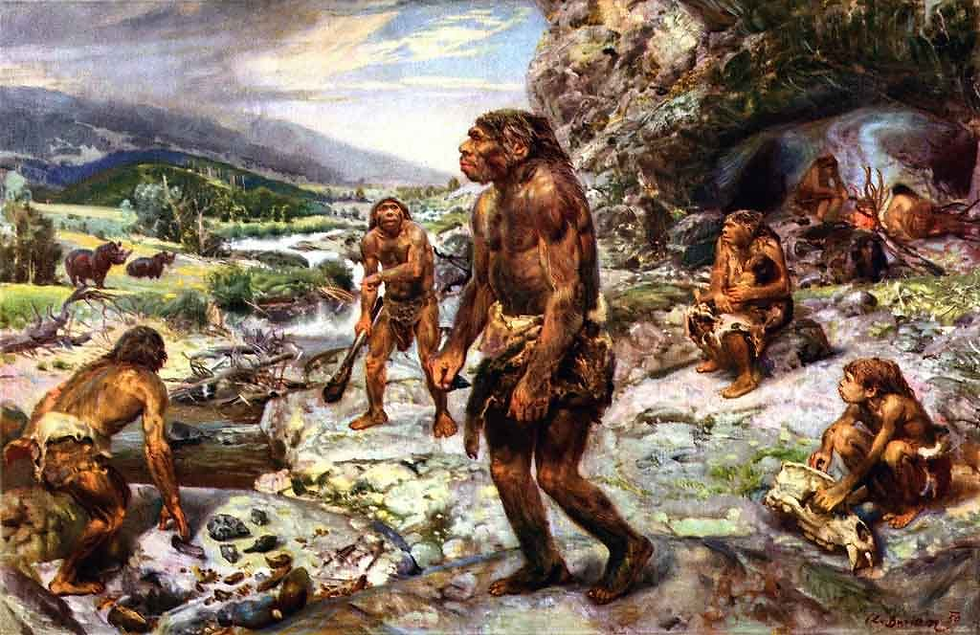
Competition Hypothesis: Modern humans possessed superior technology, social organization, or cognitive abilities that allowed them to outcompete Neanderthals for resources. This model is supported by evidence that Neanderthal populations were already in decline before the arrival of modern humans, possibly due to climate change.
Interbreeding and Assimilation: The discovery that all non-African humans carry Neanderthal DNA suggests that the two groups interbred. Some researchers propose that Neanderthals were not replaced but absorbed into modern human populations, a "leaky replacement" rather than a violent extinction.
Demographic Disadvantage: Neanderthal populations were small, dispersed, and highly inbred. Modern humans, arriving from Africa in waves, may have simply swamped them demographically, their larger numbers and more extensive social networks giving them a decisive advantage.
The Châtelperronian Enigma: Typically, Neanderthal populations do not vary in their technologies. However, the Châtelperronian assemblages have been found to be Neanderthal innovations produced as a result of exposure to Homo sapiens Aurignacian technologies; evidence of cultural transmission between the two groups.

Part II: The Upper Paleolithic Cultures

The Aurignacian is the first Upper Paleolithic culture in Europe, associated with the arrival of Homo sapiens and the earliest known figurative art.
Key Sites: Chauvet Cave (France)—the oldest known cave paintings, featuring horses, lions, rhinoceroses, and other animals rendered with remarkable skill; Hohle Fels (Germany)—the Venus of Hohle Fels, a mammoth-ivory figurine dated to 40,000 years ago, the oldest known representation of a human; Vogelherd Cave (Germany)—mammoth-ivory figurines of animals.
Technological Innovations: Aurignacian toolmakers produced bladelets (small, sharp blades) that could be mounted in rows to create composite tools. Bone and antler were used for projectile points, awls, and needles.
The Gravettian (33,000-22,000 Years Ago)

The Gravettian is characterized by the proliferation of "Venus" figurines, stylized female figures with exaggerated breasts, buttocks, and abdomens, across Europe from France to Siberia.
Key Sites: Dolní Věstonice (Czech Republic)—the oldest known ceramic figurines and evidence of textile production; Sungir (Russia)—elaborate burials with thousands of mammoth-ivory beads; Willendorf (Austria)—the famous Venus of Willendorf.
Social Organization: The widespread distribution of Venus figurines suggests a shared symbolic system across disparate groups. Gravettian burials show evidence of social hierarchy, with some individuals interred with elaborate grave goods while others receive simple burials.
The Solutrean (22,000-17,000 Years Ago)

The Solutrean, confined to southwestern Europe during the Last Glacial Maximum, is known for its extraordinary stone tool technology; pressure-flaked points so thin that they appear to be the world's first "art" made from stone.
Key Sites: Solutré (France)—the type site; Parpalló (Spain)—cave art and engraved stone plaques; Altamira (Spain)—some of the most famous cave paintings.
Artistic Achievement: Solutrean cave art reached new heights, with polychrome paintings and sophisticated shading techniques.
The Magdalenian (17,000-12,000 Years Ago)

The Magdalenian, which re-expanded across Europe after the Last Glacial Maximum, represents the culmination of Upper Paleolithic culture. The art of the Magdalenian includes the famous painted caves of Lascaux and the extensive engraved and carved portable art.
Key Sites: Lascaux (France)—the "Sistine Chapel of Prehistory," with over 600 paintings of animals; Altamira (Spain)—painted ceiling with bison; Enlène (France)—extensive portable art, including carved animal figures.
Technological Complexity: Magdalenian toolkits include harpoons, spear-throwers, and a variety of bone and antler implements. The use of engraving, painting, and sculpture reached a level of sophistication that would not be matched for thousands of years.
Part III: Were Europeans the First in the Americas?

The Solutrean hypothesis, most prominently advanced by Dennis Stanford and Bruce Bradley of the Smithsonian Institution, proposes that stone toolmakers from southwestern Europe crossed the Atlantic during the Last Glacial Maximum, bringing their technology to North America and providing the foundation for the Clovis culture. The hypothesis has generated intense debate for over two decades.
Proponents of the Solutrean hypothesis point to several lines of evidence:
Technological Similarities: They note similarities between Solutrean stone tools (22,000-17,000 years ago) and Clovis points (13,000 years ago) in terms of manufacturing technique (pressure flaking) and form (bifacial, with flutes). Both traditions share the "outre passé" flaking technique, where flakes are struck across the midline of the tool.
Genetic Evidence: Stephen Oppenheimer, Bruce Bradley, and Dennis Stanford contest the assertion that there is NO genetic evidence to support this hypothesis. They detail published evidence consistent with a pre-Columbian western Eurasian origin for some founding genetic markers, specifically mtDNA X2a, and some autosomal influence found in ancient and modern Native American populations.
They argue that the possibility that the inferred pre-Columbian western autosomal influence came more directly than through Siberia is not even considered in most genetic studies. The mtDNA X2a evidence, they contend, is more consistent with the Atlantic route and dates suggested by the Solutrean hypothesis and is more parsimonious than the assumption of a single Beringian entry that requires retrograde extinction of X in East Eurasia.
Proponents argue that the Solutrean peoples of southwestern Europe were adapted to cold, maritime environments—the "Iberian refugium"—and had the maritime technology necessary to follow the ice edge across the North Atlantic.
The Mainstream Rejection
The Solutrean hypothesis has been thoroughly critiqued by mainstream archaeology. Lawrence Guy Straus, in a comprehensive review published in American Antiquity, enumerates the insurmountable problems:
Chronology: The Solutrean ended around 16,500-18,000 years ago; at least 5,000 years before Clovis appeared. There is no evidence of Solutrean occupation during the period when a transatlantic crossing would have been necessary.
Distance: The Solutrean was separated from the U.S. eastern seaboard by approximately 5,000 kilometers of ocean.
Technology: There is no evidence that Solutrean people had navigation, deep-sea fishing, or marine mammal hunting capacities that could have enabled a transatlantic crossing.
Geography: There is no evidence that people lived above approximately 48°N latitude in western Europe during the Last Glacial Maximum, making a jumping-off point from the (then largely glaciated) area of the British Isles unlikely.
Artifact Differences: There are major differences between Solutrean and Clovis (and even more between Solutrean and pre-Clovis) assemblages in terms of lithic and osseous technologies and artistic activity.
A 2015 report re-evaluating the DNA evidence stated: "X2a has not been found anywhere in Eurasia, and phylogeography gives us no compelling reason to think it is more likely to come from Europe than from Siberia.
"Furthermore, analysis of the complete genome of Kennewick Man, who belongs to the most basal lineage of X2a yet identified, gives no indication of recent European ancestry and moves the location of the deepest branch of X2a to the West Coast, consistent with X2a belonging to the same ancestral population as the other founder mitochondrial haplogroups.
"Nor have any high-resolution studies of genome-wide data from Native American populations yielded any evidence of Pleistocene European ancestry or trans-Atlantic gene flow."
The conclusion is unequivocal: "The Solutrean techno-complex of southern France and the Iberian Peninsula is an impossible candidate as the 'source' for either pre-Clovis or Clovis traditions in North America."
Just Another Attempt at European Primacy?
The Solutrean hypothesis has drawn sharp criticism not only for its scientific failings but also for its political implications. By positing that European stone toolmakers reached North America thousands of years before the ancestors of today’s Indigenous peoples, the theory inadvertently (or, in some formulations, deliberately) undermines the long‑standing priority of Native American occupation.
Critics argue that such a narrative fits a recurring colonial pattern: the need to claim that “someone else,” preferably white and European, was here first, thereby diminishing Indigenous sovereignty and the depth of their ancestral ties to the land.
Even if the hypothesis’s proponents insist they are merely following the evidence, its resurgence in popular media and fringe archaeological circles has been seized upon by those seeking to rewrite prehistory in a way that retroactively justifies European primacy, echoing the “mound‑builder” myths of the 19th century that denied Native Americans the authorship of their own ancient earthworks.
In this light, the Solutrean hypothesis is less a legitimate scientific debate than a cultural artefact; one that reveals how theories about the deep past can become entangled with ongoing struggles over identity, land rights, and the politics of who truly belongs in the Americas.
Part IV: Comet Catastrophe and Megafaunal Extinction

The Younger Dryas Impact Hypothesis (YDIH) proposes that a fragmented comet or comet fragments struck or exploded over North America approximately 12,900 years ago, triggering a sudden return to glacial conditions (the Younger Dryas) and causing the extinction of megafauna across North America and the decline of the Clovis culture.
Proponents of the YDIH, organized as the Comet Research Group (CRG), have assembled multiple lines of evidence:
Shocked Quartz: In a study published in PLOS One in September 2025, UC Santa Barbara's James Kennett and collaborators presented evidence of shocked quartz grains in a layer of rock dating to the onset of the Younger Dryas at three well-known archaeological sites: Murray Springs in Arizona, Blackwater Draw in New Mexico, and Arlington Canyon in California's Channel Islands. These kinds of grains are created by extreme pressures and temperatures and are thought to be indicative of crater-forming cosmic impact events.
Airburst Mechanism: Unlike the dinosaur-killing asteroid that left a 200km-wide crater in the Yucatán, the proposed Younger Dryas impact event has no associated crater. Kennett argues that a fragmented comet hit Earth's atmosphere and exploded above the surface, resulting in a 'touch-down' airburst that wreaked havoc but left little, if any, evidence on the landscape. The shocked quartz grains examined show variations in shock patterns, which Kennett explains is expected of airburst-style impacts.
Other Impact Proxies: Other signs of a cosmic impact event have been found in the same layer of rock across dozens of sites across North America, including an organic-rich 'black mat' indicative of widespread biomass burning, as well as spikes in concentrations of platinum, meltglass, soot, and nanodiamonds.
The Scientific Controversy
Despite a growing list of evidence, the Younger Dryas Impact Hypothesis has faced significant backlash since it was first proposed in 2007.
Criticisms: Critics highlight inconsistencies in results, the incorrect dating of certain archaeological sites, and the over-reliance on 'impact proxies' that can be otherwise explained by terrestrial or non-catastrophic factors.
There is also evidence that populations of North American megafauna were already in a state of collapse prior to the proposed cosmic impact event, possibly as a result of anthropogenic activities such as hunting.
Systematic Review: In October 2025, a systematic review conducted by researchers working in Australia, Germany, Portugal, and Malta examined 360 papers published between 1959 and 2024 that studied megafaunal extinctions at the end of the last ice age.
The review found that "only a few considered an extraterrestrial cause, such as a solar flare or comet impact" as a credible cause. Overall, this review found 23% of papers cited humans as the primary driver of extinction, another 23% cited climate change as the primary driver, 20% proposed a combination of the two, and "a third" offered no explicit major driver of extinction.
Retraction: The September 2025 PLOS One study noted in the BBC Wildlife article carries a significant editorial note: "The study described below has since been retracted from PLOS One following concerns regarding (a) the age model underpinning the results of this study; and (b) whether the conclusions are supported by the results presented."
The Biphasic Freshwater Model
An alternative explanation for the Younger Dryas cold event, published in Science Advances in January 2026, proposes a biphasic freshwater injection model that does not require a comet impact.
The Lake Agassiz Flood: The Younger Dryas cold event is widely attributed to a disruption of the Atlantic Meridional Overturning Circulation (AMOC), driven by the catastrophic Lake Agassiz flood. While recent studies have pinpointed the source and timing of this meltwater pulse, it remains controversial whether this single freshwater event alone could have caused a millennial-scale cold period.
Two-Phase Mechanism: High-resolution biomarker records from the Labrador Sea and Baffin Bay reveal an abrupt sea ice decline during the mid-YD, parallel with partial AMOC recovery and enhanced Irminger Current inflow.
This warm water incursion may have initiated Heinrich Event 0, likely causing surface freshening in the subpolar North Atlantic and subsequently triggering a second AMOC decline during the late YD. Model simulations further support this two-phase AMOC weakening associated with surface freshening.
Implications: The biphasic freshwater injection hypothesis provides fresh insights into the mechanisms driving the YD and underscores the critical role of surface freshening in the subpolar North Atlantic in shaping deglacial abrupt climate changes; a purely terrestrial mechanism that does not require extraterrestrial intervention.
Part V: Ancient DNA and the Neolithic Transition

The traditional narrative of the Neolithic transition holds that farming spread across Europe through the migration of Near Eastern farmers who largely replaced the indigenous hunter-gatherer populations.
A landmark 2026 study published in Nature by researchers at the University of Huddersfield, Harvard University, and the Université de Liège has fundamentally challenged this model.
The Waterworld That Time Stood Still
The study analyzed complete human genomes from individuals who lived across a region encompassing modern-day Belgium, Germany, and the Netherlands between 8500 and 1700 BC. The results were striking: the arrival of farming in this area around 6500 years ago did not result in the major shift in genetic composition that took place across the rest of Europe.
Instead, the transition involved the uneven acquisition of farming-related practices by local hunter-gatherer communities with only minimal genetic input from the incoming farmers. The high levels of hunter-gatherer ancestry persisted across the region until the end of the Neolithic, around 2500 BC, when new people spread across Europe and mixed fully with local communities.
Professor John Stewart of Bournemouth University commented: "We expected a clear change between the older hunter-gatherer populations and the new agriculturalists, but apparently in the lowlands and along the rivers of the Netherlands and Belgium, the change was less immediate. It's like a Waterworld where time stood still."
The Role of Women in Cultural Evolution
Perhaps the most significant finding concerns the mechanism of this cultural transition. Genomic data from the study suggests that the farmer influx was mostly from women marrying into the local hunter-gatherer communities, bringing with them their know-how as well as their genes.
This pattern was limited to the riverine wetlands and coastal areas across the region. The wealth of natural resources seems to have allowed the local people to selectively embrace some aspects of farming while also preserving many hunter-gatherer practices, and therefore genes.
Dr. Maria Pala of the University of Huddersfield noted: "This study has also brought to light the crucial role played by women in the transmission of knowledge from the incoming farming communities to the local hunter-gatherers. Thanks to ancient DNA studies, we can not only uncover the past but also give voice to the invaluable but often overlooked role played by women in shaping human evolution"
Implications for Understanding Cultural Change
This research demonstrates that the transition to agriculture, often portrayed as a sudden, transformative revolution, was in fact a complex, regionally variable process. In some areas, hunter-gatherer populations persisted for thousands of years, selectively adopting new technologies and practices while maintaining their genetic identity.
The pattern of female-mediated cultural transmission suggests that intermarriage, rather than conquest or replacement, was a key mechanism of Neolithic expansion in at least some regions of Europe.
Part VI: The Neolithic Migration to South Asia

While the European Neolithic transition has long been a focus of ancient DNA research, the parallel story of how agriculture and new ancestries reached South Asia has remained less understood until recently.
The traditional narrative, that farming spread across Europe via Anatolian farmers who largely replaced indigenous hunter‑gatherers, finds an echo in South Asia, but with a crucial difference: the farmers who carried the Neolithic package eastward originated not from Anatolia but from the Zagros Mountains of modern‑day Iran, and their encounter with the indigenous populations of the subcontinent set the stage for the rise of the Indus Valley Civilization and the formation of Dravidian‑speaking peoples.
The Zagros Neolithic: A Distinct Genetic Lineage
Genomic studies published in Science (2016) and Nature have demonstrated that the Neolithic farmers of the Zagros region (10,000–8,000 BC) formed a genetic lineage distinct from the Anatolian farmers who migrated into Europe.
While both groups emerged from the broader Fertile Crescent, their separation occurred before the onset of agriculture: the Zagros populations were more closely related to modern inhabitants of India, Iran, Afghanistan, and Pakistan than to Europeans.
Thus, the “Neolithic revolution” in South Asia was not a western spillover of the European migration, but a parallel eastward expansion from the eastern wing of the Fertile Crescent.
The Indus Valley Civilization and the Zagros–AASI Admixture
By 8,000–10,000 years ago, Zagros hunter‑gatherers and early farmers began migrating eastward into the Indian subcontinent. There they encountered the indigenous hunter‑gatherer populations, termed Ancient Ancestral South Indians (AASI), who had been present for approximately 65,000 years.
The mixing of these two groups gave rise to the population that built the Indus Valley Civilization (3300–1300 BC). Direct evidence came in 2019 when researchers successfully sequenced the genome of a 4,500‑year‑old skeleton from Rakhigarhi, one of the largest Indus Valley sites in Haryana.
The individual’s DNA was a near‑perfect genetic match with Neolithic Iranian farmers, confirming that the Indus Valley population was largely descended from Zagros migrants with minimal input from later steppe pastoralists.
This genetic signature now forms part of the Ancestral South Indian (ASI) genome; the specific mixture of Zagros farmer ancestry with local AASI ancestry that remains prevalent in southern India today. Among contemporary groups, the Irula tribe of the Nilgiris in Tamil Nadu shows the closest genetic affinity to this ancient Indus Valley DNA.
The “Proto‑Dravidian” Ancestry: A Newly Identified Layer
Until recently, the peopling of South Asia was understood as a three‑layer model: AASI, Zagros farmers, and later Steppe pastoralists (often associated with Indo‑Aryan speakers).
A study published in October 2025 in the European Journal of Human Genetics upended this simplicity by identifying a sixth ancestral component in South Asian genomes, most prominent in the Koraga tribe of Karnataka and Kerala.
The researchers named this component Proto‑Dravidian ancestry and concluded that it represents:
A distinct lineage sister to the Zagros farmers, not a downstream branch of them
A population that existed in the area between the Zagros Mountains and the Indus Valley around 4,400 years ago
A genetic signature that has persisted in isolated Dravidian‑speaking groups, suggesting that the Dravidian language family may have deeper and more complex origins than previously supposed
As co‑author Ranajit Das explained: “Proto‑Dravidians are a specific ancestral component… who we infer existed in the area between Iran and the IVC around 4,400 years ago. They were associated with the early Dravidian‑speaking populations, but weren’t the same as the AASI… Modern Dravidian groups are populations formed by the admixture of Proto‑Dravidians, Neolithic Zagros farmers, the AASI, and in many cases, the Steppe Pastoralists.”
The Multiple Waves of South Asian Peopling
The current genetic synthesis, drawing on work by David Reich, Vagheesh Narasimhan, and others, reconstructs the settlement of South Asia as a series of at least four major waves:
1. AASI hunter‑gatherers – present for ~65,000 years
2. Zagros Neolithic farmers – arrived 10,000–8,000 years ago, admixing with AASI to form the Indus Valley population
3. “Proto‑Dravidian” lineage – a distinct, sister population that moved into the region around 4,400 years ago, contributing to Dravidian‑speaking groups
4. Steppe pastoralists (“Aryans”) – arrived 3,500–4,000 years ago, mixing with Indus Valley groups to form the Ancestral North Indian (ANI) component
Note: 'Aryans' refers to the speakers of the Indo-Aryan language group, who called themselves the Aryas (Noble), and not the mythical non-existent Aryan race mentioned in the Theosophical society and the later Ariosophy Movement & Thule Society often associated with Nazi Germany.
The British colonial administration in the 19th and early 20th centuries seized upon the emerging scholarly understanding of Indo-Aryan linguistic connections and twisted it into a racial ideology that would serve imperial interests.
Drawing on European racial theories of the time, they recast the linguistic migration of Indo-Aryan speakers into a mythologized “Aryan invasion” in which a superior “white” race conquered and subjugated a darker “Dravidian” race.
This fabricated racial dichotomy was then mapped onto India’s complex social landscape: North Indians were labeled “Aryan,” South Indians “Dravidian,” and the two were presented as fundamentally opposed races locked in ancient conflict. Never mind that the four migrations detailed above had already blended into every population, or that language, ancestry, and culture do not align neatly.
The British used this invented racial divide to justify their own rule by claiming they were merely continuing a natural state of division, while simultaneously intensifying regional, caste, and linguistic tensions that persist in Indian politics to this day.
The tragedy is that this colonial construct, the “Aryan–Dravidian divide,” was imposed upon a population that had always been a mosaic of shared ancestries, and its legacy continues to obscure the reality of India’s deeply interwoven genetic and cultural heritage.
This layered history stands in stark contrast to the European Neolithic, where the transition was dominated by a single major migration from Anatolia. In South Asia, the process was more protracted and involved multiple, genetically distinct farming populations emerging from different parts of the Fertile Crescent, followed by later interactions with steppe herders.
The persistence of ancient ancestry in modern Dravidian‑speaking groups, including the newly identified Proto‑Dravidian component, underscores the region’s role as a crucible of human prehistory, where waves of migration interwove without entirely erasing earlier genetic landscapes.

Part VII: The Peopling of the World Over Time
The story of how Homo sapiens populated every habitable corner of the globe is one of the most remarkable narratives in human history.
Beginning with our emergence in Africa, modern humans spread across continents, adapted to every climate from tropical forests to arctic tundra, and eventually developed the agricultural and urban civilizations that would transform the species.
Africa – The Homeland

As the continent where Homo sapiens evolved, Africa has the longest and most continuous record of human occupation. The earliest fossil evidence of anatomically modern humans comes from Jebel Irhoud, Morocco, dated to approximately 315,000 years ago, with a modern‑like facial morphology combined with an elongated braincase.
The Omo Kibish remains in Ethiopia date to around 200,000 years ago, representing fully modern anatomy. The Blombos Cave site in South Africa provides evidence of symbolic behavior, engraved ochre and perforated shell beads, from as early as 100,000 to 75,000 years ago, demonstrating that behavioral modernity emerged in Africa long before the migration of humans out of the continent.
Within Africa, populations remained largely confined to the continent for tens of thousands of years, with genetic diversity accumulating to levels higher than anywhere else in the world; a reflection of the longer evolutionary history of African lineages.
The Khoe and San populations of southern Africa today exhibit the highest levels of genetic diversity among modern human populations, suggesting that this region may have been a source population for later expansions.
The Levant and the Near East – The Gateway

The Levantine corridor served as the primary gateway for human migration out of Africa. The earliest evidence of modern humans outside Africa comes from Skhul and Qafzeh caves in Palestine (Israel), where burials dated to approximately 120,000 to 90,000 years ago have been found.

These early dispersals appear to have been unsuccessful—the populations either died out or retreated—as Neanderthals reoccupied the region during subsequent cold phases.
The successful Out‑of‑Africa migration, from which all non‑African populations descend, occurred around 60,000 to 50,000 years ago, likely via the Bab el‑Mandeb strait across the Red Sea or the Sinai Peninsula.
Australia and New Guinea (Sahul)

The peopling of Sahul—the combined landmass of Australia, New Guinea, and Tasmania exposed during periods of lower sea level—represents one of the earliest and most remarkable maritime migrations in human history.
The ancestors of Aboriginal Australians and Papuans likely first entered the continent between 75,000 and 50,000 years ago, with the most widely accepted evidence dating to approximately 65,000 years ago at the Madjedbebe rock shelter in northern Australia.

The journey required open‑ocean crossings of at least 90 kilometers, even during periods of lower sea level, demonstrating sophisticated maritime technology and navigation skills. Recent modeling of migration routes has identified probable "superhighways" that the first Australians followed, based on detailed reconstructions of the ancient continent's topography and water availability.
The peopling of the entire continent took approximately 10,000 years, with populations moving rapidly southward toward the Great Australian Bight and along the western and eastern coasts. By 49,000 years ago, humans had reached the southernmost parts of the continent, including Tasmania (then connected to the mainland).
East Asia – China and the Far East

The peopling of East Asia involved both early hominin and later modern human migrations. Homo erectus arrived in China by approximately 1.7 million years ago, as evidenced by sites such as the Nihewan Basin in northern China. These populations persisted for over a million years, with some evidence suggesting continuous morphological and genetic evolution in situ along lines leading to Homo sapiens.
Anatomically modern humans reached East Asia by at least 80,000 to 60,000 years ago, as evidenced by the Liujiang skeleton in southern China and the Tianyuan cave remains near Beijing (dated to approximately 42,000 to 39,000 years ago).
Genetic evidence indicates that modern humans interbred with Denisovans in the region, with Denisovan ancestry most prevalent in populations across East and Southeast Asia.
Japan – The Northern Frontier

The peopling of the Japanese archipelago occurred in multiple waves, beginning with the arrival of the Jōmon people. The earliest evidence of human occupation in Japan dates to approximately 40,000 to 35,000 years ago.
Osteological studies suggest that the first Paleolithic populations of western Japan, particularly in Kyushu, Shikoku, and the Ryukyu archipelago, originated in Southeast Asia, making them remotely related to the populations that would later occupy the Americas.
The Jōmon period (14,000–300 BC) represents a stable hunter‑gatherer culture that produced some of the world's earliest pottery. A later migration from the Korean Peninsula beginning around 3,000 years ago brought the Yayoi culture, which introduced wet‑rice agriculture, metallurgy, and the ancestors of modern Japanese populations.
Europe – Multiple Waves and Neanderthal Encounter

Europe was occupied by hominins long before the arrival of modern humans. Homo erectus reached the continent approximately 1.4 million years ago, with evidence from the Kozarnika cave in Bulgaria.
Homo heidelbergensis appeared around 800,000 years ago and evolved into Neanderthals by approximately 400,000 years ago. Neanderthals dominated Europe for over 300,000 years, developing the Mousterian tool industry and adapting to cold glacial environments.
Anatomically modern humans first entered Europe around 46,000 to 44,000 years ago, as evidenced by remains from the Bacho Kiro cave in Bulgaria, which are directly dated to this period. These early modern humans were associated with the Initial Upper Paleolithic culture and appear not to have been the ancestors of later Europeans, as ancient DNA samples from this period show no continuity with later populations.
The Aurignacian culture (43,000–35,000 years ago) represents the first widespread modern human occupation of Europe, followed by the Gravettian (32,000–22,000 years ago), which extended from the Crimean Mountains to the Iberian Peninsula.
During the Last Glacial Maximum (26,500–19,000 years ago), human populations retreated to southern refugia in Iberia, Italy, and the Balkans. The Solutrean culture (22,000–17,000 years ago) flourished in southwestern Europe, while the Magdalenian (17,000–12,000 years ago) re‑expanded northward after the ice retreated.
By 14,000 years ago, humans had recolonized northern Europe, and by 10,000 years ago, the Mesolithic cultures that would transition to agriculture were established across the continent.
The Americas – The Last Frontier

The peopling of the Americas was the final major migration of modern humans, occurring after the initial settlement of every other habitable continent. For much of the 20th century, the "Clovis‑first" model held that humans first entered the Americas via the Bering land bridge around 13,000 years ago.
This model has been decisively overturned by archaeological discoveries demonstrating human occupation of the Americas thousands of years earlier.
The Page-Ladson site in Florida provides evidence of human occupation at 14,550 years ago, with stone tools found in association with butchered mastodon remains in an undisturbed geological context.
Other pre‑Clovis sites include:
Monte Verde, Chile: Dates to approximately 14,500 years ago, with well‑preserved organic remains
Paisley Caves, Oregon: Human coprolites dated to 14,400 years ago
White Sands, New Mexico: Human footprints dated to 21,000 to 23,000 years ago (controversial)
The genetic evidence suggests that ancestral Native Americans were isolated in Beringia, the exposed land bridge between Siberia and Alaska, for several thousand years before their rapid expansion southward.
This "Beringian Standstill" allowed the development of distinct genetic and linguistic characteristics that differentiate Native Americans from their Asian ancestors.

The traditional "first route" hypothesis proposed that the first Americans walked from Siberia to Alaska across the exposed Bering land bridge, then traveled south through an ice‑free corridor between the Laurentide and Cordilleran ice sheets after it opened around 13,500 years ago.

The current accepted migration route is the coastal (kelp highway) hypothesis, which holds that maritime peoples traveled by boat along the Pacific coast from northeast Asia, around Beringia, and down the western shores of the Americas; explaining pre‑Clovis sites south of the ice sheets thousands of years before the inland corridor was passable.

A third, more politically charged hypothesis proposes that the first Americans were not Asian but European; specifically, Solutrean people from southwestern France and Iberia who supposedly crossed the North Atlantic along the ice edge during the Last Glacial Maximum, bringing their distinctive stone tool technology to North America, where it later evolved into the Clovis tradition.
This theory has been consistently rejected by mainstream archaeology for a host of insurmountable reasons: the Solutrean culture ended more than 5,000 years before Clovis appeared; there is no evidence of Solutrean seafaring capacity or Atlantic crossings; the Solutrean and Clovis lithic traditions are fundamentally different in technology, tool types, and chronology; and the genetic evidence shows no European ancestry in pre‑Columbian Native American populations.
Yet the hypothesis persists, largely because it serves a narrative that has nothing to do with science: the desire to claim that Europeans, not Asians, were the true “first discoverers” of the Americas, thereby retroactively justifying colonialism by asserting that the continent was “never really indigenous” to begin with.
In this framing, the Solutrean hypothesis becomes a modern iteration of the 19th‑century “mound‑builder” myth, which denied Native Americans authorship of their own ancient earthworks and instead attributed them to a “lost white race.”
The hypothesis thus functions less as a genuine scientific proposal than as a cultural artefact; one that reveals how debates about deep prehistory can be weaponized to undermine Indigenous sovereignty and naturalize European primacy.
The Neolithic Transition – Farmers from the Fertile Crescent

The spread of agriculture beginning around 12,000 years ago represents a transformative migration event that reshaped the genetic and cultural landscape of Eurasia. The Fertile Crescent, stretching from the Levant through Mesopotamia to the Zagros Mountains, was the cradle of domestication.
Pre‑Pottery Neolithic A (PPNA) cultures emerged in the Levant around 10,000–8800 BC, with sites such as Jericho (one of the world's first towns) and Göbekli Tepe in Turkey (a monumental ritual complex built by hunter‑gatherers).
Pre‑Pottery Neolithic B (PPNB) followed from 8800–6500 BC, characterized by domesticated animals, new architectural styles, and an expansion of farmer populations.
Genetic studies have demonstrated that the Neolithic spread into Europe primarily through the migration of farmers from Anatolia beginning around 8,500 years ago, advancing at a rate of approximately 0.6–1.3 km per year. These early farmers carried a genetic signature distinct from both the hunter‑gatherers they encountered and the populations of the Zagros region.
Iran and the Zagros – A Separate Neolithic Center

The Zagros Mountains of modern‑day Iran represent a distinct Neolithic center, with the earliest farming communities emerging around 10,000 to 9,500 BC. Sites such as Sheikh‑e Abad and Jani in the central Zagros show evidence of early domestication of barley, wheat, goats, and sheep.
The Zagros Neolithic farmers formed a genetic lineage distinct from their Anatolian counterparts, more closely related to modern populations of India, Iran, Afghanistan, and Pakistan.
The spread of farming from the Zagros into South Asia beginning around 9,000 to 8,000 years ago carried this ancestry to the Indus Valley, where it mixed with indigenous hunter‑gatherer populations to form the genetic basis of the Harappan Civilization.
South Asia – The Indian Subcontinent

The peopling of the Indian subcontinent occurred through at least four major migratory waves :
First Wave (65,000 years ago): The "First Indians" arrived as part of the Out‑of‑Africa migration that populated the world. These populations, descendants of the earliest modern humans to leave Africa, account for 50–65% of Indian ancestry today.
Second Wave (9000–5000 years ago): Agriculturists from the Zagros region of Iran moved into northwestern India, mixing with First Indians and accelerating the development of farming. This mixed population formed the foundation of the Harappan (Indus Valley) Civilization, which flourished from 2600–1900 BCE.
Third Wave (2000 BCE): Farming‑related migrations from the Chinese heartland brought Austroasiatic languages (such as Mundari and Khasi) to eastern and central India.
Fourth Wave (2000–1000 BC): Central Asian pastoralists, speaking Indo‑European languages and identifying as Aryans, migrated into India, bringing the genetic component now associated with Ancestral North Indians (ANI).
The four migratory waves outlined above did not remain isolated; they have interwoven over millennia to create the rich genetic tapestry of modern India. Today, nearly every Indian population carries a blend of these ancestries, though proportions vary by region, language, and social group.
Millennia of migration, trade, and social interaction have produced a continuum rather than discrete clusters. Thus, while the four waves provide a useful historical framework, modern India is not a simple sum of migrations; it is a dynamic, layered synthesis where each wave has left its mark in every individual, making the idea of “pure” ancestral lineages a myth.
Southeast Asia – A Complex Mosaic

Southeast Asia was shaped by at least four prehistoric migratory waves, as revealed by ancient genomic studies:
First Wave (Paleolithic): The mainland Hoabinhian hunter‑gatherer populations share closest genetic affinities with present‑day Andamanese Önge and Malaysian Jehai peoples. These populations arrived before 45,000 years ago and carried no Denisovan ancestry, although Denisovan‑shifted Papuan populations later mixed with groups in the Philippines.
Second Wave (4,000 years ago): Neolithic farmers from East Asia expanded into Southeast Asia, introducing Austroasiatic ancestry that peaks in the Mlabri and Htin peoples of Thailand, as well as in western Indonesians such as Balinese and Javanese.
Third Wave (2,000 years ago): Additional East Asian ancestry was introduced, related to modern groups such as Hmong, Dai, Vietnamese, and Thai peoples.
Fourth Wave (1,800–2,100 years ago): Austronesian ancestry was introduced into Indonesia and the Philippines, associated with the expansion of Austronesian‑speaking peoples.
Subsequent Indian cultural influence (from 2,000 years ago) introduced South Asian ancestry ranging from 2–16% in populations across Thailand, Cambodia, Vietnam, Myanmar, and Singapore, with exceptions among isolated hill tribes and hunter‑gatherer groups.
Egypt and North Africa – The Nile Valley

The peopling of the Nile Valley represents a continuous occupation spanning over a million years. The oldest archaeological finds in Egypt are Oldowan stone tools dating to perhaps over 2 million years ago. Acheulean handaxe industries persisted until approximately 400,000–300,000 years ago.
The Nazlet Khater skeleton, found in Upper Egypt, has been dated to 33,000 years ago, representing one of the earliest anatomically modern human remains in the region. Late Paleolithic cultures such as the Fakhurian (30,000–20,000 years ago) show evidence of homogenous populations adapted to Nile Valley environments.
The Neolithic transition in Egypt was complex, involving interactions between local hunter‑gatherers and incoming farmers from the Fertile Crescent. The Faiyum A culture (5600–4400 BC) represents the earliest farming culture in the Nile Valley, with evidence of domesticated wheat, barley, and cattle.
This agricultural revolution was accompanied by the development of pottery, permanent settlements, and eventually the Predynastic cultures that would coalesce into the Pharaonic state around 3100 BC.
Part VIII: Lost Civilizations and Forbidden History

The most influential (and controversial) alternative theory of human prehistory is that advanced civilizations existed before the end of the last ice age, only to be destroyed by a comet impact around 12,800 years ago. The primary proponents are Graham Hancock and Randall Carlson.
The Core Argument: Hancock argues that a comet impact at the onset of the Younger Dryas destroyed an advanced global civilization; a seafaring, building culture that left traces in the form of megalithic sites like Göbekli Tepe in Turkey, which was built around 11,600 years ago, just after the impact.
He suggests that the survivors of this lost civilization spread across the world, teaching agriculture, architecture, and astronomy to hunter-gatherers, thus explaining the sudden appearance of civilization after the end of the ice age.

Göbekli Tepe as Evidence: Göbekli Tepe, a massive megalithic complex in southeastern Turkey, dated to approximately 11,600 years ago, is central to Hancock's argument. It was built by hunter-gatherers (or so the standard narrative claims) at a time when no such complex architecture was thought possible. Hancock argues that it could only have been built by survivors of a lost civilization.
The Critical Response
The Russell's Teapot Problem: As one critic noted on the Boing Boing BBS, Hancock's argument reduces to: archaeologists are often hostile to new ideas, and certain parts of the world are undersurveyed; therefore, we cannot rule out the possibility of a lost civilization.
This is Russell's teapot territory: "we cannot rule out the possibility of dragons. Maybe there were fire-breathing lizards in some part of Amazonia that hasn't been subjected to LIDAR mapping yet. But we don't take the idea of dragons seriously or waste time looking for them, because nothing we have seen so far and no amount of scientific reason suggests that dragons are likely."
The Gradual Development of Agriculture: Tim Callahan, writing in Skeptic magazine, notes that research at other sites in the region has shown that within 1,000 years of Göbekli Tepe's construction, settlers had corralled sheep, cattle, and pigs; a gradual transition to agriculture, not a sudden introduction.
The Egyptian Question: Hancock claims that Egyptian civilization appeared suddenly without precursors. Callahan points out: "Since I was easily able to find material on the prehistoric predynastic cultures of Upper and Lower Egypt that lead by gradual steps from Neolithic villages to the earliest forms of Egyptian civilization merely by surfing the web and looking into a few books on the subject written for the layperson, I have to conclude that Hancock either made his assertion that Egyptian civilization appeared suddenly without bothering to do any research to back it up, or simply ignored any sources that didn't support his theory."
The Unacknowledged White Supremacy: More troubling is the historical context of lost civilization theories. As one commentator observed: "If you research Graham Hancock and look at his books over time, as I have, one of the things that you discover about him is that he self-edits. He doesn't use the word Atlantis now except very sparingly.
"He has also edited himself since 1995, when, in Fingerprints of the Gods, he came out and said that it was an ancient white civilization. He no longer says the 'white' part in the series. If you pay careful attention, he does talk about 'heavily bearded Quetzalcoatl' who arrives, according to myth, to give the gift of knowledge, but he doesn't mention the other part of that trope, which all of us know about, which is that this visitor supposedly had white skin."
As Callahan concludes: "the burden of proof is on those advancing the idea of Atlantis as having a historical basis, since it is difficult, if not impossible to prove a negative."
Ancient Astronaut Theories
A related tradition holds that cave art and other Paleolithic artifacts depict extraterrestrial beings. Critics note that these interpretations consistently "take the ancient texts out of context, or to misquote them deliberately, rather than to present them to readers in an honest and transparent way."
The "spaceman" of Val Camonica is a human figure with a spear and shield, not a helmet; the "wandjina" figures of Australia are stylized ancestral beings, not astronauts. Interpreting unfamiliar or stylized art as "extraterrestrial" is a form of cultural imperialism that denies the creativity and symbolic sophistication of prehistoric peoples.
Part IX: The Origins of Shamans, Caves, and Altered States

The most influential theory of Paleolithic religion is the shamanic hypothesis, which interprets cave art and ritual objects as the products of shamans who entered altered states of consciousness to communicate with the spirit world.
The Sorcerer of Trois-Frères: One of the most famous images from Paleolithic cave art is "The Sorcerer," an enigmatic figure from the Cave of the Trois-Frères in France. The original drawing by archaeologist Henri Breuil depicted a horned humanoid torso, which Breuil interpreted as a shaman or magician performing a ritual to ensure good hunting.
Margaret Murray, having seen Breuil's drawing, called it "the first depiction of a deity on Earth," an interpretation Breuil later adopted.

The Critique of Breuil: In recent decades, Breuil's interpretation, and even his drawing, has come under scrutiny. Critics argue that Breuil was fitting the evidence to support his hunting-magic theory, noting that "the figure drawn by Breuil is not the same as the one actually painted on the cave wall."
Peter Ucko concluded that inaccuracies in the drawing were caused by Breuil working in dim gaslight, mistaking cracks in the rock for man-made marks. However, Jean Clottes, a leading prehistorian, asserts that Breuil's sketch is accurate, having examined the original figure twenty times himself.
The Trance Hypothesis: David Lewis-Williams proposed that the geometric patterns found in Paleolithic art, including dots, spirals, zigzags, correspond to the entoptic phenomena experienced in the early stages of trance states.
As shamans move deeper into altered consciousness, these geometric forms give way to iconic images of animals, which Lewis-Williams interpreted as visions of the spirit world.
Entheogens and the Origins of Religion
The use of psychoactive plants to induce altered states of consciousness may have played a crucial role in the origins of religion. The term "entheogen" (from Greek *ἐνθεος*, "inspired by the divine") was coined in 1979 by a group of ethnobotanists to describe the ritual use of psychoactive plants in traditional religious contexts.
Paleolithic Evidence: Direct evidence of entheogen use in the Paleolithic is rare, but the presence of certain plants, such as Psilocybe mushrooms (which grow in Europe) and Soma (the Vedic sacred plant, possibly Amanita muscaria), has led to speculation about their ritual use.
The cave art of the Upper Paleolithic may depict altered states of consciousness, and the cave chambers themselves, dark, resonant, and remote, are ideal settings for shamanic rituals.
Part VIII: Synthesis – The Unfinished Story
The story of the cognitive revolution and the peopling of the world rests on evidence that has grown exponentially in the past two decades:
Genetic Data: Over 15,000 ancient genomes provide a detailed picture of population movements, interbreeding, and adaptation over the past 45,000 years.
Archaeological Sites: Hundreds of Upper Paleolithic sites across Europe, Africa, and Asia document the emergence of art, complex tools, and ritual behavior.
Climate Data: Ice cores, deep-sea sediments, and terrestrial records provide a high-resolution timeline of climate change that framed human migration and adaptation.
Yet the gaps remain enormous. We do not know when language emerged, or whether the "cognitive revolution" was a sudden genetic event or a gradual cultural accumulation.
We do not know why the Americas were settled so late, or whether pre-Clovis populations ever established themselves. We do not know what the cave paintings meant to their creators.
The Interpretation Problem
Every discovery is interpreted within a theoretical framework. The same cave painting can be: a hunting-magic ritual; a shamanic vision; a territorial marker; a piece of prehistoric art with aesthetic value independent of function; or a coded message from survivors of a lost civilization.
Anomalous evidence like pre-Clovis sites, claims of very early dates for cave art, evidence of complex behavior before the "great leap" is met with skepticism. Some of this evidence is genuinely flawed; some is dismissed because it challenges the dominant paradigm.
The debate over the peopling of the Americas, once dominated by the Clovis-first model, is now a cautionary tale about the dangers of premature consensus.
The Allure of Lost Civilizations
The persistent appeal of lost civilization theories reflects a deep human need for a more dramatic past. The standard narrative of gradual development from hunter-gatherers to farmers to city-builders is, for some, unsatisfying.
The idea that an advanced civilization was destroyed at the end of the last ice age offers a story of fall and loss that resonates with religious and mythological traditions.
However, as critics note, these theories often rest on selective use of evidence, the "God of the gaps" fallacy, and unacknowledged cultural assumptions about the capabilities of non-Western peoples. The burden of proof, as Callahan notes, is on those advancing such ideas, "since it is difficult, if not impossible to prove a negative."
Conclusion: The Threshold of Civilization
The period from 70,000 to 12,000 years ago saw the transformation of anatomically modern humans into behaviorally modern humans; creatures capable of art, religion, long-distance trade, and the complex social organization that would eventually lead to the first civilizations.
The story of this transformation is not settled. The "Great Leap Forward" may have been a real event, triggered by genetic or demographic changes, or it may be an artifact of archaeological preservation.
The peopling of the world may have been a single wave out of Africa, or multiple dispersals that interbred and overlapped. The first Americans may have arrived 20,000 years ago or 13,000 years ago; or both.
The alternative theories surveyed here, like the Solutrean hypothesis, the lost civilization thesis, and the ancient astronaut interpretations, are not accepted by mainstream science. But they persist because they try to address—although contrived—the gaps in the narrative: the sudden appearance of complex art, the mystery of Göbekli Tepe, the questions that the standard model does not fully answer.
Next, we will trace the story from the end of the last ice age to the emergence of cities, states, and writing. There, too, we will find debates, anomalies, and alternative theories. The pattern is the same: a field where the evidence is fragmentary, the interpretations are contested, and the stakes are nothing less than understanding the origins of civilization itself.
The cognitive revolution made us human. But what came next, the Neolithic revolution, the rise of cities, and the invention of writing, made us civilized.
That story begins where this one ends: at the threshold of the Holocene, when the ice retreated, the seas rose, and humanity stood on the brink of history.
Appendix: Key Upper Paleolithic Cultures
Aurignacian | 45,000-35,000 BP | Europe, Levant | First figurative art, blade tools, bone flutes
Gravettian | 33,000-22,000 BP | Europe, Siberia | Venus figurines, elaborate burials, ceramic technology
Solutrean | 22,000-17,000 BP | Southwestern Europe | Pressure-flaked points, advanced stone technology
Magdalenian | 17,000-12,000 BP | Western Europe | Painted caves (Lascaux, Altamira), harpoons, spear-throwers
Appendix: The Four Positions on Behavioral Modernity
Multispecies Transition | Francesco D'Errico | 300,000-400,000 years ago | Symbolic capacities present in Homo heidelbergensis; sporadic expression
Gradual Accumulation | Sally McBrearty, Alison Brooks | 300,000-year buildup | Gradual, sporadic accumulation of modern behaviors in Africa
Speciation-Driven | Christopher Henshilwood, Ian Watts | Coincident with modern human speciation | Symbolism emerged as part of modern human package in Africa
Genetic Mutation | Richard Klein | ~50,000 years ago | Single genetic mutation rewired the brain

Bibliography:
Bar-Yosef, Ofer. "The Upper Paleolithic Revolution." Annual Review of Anthropology 31 (2002): 363-393.
Breslin, Emily. Stasis and Flux: A Genomic Study of 20,000 Years of European Prehistory. PhD Thesis, Trinity College Dublin, 2025.
Callahan, Tim. "Lost Civilizations and Imaginative Conjectures." Skeptic 22, no. 3 (2017): 42-64.
D'Errico, Francesco. "The invisible frontier: a multiple species model for the origin of behavioral modernity." Evolutionary Anthropology 12 (2003): 188-202.
Diamond, Jared. Guns, Germs, and Steel. W.W. Norton, 1999.
Fichera, Alessandro, et al. "Ancient DNA reveals hunter-gatherer persistence in Neolithic Northwest Europe." Nature, 2026.
Henshilwood, Christopher, et al. "Emergence of modern human behavior: Middle Stone Age engravings from South Africa." Science 295 (2002): 1278-1280.
Kennett, James, et al. "Shocked quartz at the Younger Dryas boundary." PLOS One, September 2025 (retracted).
Klein, Richard. "Archaeology and the evolution of human behavior." Evolutionary Anthropology 9 (2000): 17-36.
McBrearty, Sally, and Alison Brooks. "The revolution that wasn't: a new interpretation of the origin of modern human behavior." Journal of Human Evolution 39 (2000): 453-563.
Oppenheimer, Stephen, Bradley, Bruce, and Stanford, Dennis. "Solutrean hypothesis: genetics, the mammoth in the room." Smithsonian Profiles.
Raff, Jennifer A., and Bolnick, Deborah A. "Does Mitochondrial Haplogroup X Indicate Ancient Trans-Atlantic Migration to the Americas? A Critical Re-Evaluation." PaleoAmerica 1, no. 4 (2015): 297-304.
Straus, Lawrence Guy. "Solutrean Settlement of North America? A Review of Reality." American Antiquity 65, no. 2 (2000): 219-226.
Zhang, Xiaodong, et al. "Surface freshening in the subpolar North Atlantic sustaining the weakened AMOC during the late Younger Dryas." Science Advances 12, no. 1 (2026).
"Exploding comet may have wiped out mammoths and other enormous Ice Age mammals." BBC Wildlife Magazine, January 2026.
*This whitepaper is presented as a compilation of mainstream and alternative sources. The reader is invited to evaluate the evidence and arguments independently.*


Comments