
.png)

Ancient World: Emergence of the Hominins (Evolution Part 1)
- A. Royden D'Souza

- Mar 22
- 24 min read
Updated: Apr 4
The story of human origins rests on evidence so fragmentary that all of prehuman evolution could fit into the back of a pickup truck. Every fossil hominin ever discovered, representing millions of years and countless generations, would barely fill a small room.
From this handful of bones, scientists have constructed a narrative of our origins so detailed that it is taught in schools, displayed in museums, and repeated in textbooks as settled fact.

Yet beneath the surface of consensus lie controversies that have raged for decades: Was Sahelanthropus truly bipedal or just an ape? Did Homo floresiensis represent a separate species of diminutive human or a population of pathological pygmies?
Did modern humans emerge solely from Africa or evolve simultaneously across the Old World? And what of the evidence—dismissed, ignored, or actively suppressed—that suggests a far more ancient origin for anatomically modern humans?
Let's try to compile the full range of evidence, interpretation, and controversy. We'll draw from mainstream paleoanthropology, fringe theories, suppressed discoveries, and the sociological forces that shape what counts as knowledge.
The goal is not to endorse any single narrative but to lay out all the pieces so we can apply our own logic to the most profound question we can ask: Where do we come from?
Part I: The Mainstream Timeline

The split between the lineage leading to modern humans and that leading to chimpanzees, our closest living relatives, is estimated at approximately 6 to 7 million years ago. This date derives primarily from molecular clock analyses that measure genetic differences between humans and chimpanzees and calibrate them against what few fossil benchmarks exist.
The late Miocene environment was transforming. The expansion of savannah grasslands across Africa, replacing the dense forests that had dominated for millions of years, created patchy woodland-savannah mosaics.
The traditional "savannah hypothesis" holds that this shift forced some apes out of the trees, selecting for bipedalism, which freed the hands for carrying and tool use.
Sahelanthropus tchadensis ("Toumaï"): Discovered in Chad in 2001 by Ahounta Djimdoumalbaye, this cranium dates to approximately 6-7 million years old, with faunal studies suggesting the older part of that range.

The brain volume is between 320 and 380 cubic centimeters, comparable to that of chimpanzees. The significance of Toumaï is fiercely debated:
No postcranial remains have been definitively associated with the skull. Whether Toumaï walked upright cannot be determined from the existing evidence.
The foramen magnum (the opening through which the spinal cord exits) is positioned toward the back of the skull, more ape-like than human, suggesting the skull was held forward rather than balanced atop an erect body.
Brigitte Senut, one of the discoverers of Orrorin tugenensis, has controversially suggested that Toumaï may be an early gorilla rather than a hominin on the human line.
Despite these uncertainties, the discoverers, led by Michel Brunet, consider Toumaï a hominid (on our side of the chimp-human split). All scientists agree that whatever its exact relationship, Toumaï is a find of major significance.
Orrorin tugenensis ("Millennium Man"): Found in Kenya and dated to about 6 million years ago, this species is represented by fragmentary remains including a femur that shows evidence of bipedalism. The discoverers argue it represents a direct human ancestor, but others contend the evidence is too fragmentary for certainty.
Ardipithecus ramidus ("Ardi"): At 4.4 million years old, Ardi is represented by a partial skeleton that provides the earliest substantial evidence of bipedalism combined with tree-climbing adaptations. She stood about 121 cm tall, had a brain about 22% of modern human size, and lived in a wooded environment rather than open savannah; challenging the long-held assumption that bipedalism evolved in response to grassland expansion.


The Australopithecines: Bipedal but Small-Brained
The genus Australopithecus represents a successful radiation of bipedal hominins across eastern and southern Africa, spanning roughly 4 to 2 million years ago. These creatures walked upright but retained small brains, long arms adapted for climbing, and faces that projected forward.
Lucy (Australopithecus afarensis): Discovered in 1974 in Ethiopia and dated to about 3.2 million years ago, Lucy was the first nearly complete skeleton of an early hominin.

Standing only 105 cm tall, with a brain about 31% of modern human size, she demonstrated conclusively that bipedalism preceded large brain size; overturning earlier assumptions that intelligence drove the transition to walking upright.
The famous Laetoli footprints (3.6 million years old) in Tanzania preserve the tracks of three individuals walking across volcanic ash, confirming that by this time, these hominins had a fully modern striding gait.
Paranthropus ("The Nutcracker Man"): A side branch of the hominin family tree that lived alongside early Homo. These robust australopithecines had massive jaws and teeth adapted for eating hard, fibrous plant material. They died out around 1.2 million years ago without contributing to the modern human lineage.

The Emergence of Homo: Tool Use and Brain Expansion

The transition from australopithecine to Homo marks a major threshold. Key changes include:
Brain expansion: Homo habilis (2.4-1.7 million years ago) had a brain about 43% of modern human size.
Tool manufacture: The Oldowan tool industry appears alongside Homo habilis. Whether Homo was the first toolmaker is debated; some australopithecine sites also contain stone tools.
Reduced sexual dimorphism: Males and females became more similar in size, suggesting changes in social structure.

Homo ergaster and Homo erectus: Appearing around 1.9 million years ago, these hominins represent a significant leap toward modern human form. They had:
Bodies with modern proportions: long legs, narrow hips, relatively short arms
Brain volumes reaching 57-68% of modern human size
Sophisticated Acheulean handaxe technology
Evidence of controlled fire use
The first hominins to leave Africa
The Turkana Boy (1.6 million years ago) is a nearly complete skeleton of Homo ergaster standing 160 cm tall, essentially modern in body form though with a smaller brain.
Out of Africa: The First Migrations
Hominins began leaving Africa much earlier than previously thought. Homo georgicus, discovered at Dmanisi in the Republic of Georgia, dates to 1.8 million years ago; almost immediately after Homo erectus appears in Africa.

These individuals had small brains (46% of modern size) and primitive features, suggesting that the initial migration occurred very early in Homo evolution.
By 1.6 million years ago, Homo erectus had reached Indonesia. Stone tools on the Indonesian island of Flores date back to 840,000 years ago, long before Homo sapiens existed.

Archaic Humans: Neanderthals & Denisovans
Homo heidelbergensis (700,000-200,000 years ago) is considered the common ancestor of both Neanderthals and modern humans. These hominins built shelters, hunted large game, and may have buried their dead.

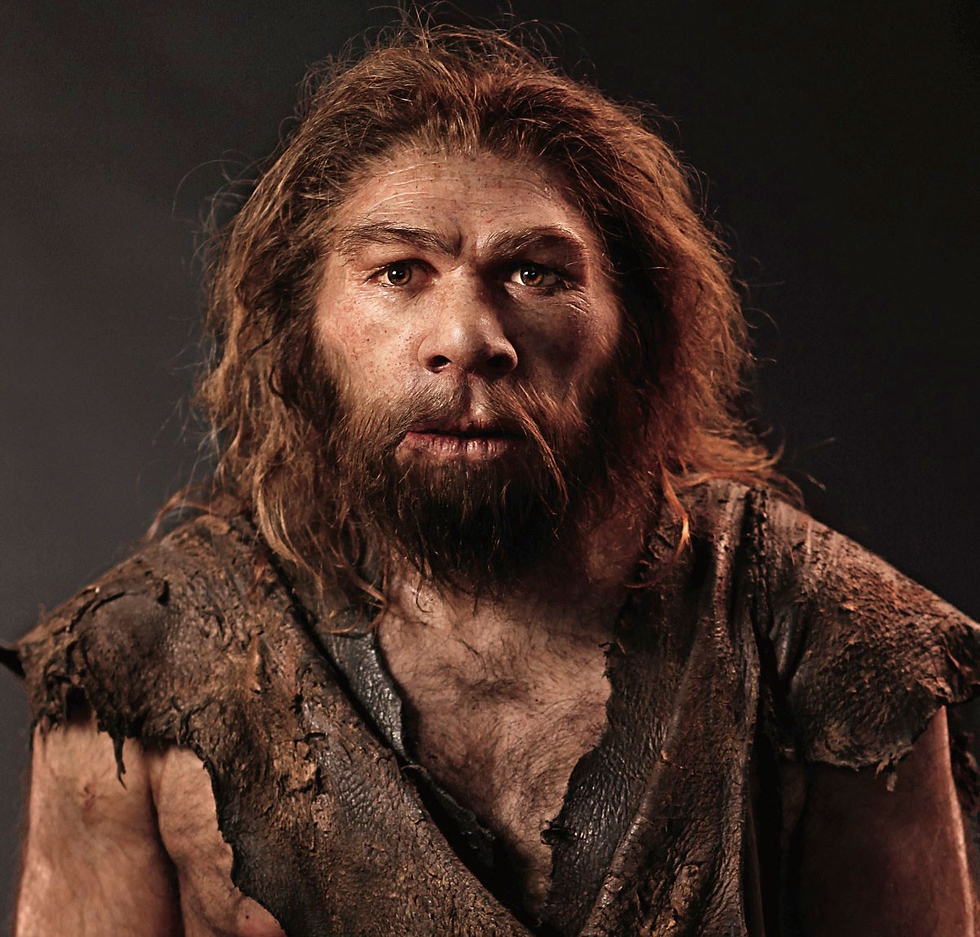
Neanderthals (Homo neanderthalensis) evolved in Europe and western Asia, adapting to cold climates with stocky bodies, large noses, and robust builds. They made sophisticated stone tools, controlled fire, buried their dead with ritual objects, and may have had language.
Their brain size was actually larger than that of modern humans. Genetic evidence shows interbreeding with modern humans; people of non-African descent carry approximately 1-2% Neanderthal DNA.


Denisovans are known only from a few fragments of bone and teeth from a Siberian cave and genetic material extracted from them. They represent a third distinct lineage that interbred with both Neanderthals and modern humans.
Anatomically Modern Humans (Homo sapiens) Emerge
The earliest fossil evidence for anatomically modern humans comes from:
Jebel Irhoud, Morocco: 315,000 years ago—facial features essentially modern though the braincase is more elongated
Omo Kibish, Ethiopia: Approximately 200,000 years ago—fully modern anatomy
Herto, Ethiopia: 160,000 years ago—transitional but clearly modern
The standard "Out of Africa" model holds that Homo sapiens evolved in Africa and began dispersing around 60,000-50,000 years ago, replacing all other hominin populations with little interbreeding. However, the picture has become more complex.
Evidence of modern humans in the Middle East from 120,000 years ago (Skhul and Qafzeh caves) suggests early, failed dispersals that were later replaced by Neanderthals before the final successful expansion.

Part II: Where the Narrative Fractures

The most significant theoretical divide in paleoanthropology is between two competing models for the origin of modern humans.
The Out of Africa Model (also called "Recent African Origin" or "Replacement") holds that:
Homo sapiens evolved only in Africa, between 200,000 and 100,000 years ago
These modern humans then spread across the globe, replacing existing hominin populations with little or no interbreeding
All living humans share a common ancestor from this African population
This model is supported by genetic evidence showing that African populations have the highest genetic diversity, consistent with a longer period of evolution on that continent.
The Multiregional Model holds that:
Homo sapiens evolved simultaneously across Africa, Europe, and Asia from local populations of Homo erectus
Continuous gene flow between these populations prevented speciation
Modern regional differences have deep antiquity, evolving over hundreds of thousands of years
Alan Thorne of the Australian National University, a leading multiregionalist, argued that human genes have flowed between continents through the entire span of human evolution, interrupted only by ice ages.

The Hybrid Models: The discovery of Neanderthal and Denisovan DNA in modern human genomes has forced a synthesis. The current consensus is that modern humans largely originated in Africa but interbred with local archaic populations as they expanded; producing a model sometimes called "Out of Africa with Assimilation" or "Leaky Replacement."
Christopher Stringer, a leading Out of Africa proponent, now acknowledges limited interbreeding while maintaining that Africa was the primary source of modern human anatomy.
The Hobbit Controversy: Species or Pathology?
The discovery in 2003 of a three-foot-tall hominin on the Indonesian island of Flores sparked one of the most intense debates in recent paleoanthropology. The fossils, dating to as recently as 12,000-18,000 years ago (with stone tools extending back 840,000 years), were identified by their discoverers as a new species: Homo floresiensis.

Interpretation 1: The discovery team argued that Homo floresiensis descended from an early population of Homo erectus that reached Flores nearly a million years ago and underwent island dwarfism, a well-known evolutionary process where large animals shrink on islands with limited resources.
The hobbits had:
A brain the size of a chimpanzee (about 400 cc)
A distinctive brain shape unlike any modern human
Primitive features in the wrist, pelvis, and teeth
Evidence of sophisticated tool use and fire control
In 2007, Dean Falk, a paleoneurologist at Florida State University, published a landmark analysis of the LB1 brain. Using virtual endocasts, detailed maps of imprints left on the ancient hominid's braincase, her team compared LB1's brain to nine microcephalic modern human brains and ten normal modern human brains.
The results were striking: LB1 shared many features with normal human brains but did not share any features with microcephalic brains. Falk characterized LB1 as having features that are the "antithesis" of microcephaly.
Falk's team found that certain shape features completely separate normal humans from microcephalics, and LB1 classifies with normal humans in these features. However, in other respects, the hobbit's brain is unique, consistent with its attribution to a new species.
Comparison of the frontal lobe, temporal lobe, and back of the brain showed the LB1 brain is nothing like a microcephalic's and is advanced in ways different from living humans.
Falk speculates that Homo floresiensis evolved greater intelligence by reorganizing the brain's hardwiring rather than evolving a larger brain, packing more intellectual power per gram of gray matter than modern humans. This would explain why the fossils were found with advanced tool kits and clear signs of fire use despite the small brain size.
Interpretation 2: Skeptics argued that the hobbit fossils belong to modern humans with microcephaly, a genetic disorder causing abnormally small brains. Proponents of this view pointed to the significant facial asymmetry and dental anomalies of LB1; signs of a developmental disorder.
They also noted that the average cranial capacity of modern Homo sapiens living on Flores is 1,270ml, while LB1 has a capacity of about 470ml, far smaller than expected even for a pygmy population.
Interpretation 3: A third interpretation, proposed by Gary Richards of UC Berkeley, argues that the hobbits were a population of small-brained but otherwise healthy human pygmies. Richards points to research showing that pygmies are shorter from birth, that small body size can produce secondary skeletal changes that appear "primitive," and that a smaller brain would require fewer calories; a survival advantage on resource-poor islands.
The debate is far from over. As one commentator noted, "The debate will not be definitively resolved until more contemporary specimens are found at Liang Bua."
If further skull specimens are discovered that share features with LB1, that will confirm the new species hypothesis. Regardless of which interpretation prevails, the Flores hobbits raise profound questions: If they were a separate species surviving until 12,000 years ago, humans shared the planet with at least one other hominin within historical memory. If they were modern humans, the plasticity of the human form is far greater than previously imagined.
The Toumaï Controversy: Ape, Ancestor, or Gorilla?
The 2001 discovery of Sahelanthropus tchadensis pushed the hominin fossil record back to 6-7 million years; close to the molecularly estimated divergence date for chimpanzees and humans. But what exactly was Toumaï?
The discoverers, led by Michel Brunet, argue it was a hominid (on the human side of the split) and a habitual biped. They point to characteristics it shares with other hominids known to be bipedal.
But other scientists have noted that the foramen magnum is positioned toward the back of the skull, as in apes, indicating the skull was held forward, not balanced on an erect body.
Brigitte Senut, one of the discoverers of Orrorin tugenensis, has made the most provocative counterclaim: Toumaï may be an early gorilla. This would place it on a completely different branch of the evolutionary tree, not ancestral to humans at all.
As Jim Foley notes on the talk.origins archive, "It is, I think, impossible to know how Toumaï is related to us until other fossils can be found from the same time period."

Part III: Alternative Theories and Suppressed Evidence
The Aquatic Ape Hypothesis proposes that human ancestors underwent a period of adaptation to semi-aquatic environments, which explains distinctive human features not found in other great apes.

The hypothesis was first formulated by German pathologist Max Westenhöfer in 1942, who discussed various human characteristics that could have derived from an aquatic past. As he stated: "The postulation of an aquatic mode of life during an early stage of human evolution is a tenable hypothesis, for which further inquiry may produce additional supporting evidence."
Independently, British marine biologist Alister Hardy had since 1930 hypothesized that humans may have had aquatic ancestors. On the advice of colleagues, he delayed presenting the hypothesis for approximately thirty years.
After he had become a respected academic and was knighted for contributions to marine biology, Hardy finally voiced his thoughts in a speech to the British Sub-Aqua Club on 5 March 1960. He later explained more fully in New Scientist:
"My thesis is that a branch of this primitive ape-stock was forced by competition from life in the trees to feed on the sea-shores and to hunt for food, shell fish, sea-urchins etc., in the shallow waters off the coast. I suppose that they were forced into the water just as we have seen happen in so many other groups of terrestrial animals. I am imagining this happening in the warmer parts of the world, in the tropical seas where Man could stand being in the water for relatively long periods, that is, several hours at a stretch."
The idea was generally ignored by the scientific community. Some interest came from geographer Carl Sauer, whose views on the role of the seashore in human evolution "stimulated tremendous progress in the study of coastal and aquatic adaptations" inside marine archaeology.
In 1967, the hypothesis was mentioned in The Naked Ape by zoologist Desmond Morris, who reduced Hardy's phrase "more aquatic ape-like ancestors" to the bare "aquatic ape," commenting that "despite its most appealing indirect evidence, the aquatic theory lacks solid support."
Elaine Morgan's Popularization: The hypothesis found its champion in Elaine Morgan, a scriptwriter who objected to the male image of the "mighty hunter" being presented in popular anthropological works. Her 1972 book The Descent of Woman became an international best-seller, a Book of the Month selection in the United States, and was translated into ten languages.
Part of its success was due to the growing women's liberation movement, as Morgan's work was inspired by a feminist critique of then-standard anthropological ideas.
Morgan wrote: "Waterside hypotheses of human evolution assert that selection from wading, swimming and diving and procurement of food from aquatic habitats have significantly affected the evolution of the lineage leading to Homo sapiens as distinct from that leading to Pan."
When her book aroused no interest in the academic community, she dropped the feminist polemic and wrote a series of books exploring the issues in more detail: The Aquatic Ape (1982), The Scars of Evolution (1990), The Descent of the Child (1994), and The Aquatic Ape Hypothesis (1997).
Key Arguments of the Hypothesis: Proponents point to several human features they argue are best explained by aquatic adaptation:
Hairlessness | Similar to aquatic mammals (whales, dolphins) that lose hair for hydrodynamics | Evolved for thermoregulation or parasite reduction
Subcutaneous Fat | Insulation in water, similar to aquatic mammals | Energy storage, sexual selection
Bipedalism | Evolved first for wading | Evolved for savannah walking
Voluntary Breath Control | Essential for diving | Related to speech development
Diving Reflex | Present in human infants and adults | Vestigial response
Tears and Eccrine Sweating | Salt excretion mechanisms | Thermoregulation
The diving reflex—bradycardia (slowed heart rate) and peripheral vasoconstriction when the face is immersed in cold water—is present in all humans but is strongest in aquatic mammals. It is also present in human infants up to six months old, who can instinctively hold their breath underwater.
Academic Reception: The AAH has received little attention from mainstream anthropologists and paleoanthropologists. It is not accepted as empirically supported by the scholarly community and has been met with significant skepticism.
In a 1997 critique, anthropologist John Langdon characterized the AAH as an "umbrella hypothesis," one that attempts to explain too many diverse traits as the result of a single selective pressure.
He argued that such hypotheses are difficult to disprove but also lack explanatory power, and that the AAH was no more powerful an explanation than the null hypothesis that human evolution is not particularly guided by interaction with bodies of water.
John Hawks, an anthropologist at the University of Wisconsin, wrote that it is fair to categorize the AAH as pseudoscience because of the social factors that inform it, particularly the personality-led nature of the hypothesis and the unscientific approach of its adherents.
Physical anthropologist Eugenie Scott has described the aquatic ape hypothesis as an instance of "crank anthropology" akin to other pseudoscientific ideas in anthropology such as alien-human interbreeding and Bigfoot.
In The Accidental Species: Misunderstandings of Human Evolution (2013), Nature editor Henry Gee remarked on how a seafood diet can aid in the development of the human brain.
He nevertheless criticized the AAH because "it's always a problem identifying features [such as body fat and hairlessness] that humans have now and inferring that they must have had some adaptive value in the past," and "it's notoriously hard to infer habits [such as swimming] from anatomical structures."
The 1987 Valkenburg Conference: A conference devoted to the subject was held at Valkenburg, Netherlands in 1987. Its 22 participants included academic proponents and opponents of the theory, headed by anthropologist Vernon Reynolds of Oxford University.
His summary conclusion was nuanced: "Overall, it will be clear that I do not think it would be correct to designate our early hominid ancestors as 'aquatic.' But at the same time there does seem to be evidence that not only did they take to water from time to time but that the water (and by this I mean inland lakes and rivers) was a habitat that provided enough extra food to count as an agency for selection."
Modern Waterside Hypotheses: More recent formulations have softened the claim, replacing "aquatic" with "waterside" to acknowledge that human ancestors may have exploited lakes, rivers, and coastlines without becoming fully aquatic. This more modest version has gained some acceptance, as coastal and riverside sites are increasingly recognized as important in human evolution.
Evolutionary biologist Carsten Niemitz proposed a "shore dweller" hypothesis of wading, though distancing himself from the AAH. He records 10 monkey and ape species, including chimpanzees and gorillas, that have been observed wading on two feet. Niemitz's hypothesis places the wading bipedalism of hominids as occurring in the late Miocene.
Paleoanthropologists Alice Roberts and Mark Maslin published a critique of the AAH, dismissing it as a distraction "from the emerging story of human evolution that is more interesting and complex," adding AAH has become "a theory of everything" that is simultaneously "too extravagant and too simple." They were responding to BBC radio documentaries on "The Waterside Ape" made by David Attenborough in 2016.
Elaine Morgan's Final Assessment: Elaine Morgan died in 2013, having advocated for the hypothesis for over forty years. She assumed that the total lack of response to her 1972 book from the academic community was due to the fact that she was an outsider: "The response I had not foreseen was total silence. But in respect of the aquatic theme that is what I got from them, and with few exceptions still get. That kind of silence is a virtually unbeatable strategy."
She removed the polemics and rewrote the scientific part, publishing it as The Aquatic Ape ten years later, but it did not gain more acceptance from scientists.
Forbidden Archeology: The Case for Extreme Human Antiquity
Forbidden Archeology: The Hidden History of the Human Race, published in 1993 by Michael A. Cremo and Richard L. Thompson, is a 914-page compendium of evidence that the authors claim has been suppressed by the scientific establishment.
Cremo identifies as a "Vedic archeologist," meaning his research is conducted within the framework of the Vedas; ancient Hindu scriptures that describe human existence spanning vast cycles of time.
The book was written in association with the Bhaktivedanta Institute, a branch of ISKCON (International Society for Krishna Consciousness, commonly known as the Hare Krishna movement) dedicated to reconciling Vedic/Puranic cosmology with science.
Cremo states that the book has "over 900 pages of well-documented evidence suggesting that modern man did not evolve from ape man, but instead has co-existed with apes for millions of years!"
Cremo and Thompson argue that:
Evidence for anatomically modern humans extends back millions of years, far beyond the accepted 200,000-year origin.
This evidence was systematically suppressed by a "knowledge filter" (confirmation bias) within the scientific community, particularly after the 1930s.
The Darwinian evolutionary framework is inadequate to explain human origins and is maintained more by ideology than evidence.
The authors combed through 19th-century and early 20th-century scientific literature, presenting detailed accounts of discoveries that were later ignored or dismissed.
These include:
Eoliths: Crudely worked stones found in Tertiary deposits (dating to before 2.6 million years ago), interpreted by early archaeologists as the earliest human tools. Later researchers dismissed them as naturally formed.
Calaveras Skull: A human skull reportedly found in a California gold mine beneath ancient lava flows, dated by some to the Pliocene. It was eventually declared a hoax.
Castenedolo Skeletons: Modern-appearing human skeletons found in Italy in the 1860s in Pliocene deposits. The finder, a respected geologist, reported them but could not prevent their dismissal.
Moab, Utah, footprints: Human-like footprints found in Cretaceous sandstone. Critics argued they were carvings or erosional features.
The book has attracted attention from mainstream scholars as well as Hindu creationists and paranormalists. Scholars of mainstream archaeology and paleoanthropology have described it as pseudoscience.
In a twenty-page review in Social Studies of Science, Jo Wodak and David Oldroyd describe the book's argument: Early paleoanthropologists interpreted much empirical information as evidence favoring the existence of human beings in the Tertiary period.
But starting around the 1930s, paleoanthropologists turned to the view that human being first evolved in the Pleistocene. The older evidence, Cremo and Thompson say, was never shown bad; it was just reinterpreted.
What Cremo and Thompson have done is "comb the early literature in great—indeed impressive—detail" and argue "that the old arguments were never satisfactorily disproved and should be reconsidered with open minds."
Colin Groves, an anthropologist at the Australian National University, notes that 19th-century finds were generally "found by accident and by amateurs," lacking proper documentation of crucial contextual information. Cremo and Thompson fail to take account of this, he says, and seem to want to accord equal value to all finds.
Groves also states that their discussion of radiometric dating fails to take account of the ongoing refinement of these methods. He concludes that the book is only "superficially scholarly."
Marylène Patou-Mathis, a paleontologist at the National Museum of Natural History in Paris, wrote in the French journal L'anthropologie that the book is "a provocative work that raises the problem of the influence of the dominant ideas of a time period on scientific research. These ideas can compel researchers to publish their analyses according to the conceptions permitted by the scientific community."
The evidence Cremo and Thompson bring forward, she wrote, "isn't always convincing (far from it)," but "the documentary richness of this work, more sociological than scientific, isn't to be overlooked."
Tim Murray, head of the archaeology department at La Trobe University in Melbourne, wrote in the British Journal for the History of Science: "This is a piece of 'Creation Science,' which, while not based on a need to present a Christian alternative, manifests many of the same types of argument," including accusing opponents of unscientifically trying to defend their biases, alleging they are acting conspiratorially, and explaining "the currently marginal position of your alternative as being the result of prejudice, conspiracy and manipulation rather than of any fault of the theory itself."
Kenneth L. Feder, an anthropologist at Central Connecticut State University, wrote in Geoarchaeology: "While decidedly antievolutionary in perspective, this work is not the ordinary variety of antievolutionism in form, content, or style. In distinction to the usual brand of such writing, the authors use original sources and the book is well written. Further, the overall tone of the work is far superior to that exhibited in ordinary creationist literature. Nonetheless, I suspect that creationism is at the root of the authors' argument, albeit of a sort not commonly seen before."
The Vedic-Puranic Framework: Cremo's underlying framework is explicitly Vedic (Puranic, to be more accurate). The ancient Sanskrit texts describe human existence within cycles of time (yugas) lasting millions of years. In this cosmology, humanity has existed for vast stretches of time, not just the few hundred thousand years accepted by mainstream science.
Reviewers have noted the doctrinal motivation. Murray wrote that "far from being a disinterested analysis," Forbidden Archeology "is designed to demolish the case for biological and chemical evolution and to advance the case for a Vedic alternative."
Wodak and Oldroyd wrote that although the authors don't directly come out with a Vedic alternative, "the evidence is construed in the silent light of Vedic metaphysics."
In 2003, Cremo, writing alone, published Human Devolution, which details the Vedic paradigm. "The reasons for its late appearance," Cremo wrote in the Introduction, "have more to do with the time it takes to research and write such a book rather than any desire to avoid a detailed discussion of a Vedic alternative to Darwinism."
The Conspiracy Question: Several reviewers say that Forbidden Archeology proposes a "conspiracy theory" and argue that science in general and paleoanthropology in particular are more open than the book's authors would have us believe: "[Dissenting] voices in the literature evidences the fact that there is not some conspiratorial 'cover-up' in palaeoanthropology."
The book is more than 900 pages long, and reviewers have noted that the authors "go in for overkill in terms of swamping the reader with detail; a strategy which may persuade readers who lack access to the relevant sources and have no special expertise in paleoanthropology, and are therefore likely to assume that such a thorough exposition of the historical terrain must signify accuracy and equity."
The Paluxy River "Man Tracks": Humans and Dinosaurs Together
In the Paluxy River near Glen Rose, Texas, dinosaur tracks are preserved in Cretaceous limestone; evidence of creatures that lived roughly 100 million years ago. For decades, creationists have claimed that alongside these dinosaur tracks are human footprints, proving that humans and dinosaurs coexisted, contradicting evolutionary timelines.
The Reverend Carl Baugh, founder of the Creation Evidences Museum near Glen Rose (established 1984), has been the most prominent promoter of these claims. In 1982, Baugh began excavating at the Paluxy and claimed to have found human footprints in association with dinosaur tracks.
He told the Dallas Observer in 1996: "Leading evolutionary scholars have admitted that if we could prove that man and dinosaur existed contemporaneously, that would destroy the entire theory of evolution. I have that evidence."

The Investigations: Dr. Ronnie Hastings, a physicist and educator from Waxahachie, Texas, conducted extensive fieldwork at the Paluxy sites from 1982 onward, visiting them more than forty times over two years. His detailed ethnography and analysis, published in Creation/Evolution Journal, documented the creationist excavations and their claims.
Key findings from Hastings' investigations:
The 1982 McFall Site Excavations: Baugh claimed to have discovered "twenty-four Tyrannosaurus prints" and a variable number of "new manprints." During this excavation, Baugh claimed to have discovered not only Cretaceous human footprints, but also a human handprint, a footprint made by a human slipping in the mud, saber-toothed tiger tracks, and unfossilized wood embedded in the same limestone that contained the dinosaur tracks.
Quality of Excavation: Hastings observed that the excavation was compromised by its single-minded interest in discovering human traces. He overheard one volunteer express concern that he may have altered the shape of the track he was clearing; Baugh replied "If it is a dinosaur print, don't worry about it."
Shifting Claims: When Hastings pointed out discrepancies in Baugh's claims about the locations of key discoveries, Baugh "merely insisted that his latest placement was right." He did not produce horizontal plan maps or vertical profiles.
The "Best" Evidence: When Baugh showed Hastings a photograph of his "best" human footprint, freshly exposed, it turned out to be a photograph not of a human footprint but of Thalassinoides trace fossils; casts of burrows made by a shrimp-like animal in Cretaceous times. Parallel burrow cast ridges had clearly been mistaken for toes.
The Hammer: Baugh kept a cigar box containing a hammer that had been found near London, Texas, embedded in Ordovician (roughly 500 million-year-old) rock. Baugh believed it proved that "Ordovician" is Iron Age. Hastings noted that the hammer was actually a nineteenth-century miner's mallet that had fallen into a crack in Ordovician rock and was subsequently sealed in a concretion formed from minerals leaching out of the bedrock.
The Colorations Controversy: A crucial development came with the discovery that color distinctions on the rock surface clearly revealed the "mantracks" to be dinosaurian. These colorations, also called discolorations, showed that elongate dinosaur tracks, where the dinosaur's foot slipped or eroded, could appear human-like.
In October 1985, cores were taken at the Taylor site to gain insight into how the colorations formed. John Morris of the Institute for Creation Research, who had previously championed the mantrack claims, subsequently published an article suggesting the colorations might be surface phenomena, perhaps the result of painting or staining.
He proposed the mechanism of using hydrochloric acid and iron sulfate but "failed to point out what a task it would be to paint the well over 120 colorations now documented."
The 1986 Retraction: By 1986, the creationist position had shifted significantly. John Morris, in an Impact article, admitted that the "best" of the creationist "mantracks" were dinosaurian. However, he qualified this to keep alive hopes for hard-line "mantrack" enthusiasts, suggesting that the colorations might be only surface phenomena.
Glen Kuban, a researcher who worked extensively on the Taylor site, published a summary of his findings in Origins Research, the publication of the creationist organization Students for Origins Research. This effectively debunked past creationist mantrack claims from within the creationist press.
The Wider Impact: By August 1986, Kuban and Hastings planned to obtain cores to determine whether the colorations were surface-only or subsurface, thereby settling the matter of possible painting or staining.
The genuine nature of the colorations had been evident to researchers, with small surface chips showing no unexpected geochemical features and indicating material other than limestone below the track surface.
Paleontologists at the first annual International Conference on Dinosaur Tracks in Albuquerque, New Mexico, reviewed worldwide dinosaur trail data to find a previously little-noticed frequency of elongate tracks consistent with dinosaurs "dropping down" on their "heels."
Particularly devastating to Morris's suggestion of fraud were discoveries of dinosaur tracks with colorations in both Colorado and New Mexico shortly after the conference.
Part IV: Global Context and Parallel Developments

The 7-million-year span of human evolution encompasses dramatic climatic shifts:
Late Miocene (11-5 mya): Global cooling, expansion of C4 grasslands across Africa. The forests that had dominated for millions of years retreated, creating patchy woodland-savannah mosaics.
Pliocene (5-2.6 mya): Continued cooling; formation of the Isthmus of Panama (3 mya) altered ocean currents, intensifying ice ages.
Pleistocene (2.6 mya - 11,700 ya): The Ice Ages. Repeated glaciation cycles in the Northern Hemisphere caused sea levels to drop by up to 120 meters, exposing land bridges that allowed hominin migrations.
The Younger Dryas (12,800-11,600 ya): A sudden return to glacial conditions that may have been triggered by a comet impact.

Co-Evolution of Other Species
The hominin lineage did not evolve in isolation. African megafauna like elephants, giraffes, antelopes, and predators evolved alongside hominins. As hominins moved out of Africa, they encountered mammoths, woolly rhinos, cave bears, and saber-toothed cats.
Stone Tool Traditions:
Oldowan | 2.6-1.7 mya | Simple flakes, cores, choppers | Homo habilis, early Homo erectus
Acheulean | 1.7 mya - 200 kya | Bifacial handaxes, cleavers | Homo erectus, Homo heidelbergensis
Mousterian | 300-40 kya | Prepared-core technique | Neanderthals, early Homo sapiens
Upper Paleolithic | 50-10 kya | Blade technology, bone tools, art | Homo sapiens
The persistence of the Acheulean handaxe tradition for over 1.5 million years with minimal change is one of the great puzzles of human evolution.
Part V: Synthesis – The Logic of Evidence

When stripped of interpretation, the physical evidence for human evolution consists of:
Fossils: A few thousand hominin specimens, mostly fragmentary, representing perhaps 10,000 individuals across 7 million years; a vanishingly small sample.
Stone tools: Millions of artifacts, but often lacking direct association with specific hominin species.
Genetic data: Strong evidence for common ancestry with other apes, and for interbreeding between modern humans and archaic populations.
Geological and climatic data: Well-established context for hominin evolution.
The gaps in this record are enormous. We do not have a continuous sequence of ancestors; we have isolated snapshots that must be connected by inference.
The Interpretation Problem
Every fossil find is interpreted within a theoretical framework. The same skull can be:
A direct human ancestor
A side branch that went extinct
A pathological modern human
A distinct species requiring reclassification
The debates over Homo floresiensis (separate species vs. pathological pygmies), Sahelanthropus (bipedal ancestor vs. gorilla), and Out of Africa vs. Multiregional demonstrate that interpretation is not simply reading the evidence but constructing a narrative that is often treated as settled fact rather than the most prominent theory.
The Question of Paradigm
Thomas Kuhn's concept of paradigm shifts suggests that science does not progress by accumulating facts but by working within a paradigm until anomalies accumulate to the point where the paradigm breaks down.
Paleoanthropology may be in such a period. The old "Out of Africa" replacement model has been replaced by a more complex picture involving interbreeding. The savannah hypothesis has been complicated by evidence that early hominins lived in woodlands.
The question is whether the anomalies will eventually force a more radical shift; one that accepts the possibility of extreme human antiquity, or aquatic adaptation, or some other currently marginalized idea.
Conclusion: The Unfinished Story
The story of human emergence is not settled. It is a narrative built from fragments, interpreted through frameworks that shift with each new discovery. The mainstream account, 7 million years of evolution from ape-like ancestors to Homo sapiens, is coherent and supported by substantial evidence. But it is also incomplete, with gaps that alternative theories attempt to fill.
As we move on to examining the next stage of evolution, we will trace the story from the emergence of anatomically modern humans to the migrations that populated every continent. There, too, we will find debates, anomalies, and alternative theories. The pattern is the same: a field where the evidence is fragmentary, the interpretations are contested, and the stakes are nothing less than understanding who we are and where we came from.
Appendix: Key Hominin Species (Species | Time Range | Key Features | Location)
Sahelanthropus tchadensis | 7-6 mya | Possible biped? Controversial; foramen magnum position suggests ape-like posture | Chad
Orrorin tugenensis | 6 mya | Femur suggests bipedalism | Kenya
Ardipithecus ramidus | 4.4 mya | Bipedal but climbed trees, small brain | Ethiopia
Australopithecus afarensis | 3.9-2.9 mya | Bipedal, small brain (Lucy) | East Africa
Homo habilis | 2.4-1.7 mya | First stone tools, larger brain | East Africa
Homo erectus | 1.8 mya - 140 kya | Longest-lived hominin, Acheulean tools | Africa, Asia
Homo floresiensis | 100-12 kya? | 3-foot tall, tiny brain, advanced tools | Indonesia
Homo sapiens | 300 kya - present | Modern anatomy, symbolic culture | Global

## Bibliography
- Brunet M., Guy F., Pilbeam D., et al. (2002). "A new hominid from the upper Miocene of Chad, central Africa." *Nature*, 418:145-51.
- Cremo, Michael A. & Thompson, Richard L. (1993). *Forbidden Archeology: The Hidden History of the Human Race*. Bhaktivedanta Institute.
- Falk, Dean, et al. (2007). "Brain shape in human microcephalics and *Homo floresiensis*." *Proceedings of the National Academy of Sciences*.
- Feder, Kenneth L. (1994). Review of *Forbidden Archeology*. *Geoarchaeology*.
- Foley, Robert & Lahr, Marta Mirazón (2014). "The Role of 'the Aquatic' in Human Evolution." *Evolutionary Anthropology*, 23:56-59.
- Groves, Colin. Review of *Forbidden Archeology*.
- Hardy, Alister (1960). "Was Man More Aquatic in the Past?" *New Scientist*, 17 March 1960.
- Hastings, Ronnie (1985, 1986). "Tracking Those Incredible Creationists." *Creation/Evolution Journal*.
- Hawks, John. "Why Anthropologists Don't Accept the Aquatic Ape Theory."
- Langdon, John (1997). "Umbrella Hypotheses and Parsimony in Human Evolution." *Journal of Human Evolution*.
- Morgan, Elaine (1972). *The Descent of Woman*.
- Morgan, Elaine (2008). *The Aquatic Ape Hypothesis*.
- Murray, Tim. Review of *Forbidden Archeology*. *British Journal for the History of Science*.
- Niemitz, Carsten (2010). "The evolution of the upright posture and gait—a review and a new synthesis." *Naturwissenschaften*, 97(3):241-263.
- Patou-Mathis, Marylène. Review of *Forbidden Archeology*. *L'anthropologie*.
- Stringer, Christopher (2002). "Modern human origins: progress and prospects." *Philosophical Transactions of the Royal Society*.
- Wodak, Jo & Oldroyd, David. Review of *Forbidden Archeology*. *Social Studies of Science*.
---
*This whitepaper is presented as a compilation of mainstream and alternative sources. The reader is invited to evaluate the evidence and arguments independently.*


Comments