
.png)

Elite Crimes: Marc Dutroux & The Missing Children
- A. Royden D'Souza

- Apr 7
- 19 min read
Updated: Apr 25
On a warm June afternoon in 1995, two eight‑year‑old girls, Julie Lejeune and Mélissa Russo, were playing near their homes in the Belgian town of Grâce‑Hollogne. They never came home. Their disappearance was the kind of tragedy that happens everywhere, the kind that fades into a cold case file.
But this was not a normal disappearance. And what would follow over the next year would not only claim more lives but would tear open the foundations of Belgian society, expose a justice system so broken that it could not find two children starving in a basement while their captor sat in jail, and give rise to questions that three decades later remain unanswered.
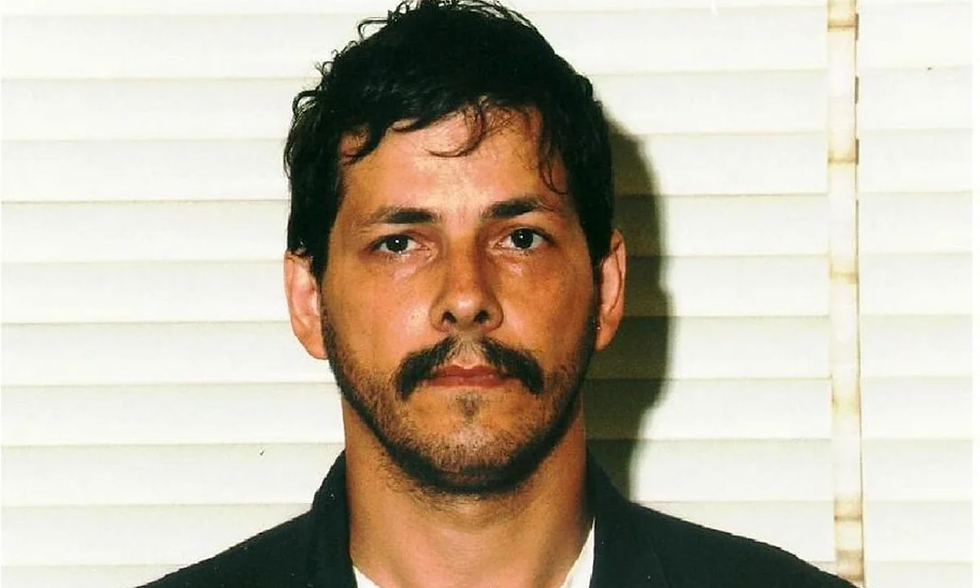
By the time the nightmare ended, six children had been abducted. Four were dead. Two survived, found chained in a dungeon beneath a house that police had searched while the children were still alive inside. The man responsible, a convicted child rapist who had been released from prison early, was caught only because a witness remembered part of a license plate.
The public expected horror. What they did not expect was that the investigation would point to something far larger than one depraved individual. Witnesses came forward with stories of organized sex parties attended by judges, politicians, and businessmen. They named names. They described a network that procured children for the powerful, filmed the abuse for blackmail, and protected itself through connections that reached into the highest offices.
Then the judge leading the investigation was dismissed. The special police team was disbanded. The key witness was publicly discredited. And the official narrative settled on a conclusion that half the country never accepted: Marc Dutroux was an isolated predator, and the conspiracy theories were just hysteria.
This paper does not pretend to know the full truth. But it traces the full continuity of the affair; the abductions, the failures, the testimony that was heard and then silenced, the parliamentary inquiry, the trial, and the lingering questions. It places the Dutroux case in its broader context: a Belgium shaken not only by this scandal but by the dioxin crisis, a nation where public trust in institutions cratered and never fully recovered.
The White March of October 1996 saw 300,000 Belgians take to the streets in silence, demanding justice. They walked in white to mourn the children and to protest a system that had failed to protect them. Thirty years later, the walkers have aged, the children are still gone, and the questions remain. Was Dutroux alone? Or did his crimes reveal something darker—a network that still protects itself, a truth that was buried along with the bodies of Julie, Mélissa, An, and Eefje? This is the story of that question.
Part I: The Marc Dutroux Timeline of Horror

On June 24, 1995, two eight-year-old girls, Julie Lejeune and Mélissa Russo, vanished from the streets of Grâce-Hollogne, a suburb of Liège. They were playing near their homes when Marc Dutroux, a 39-year-old former electrician with a criminal record for child rape, abducted them.
The girls were taken to Dutroux's house in Marcinelle, near Charleroi, where he had constructed a concealed dungeon in the basement; a cell measuring just 2.15 meters long, less than a meter wide, and 1.64 meters high, hidden behind a massive concrete door disguised as a shelf.
Two months later, on August 22, 1995, An Marchal, 17, and Eefje Lambrecks, 19, disappeared while on a camping trip in Ostend. They were abducted by Dutroux and his accomplice Michel Lelièvre, a heroin addict who was paid with drugs for his participation.
Since the dungeon in Marcinelle was already occupied by Julie and Mélissa, the two older girls were chained to a bed in another room of Dutroux's house.
In late 1995, Dutroux came under investigation for his involvement in a stolen car trafficking operation. He was taken into custody on December 6, 1995, and remained imprisoned until March 20, 1996. During this period, Dutroux's wife, Michelle Martin, was left in charge of the house in Marcinelle. She had been instructed to feed the two eight-year-old girls imprisoned in the dungeon. She did not.
When Dutroux was released from custody on March 20, 1996, he returned to find Julie and Mélissa dead from starvation. Rather than report their deaths, he buried their bodies in the garden of another property he owned in Sars-la-Buissière.
The exact fate of An and Eefje would later be discovered; they had been killed several weeks after their abduction, their bodies buried under a shack on property Dutroux owned in Jumet.
The Rescue of Sabine and Laetitia
On May 28, 1996, Sabine Dardenne, age 12, was abducted while cycling to school near Tournai. She was taken by Dutroux and Lelièvre and imprisoned in the same dungeon in Marcinelle where Julie and Mélissa had been held.
She would remain there for 80 days, repeatedly raped and told by Dutroux that she was being held by a gang that planned to kill her.
The final abduction occurred on August 9, 1996. Laetitia Delhez, age 14, was walking home from a public swimming pool in Bertrix when she was forced into a car by Dutroux and Lelièvre.
This kidnapping proved to be Dutroux's undoing. An eyewitness to the abduction remembered part of the license plate number, which matched Dutroux's vehicle.
Arrest and Discovery
On August 13, 1996, Marc Dutroux, his wife Michelle Martin, and Michel Lelièvre were arrested. Initially, a search of Dutroux's properties yielded nothing. But after two days of interrogation, both Dutroux and Lelièvre confessed.
On August 15, 1996, Dutroux led investigators to the concealed dungeon in his Marcinelle basement. Inside, they found Sabine Dardenne and Laetitia Delhez; alive. The two girls had been imprisoned together, sharing a cell barely larger than a coffin.
Two days later, on August 17, Dutroux led police to his property in Sars-la-Buissière. There, buried in the garden, investigators found the bodies of Julie Lejeune and Mélissa Russo, along with the remains of Bernard Weinstein, a former accomplice whom Dutroux had drugged, buried alive, and then cemented over.
Dutroux claimed he had killed Weinstein because the man had failed to feed the two girls during Dutroux's incarceration in late 1995.
On September 3, 1996, the bodies of An Marchal and Eefje Lambrecks were exhumed from under a shack in Jumet, on another property connected to Dutroux.
The Victims:
Julie Lejeune | 8 | June 24, 1995 | Died of starvation while Dutroux was in custody
Mélissa Russo | 8 | June 24, 1995 | Died of starvation while Dutroux was in custody
An Marchal | 17 | August 22, 1995 | Murdered; body found September 1996
Eefje Lambrecks | 19 | August 22, 1995 | Murdered; body found September 1996
Sabine Dardenne | 12 | May 28, 1996 | Rescued alive, August 15, 1996
Laetitia Delhez | 14 | August 9, 1996 | Rescued alive, August 15, 1996

Part II: How Dutroux Was Not Stopped
Marc Dutroux was not an unknown offender. In February 1986, he and Michelle Martin were arrested for abducting and raping five young girls. In April 1989, Dutroux was sentenced to 13 years in prison; Martin received five years. But Dutroux was released on parole in April 1992, after serving only three years; a fact that would later provoke public outrage.
Upon his release, Dutroux managed to convince a psychiatrist that he was disabled, securing a government pension. He also obtained sleeping pills and sedatives from a doctor; the same drugs he would later use to subdue his victims.

The Letter from Dutroux's Own Mother: In 1995, Dutroux's mother wrote to the authorities warning that her son was holding girls captive in his houses. This letter was ignored. She had previously written to the prison director at the time of Dutroux's parole, also warning that he remained dangerous.
The Missed Search of December 1995
The most devastating failure occurred in December 1995. Dutroux was in custody on car theft charges, and police searched his Marcinelle home on December 13 and again on December 19.
During these searches, Julie Lejeune and Mélissa Russo were still alive in the concealed dungeon beneath the house. But the search was conducted in relation to car theft, not kidnapping. Police had no dogs, no specialized equipment, and no reason to suspect the presence of a hidden cell. The girls were not found.
When Dutroux was released from custody in March 1996, he returned to find the two eight-year-olds dead from starvation.
What the Parliamentary Commission Found
A 17-month investigation by a parliamentary commission into the Dutroux affair documented a litany of errors:
Poor communication between police and judicial authorities across different regions of Belgium
Failure to share information between jurisdictions
Disrespectful treatment of victims' families
Multiple ignored clues that could have led to Dutroux earlier
The commission's report would later describe a system in which "communications between police and the judiciary had been poor. Judicial authorities in different parts of the country did not cooperate with one another."
Part III: Dutroux as Part of Something Larger

In the immediate aftermath of Dutroux's arrest, the investigating judge in charge of the case, Jean-Marc Connerotte, made an appeal for victims to come forward. He offered them anonymity. What followed would become one of the most controversial chapters in the affair.
Multiple women came forward, designated only by codenames—"X1," "X2," and so on. Their testimony suggested that Dutroux was not an isolated predator but part of a much larger paedophile network, one that involved influential figures in Belgian society.
The most prominent of these witnesses, X1, was later revealed to be a woman named Régina Louf. Her testimony was explosive.
The Testimony of Régina Louf
Régina Louf claimed that as a teenager, she had been forced to participate in organized sex parties attended by members of the Belgian elite.
She described a highly organized operation:
Clients included judges, a prominent politician, and a banker
The parties involved not only sex but also sadism, torture, and murder
The events were filmed secretly for purposes of blackmail
At least two unsolved murders of teenage girls matched crimes she described
Dutroux, at the time, was a young man who brought drugs to the parties and was permitted to use the girls himself as a reward
Louf named names. She described one of the organizers as a man she knew as "Mich"—Jean-Michel Nihoul, a property surveyor and fraudster who was already known to police. Nihoul would later be charged as a co-defendant in the Dutroux case.
The Dismissal of Judge Connerotte
On October 14, 1996, Judge Jean-Marc Connerotte was removed from the case. The official reason: he had attended a fundraising dinner organized by the families of the victims; an action deemed a conflict of interest.
The dismissal sparked fury. Many saw it as a deliberate attempt to derail an investigation that was getting too close to powerful people. Judge Connerotte himself later testified that he had needed "bullet-proof vehicles and armed guards" to protect himself against shadowy figures determined to stop the truth from emerging.
"Rarely has so much energy been spent opposing an inquiry," he said. He believed organized crime had taken control of the case.
The Disbanding of the X-Files Team
After Connerotte's dismissal, a new investigating magistrate was appointed. The special police team that had been interviewing the X-witnesses was disbanded. A new team was assigned to "re-read" the testimony of Régina Louf and the other witnesses.
The press was told that the previous team had manipulated Louf's evidence to make her seem credible; a charge the original investigators have consistently denied and which has never been substantiated.
The Campaign Against the X-Witnesses
Louf's name was leaked to the press. The state-owned television network RTBF began a campaign designed to prove that Dutroux was an "isolated pervert" acting alone, that Nihoul was innocent, and that Louf was a fantasist.
Today, in the official narrative, Régina Louf's reputation is destroyed. The Prosecutor General of Liège has declared her mentally unstable, despite independent psychological evaluations to the contrary. She will not be called as a witness in any future proceedings. Her testimony has been declared worthless.
What the X-Files Witnesses Described
The X-witnesses collectively described:
A network that procured young girls for wealthy and powerful clients
Sex parties held in private locations across Belgium
The production of child pornography for purposes of blackmail
At least two murders of teenage girls that matched unsolved cases
Protection from prosecution extended to those with connections
One of the X-witnesses later worked for the Belgian police's child protection unit; a fact that further complicates the official dismissal of their testimony.
Public Opinion: Persistent Belief in a Network
Despite the official dismissal of the network theory, the Belgian public never fully accepted the "isolated predator" narrative. A poll conducted in February 2004, just before Dutroux's trial began, found that 68 percent of Belgians believed Dutroux and his accomplices had protection from "people in high places."
Sixty-six percent said Dutroux should face the death penalty; a punishment that had been abolished in Belgium just a month before his arrest.
A French commentator observed in 2012 that if a poll were conducted on the subject, "the majority of the population would estimate that the theory of the 'paedophile network' is closer to the truth than the thesis of the 'isolated predator'."
The author noted that the parents of Mélissa and Julie "are still convinced today that their children were victims of a vast paedophile network involving the highest figures of the kingdom."

Part IV: The Institutional Crisis
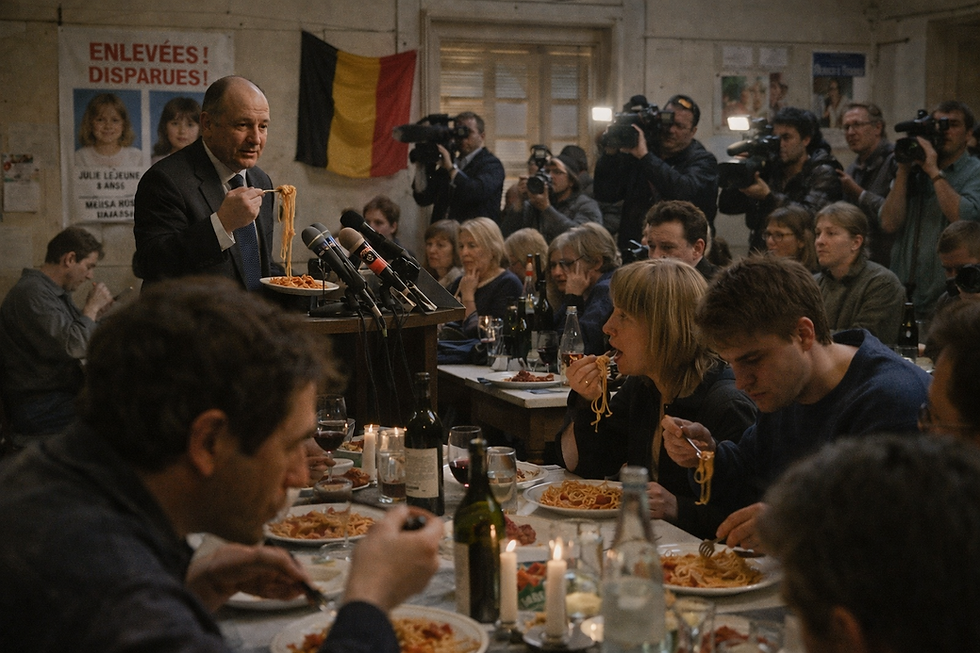
Judge Connerotte's dismissal for attending a fundraising dinner might seem trivial. But the "spaghetti dinner" became a symbol.
The families of the victims had organized the meal to raise money for their search for the missing girls; a search that official authorities had botched repeatedly.
For Connerotte to be removed for showing solidarity with the families struck many as a sign that the system was protecting itself rather than serving justice.
The White March: Belgium's Largest Protest
On October 20, 1996, between 275,000 and 350,000 people marched in silence through Brussels. It was the largest demonstration in Belgium since the Second World War.
Dressed in white, the color of mourning and of protest, Belgians from across the country demanded reform of the police and justice system.
The march was not merely about Dutroux. It was about a system that had failed: police who heard children's cries during a search and did nothing, judges who released a convicted child rapist early, investigators who ignored warnings, and authorities who seemed more interested in protecting their own than in protecting children.
The Parliamentary Commission: Promises of Reform
A parliamentary commission began its work on October 25, 1996, under the mandate to investigate "Dutroux, Nihoul and associates."
Officially named the "Commission d'enquête parlementaire sur la manière dont la police et la justice ont traité l'affaire Dutroux-F,"(Parliamentary Inquiry Commission on the way the police and justice handled the Dutroux case), it delivered a damning indictment of the Belgian state.
Its findings, released in a final report in 1997 and 1998, went far beyond the simple incompetence of individuals, pointing to a systemic and institutional failure that allowed a convicted criminal to operate with near-impunity.
A State That Failed to Protect: The commission concluded that the root cause of the disaster was not just a few bad actors, but a deeply flawed system. Its primary findings identified several critical structural failures:
A Dysfunctional Police Landscape: The report highlighted the "inefficiency" created by the existence of multiple, competing police forces (the gendarmerie, municipal police, and judicial police) with overlapping and ill-defined jurisdictions. This led to chaos, lost information, and a lack of accountability, described as "petty bureaucratic fiefdoms under factional political influence."
An Overburdened and Unaccountable Judiciary: The commission found an investigating magistracy that was overworked, under-resourced, and lacked adequate professional oversight. It called for better training, a more professional promotion system, and clearer lines of command to ensure accountability.
Political Responsibility: The report directly blamed former Justice Minister Melchior Wathelet for the controversial early release of Marc Dutroux from prison in 1992, a decision that allowed him to continue his crimes.
Indirect Protection: The commission's most controversial and closely watched finding concerned the existence of a wider network protecting Dutroux.
It ultimately rejected the theory that Dutroux was directly shielded by senior police officers or high-level political figures.
However, it concluded that the cumulative effect of the systemic failures, like the "negligence, amateurism and incompetence," provided indirect protection to him. This meant the system was so broken that it allowed his criminal enterprise to flourish without any single individual or group needing to actively shield him.
The commission's hearings laid bare a shocking litany of specific police failures:
Ignoring Evidence: Police had visited Dutroux's house while two girls were being held captive in a secret basement dungeon but failed to investigate properly.
Losing the Suspect: In one of the most emblematic failures, a convicted child murderer, who was being transported by police, was allowed to escape and remain at large for months.
Lack of Urgency: There was a profound failure to treat the disappearances of children with the priority and urgency they required.
The Shadow of a Wider Pedophile Network: While the commission concluded there was no high-level political conspiracy, its investigation did uncover evidence suggesting the existence of a wider pedophile network.
This centered on the figure of Michel Nihoul, a businessman arrested as an accomplice. The commission found that Nihoul's network appeared to have connections to influential circles, which could explain some of the bizarre failures in the investigation.
It highlighted that witnesses had come forward with information about the sexual abuse of children by Nihoul and his acquaintances. The suspicion of such a network, and the possibility of official protection for some of its members, remained the most explosive and unresolved aspect of the case, with the commission noting that further investigation was needed.
Individual Accountability: The report was not just about systems; it named names. It identified approximately 30 specific police and judicial officials it held responsible for the investigative failures. These individuals were cited for their specific errors, negligence, or poor judgment that collectively led to the disastrous outcome.
Promises of Reform: The commission's report was met with immediate political action. Parliament voted unanimously to accept its findings, and Prime Minister Jean-Luc Dehaene promised a complete overhaul of the judicial and police system.
The government committed to following the commission's recommendations, which included a plan to restructure the police and improve the magistracy. The "White March" of over 300,000 citizens in Brussels had created immense political pressure for change.
Despite these promises, many of the commission's most profound recommendations were never fully implemented. The deep-seated political, linguistic, and institutional interests that had created the fragmented system proved resilient.
The structural reforms were watered down, and many of the officials identified as being personally responsible faced no significant disciplinary action, leading to widespread public disillusionment. As one victim's father put it, "The traditional parties in power have once again managed to protect themselves."
The commission's work was a powerful exposure of a broken system, but its promise of deep, structural reform remains largely unfulfilled. Its findings were damning. But in the end, the commission's proposed reforms were not fully implemented.
As one academic study concluded, "In the end, no political casualties ensued from the inquiry that was undertaken, nor could the parties agree on the wide-ranging reform package proposed by the inquiry. With no catharsis resulting from the initial inquiry, the sense of crisis unleashed by the Dutroux affair deepened into an institutional crisis challenging the foundations of not only the justice system and to some extent even the entire Belgian political order."
The 1998 Courthouse Escape: Humiliation Compounded
On April 23, 1998, Marc Dutroux escaped from the Palace of Justice in Neufchâteau. He overpowered an officer guarding him and fled. He was recaptured within hours, but the damage was done.
The escape triggered immediate resignations: Stefaan De Clerck, the Minister of Justice, and Johan Vande Lanotte, the Minister of the Interior, both stepped down. The head of the gendarmerie, General Willy Deridder, followed.
For the Belgian public, the escape confirmed their worst suspicions: a system so broken that a man accused of murdering children could simply walk out of a courthouse.
Part V: Seven Years in Pre-Trial Detention

Marc Dutroux was arrested in August 1996. His trial did not begin until March 1, 2004. For nearly eight years, Dutroux remained in pre-trial detention; a delay that his lawyers would later use to argue for his release on human rights grounds.
The delays were caused by the sheer complexity of the case, the multiple investigations, the parliamentary commission, the recusal of judges, and the endless procedural battles. For the victims' families, each delay was another wound.
The Trial of the Century
The trial opened in Arlon, a small town in southern Belgium, under unprecedented security. More than 300 police were deployed around the Palace of Justice.
Four defendants stood in the dock:
Marc Dutroux, 47, charged with murder, rape, abduction, and confinement
Michelle Martin, 44, his estranged wife, charged with complicity
Michel Lelièvre, 32, the heroin addict who helped with abductions
Michel Nihoul, 62, the property surveyer accused of organizing sex parties
The trial lasted nearly four months. The court heard from more than 450 witnesses. The surviving victims testified.
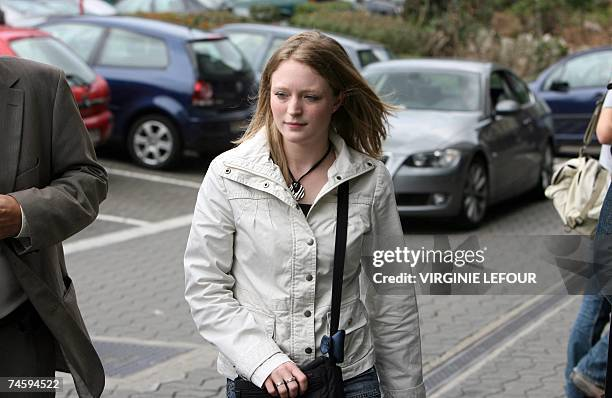
Sabine Dardenne, now 20 years old, had waited eight years for this moment. "I want to look Dutroux in the eyes and show him that despite everything he made me suffer, I have not gone mad," she said before the trial.
She described how Dutroux had told her she was being held by a gang, that her parents would not pay the ransom, that she would be killed. He let her write letters to her family, then read them and never posted them.
Laetitia Delhez testified that Dutroux laughed at her pain while he raped her.
The Verdict
On June 22, 2004, the jury returned its verdict:
Marc Dutroux: sentenced to life imprisonment
Michelle Martin: 30 years in prison
Michel Lelièvre: 25 years in prison
Michel Nihoul: 5 years for drug offenses and participation in a criminal organization; but acquitted of the most serious charges related to the children
The Nihoul verdict was deeply controversial. Many believed he had been protected. But the evidence linking him directly to the abductions was never established to the court's satisfaction.
Part VI: Belgium's Year of Crises

The Dutroux affair did not occur in isolation. In 1999, Belgium was rocked by the dioxin crisis; the discovery that animal feed had been contaminated with cancer-causing chemicals, leading to a global recall of Belgian poultry, eggs, pork, and dairy products.
The scandal exposed failures in the public health inspection system and led to the resignation of the government.
As one academic analysis noted, the Dutroux affair and the dioxin scandal together constituted "catalytic crises" that challenged "the foundations of not only the justice system and to some extent even the entire Belgian political order."
Both revealed systemic failures, both led to official inquiries that promised reform, and both left the public feeling betrayed.
The James Bulger Case: A Parallel Trauma
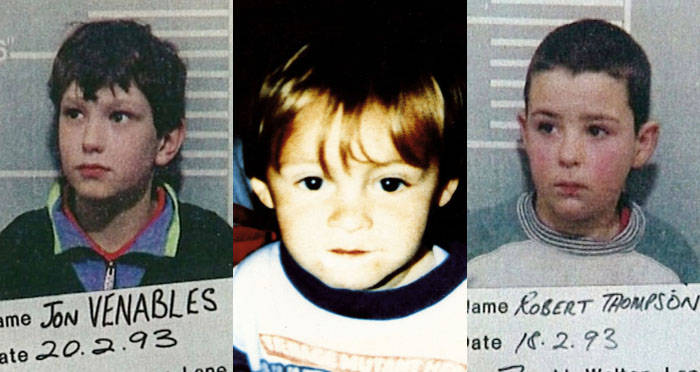
Across the Channel, Britain had experienced its own national trauma in 1993 with the murder of James Bulger, a two-year-old abducted and killed by two ten-year-old boys in Liverpool. The case, like Dutroux's, exposed failures of the justice system, sparked national outrage, and led to demands for reform.
But there was a difference: in the Bulger case, the killers were caught, tried, and convicted. There was no lingering suspicion of a network, no conspiracy theories about powerful figures protecting the perpetrators. The Bulger case was tragic but ultimately resolved. The Dutroux case, by contrast, left open wounds.
The Van Hees Murders: Unsolved and Connected?
One of Régina Louf's claims was that she had witnessed the murder of two teenage girls whose cases had never been solved.
Investigators were able to corroborate details of her account that were not publicly known. But the investigation into those claims was halted when the X-files team was disbanded.
Whether these murders remain unsolved, or were quietly closed, is part of the unanswered questions that continue to haunt the case.
Part VII: The Ongoing Fight for Release
In 2025, Belgium marked 30 years since the abduction of Julie and Mélissa. Marc Dutroux remains behind bars. But his lawyer, Bruno Dayez, continues to seek a psychiatrist willing to declare him no longer dangerous.
Dayez has called Dutroux a "toothless circus lion" resigned to prison life, while admitting his client remains psychologically unstable. Given the enduring public outrage, any prospect of Dutroux's release remains, by Dayez's own admission, "virtually nil."
Michelle Martin was granted conditional release in 2012 after serving 16 years of her 30-year sentence.
The Reform of Belgian Policing
The Dutroux affair led to sweeping reforms in Belgium's police and justice system, including the creation of Child Focus, a national center for missing children. Police and judicial structures were reorganized to improve coordination between jurisdictions.
But for the families of the victims, the reforms came too late. Carine and Gino Russo, parents of Mélissa, withdrew from the prosecution in 2002, saying they had lost faith in the investigators. "There are just too many things which have been done badly or not at all," their lawyer said.
The Unanswered Questions
More than 30 years after the first abductions, fundamental questions remain:
Was Dutroux part of a larger network, or was he an isolated predator?
Why were leads pointing to influential figures not pursued?
Why was Judge Connerotte removed from the case when he was making progress?
Why were the X-witnesses discredited rather than fully investigated?
Did Jean-Michel Nihoul and others have protection from the highest levels?
The official answer, after years of investigation, is that Dutroux was an isolated pervert and that the network theories were a "hysterical" distraction. But for a majority of Belgians, that answer has never been satisfying.
As the BBC's Olenka Frenkiel concluded in her 2002 investigation: "Far from being investigated, leads pointing to a network seem rather to have been blocked or buried."
The Symbolic Weight of the White March
The White March of October 1996 remains the largest protest in Belgian history. It was a moment when hundreds of thousands of citizens declared that the system had failed and demanded accountability.
In the decades since, the promises of that march have been only partially fulfilled. Belgium's police and justice systems were reformed. Child Focus was created. But the deeper suspicion, that powerful people were protected, that the full truth was never uncovered, has never fully dissipated.
Part VIII: The Wounds That Never Closed
The Marc Dutroux affair is more than a criminal case. It is a story about institutional failure, about the limits of justice, and about the persistent human need to believe that the suffering of innocent children could not have been meaningless.
For the families of Julie, Mélissa, An, and Eefje, no trial, no verdict, and no reform can undo what was done. For the survivors, Sabine and Laetitia, the ordeal will never fully leave them.
For the Belgian public, the affair became a mirror held up to their institutions; and the reflection was not flattering. The police who heard children crying and did nothing. The judges who released a convicted child rapist early. The investigators who ignored warnings. The system that seemed more concerned with its own reputation than with justice.
And for those who believe in the network theory, the affair remains an open wound. If powerful people protected Dutroux, if evidence was buried, if witnesses were discredited to protect the establishment, then the justice system did not merely fail; it actively conspired.
The parliamentary commission, the trial, the reforms; none of it has fully answered the question that Régina Louf and the other X-witnesses raised: Was Dutroux alone, or was he part of something larger?
In 2025, as Belgium marked thirty years since Julie and Mélissa disappeared, the question remained unanswered. Marc Dutroux is in prison, unlikely ever to be released. Michelle Martin is free. Michel Lelièvre was granted parole. Michel Nihoul died in 2019, having served only five years for offenses unrelated to the children.
And Régina Louf, whose testimony might have changed everything, lives in obscurity; her reputation destroyed, her evidence dismissed, her name still associated with what the authorities called a fantasy.
But 68 percent of Belgians believed there was a network. That number has never been explained away.
Appendix: Key Dates in the Dutroux Affair
February 1986 | Dutroux and Martin arrested for abduction and rape of five girls
April 1989 | Dutroux sentenced to 13 years; Martin to 5 years
April 1992 | Dutroux released on parole after serving 3 years
June 24, 1995 | Julie Lejeune and Mélissa Russo abducted
August 22, 1995 | An Marchal and Eefje Lambrecks abducted
December 6, 1995 | Dutroux arrested on car theft charges
March 20, 1996 | Dutroux released; returns to find Julie and Mélissa dead
May 28, 1996 | Sabine Dardenne abducted
August 9, 1996 | Laetitia Delhez abducted
August 13, 1996 | Dutroux, Martin, Lelièvre arrested
August 15, 1996 | Sabine and Laetitia rescued from dungeon
August 17, 1996 | Bodies of Julie, Mélissa, and Weinstein found
September 3, 1996 | Bodies of An and Eefje found
October 14, 1996 | Judge Connerotte removed from case
October 20, 1996 | White March: 300,000 protest in Brussels
April 23, 1998 | Dutroux escapes from courthouse; recaptured; ministers resign
March 1, 2004 | Trial begins in Arlon
June 22, 2004 | Dutroux sentenced to life imprisonment
August 28, 2012 | Michelle Martin granted conditional release
June 24, 2025 | 30th anniversary of Julie and Mélissa's abduction

References
La Libre Belgique (2002) | French-language chronology of the Dutroux affair
Australian National University (2008) | Academic analysis of Dutroux affair as catalytic crisis
Al Jazeera (2004) | Coverage of trial and public opinion poll data
Belga News Agency (2025) | 30th anniversary coverage; current status of Dutroux
Virgule.lu (2012) | Comprehensive date chronology of the affair
BBC News (2002) | Olenka Frenkiel investigation: "Belgium's X-Files"
BBC News (2002) | Coverage of parents withdrawing from prosecution
Wikipedia (multiple) | Factual timeline and victim information
Causeur (2012) | Analysis of network theory persistence in Belgian public opinion
*Readers are encouraged to consult primary sources, including parliamentary commission reports and trial transcripts, for further detail.*

Comments