
.png)

Esoterica: The Evolution of Philosophy
- A. Royden D'Souza

- Mar 15
- 27 min read
Updated: Mar 19
Philosophy is, at its simplest, the science of figuring out what things are truly worth. It's the tool humans use to measure values—to determine what is more important than what else.
When you stop and ask yourself, "What really matters in life?" you are doing philosophy. When you decide that kindness is better than cruelty, or that truth is better than lies, you are making a philosophical judgment.

The ancient Romans, through the writer Cicero, defined philosophy as "the science of things divine and human, and of the causes in which they are contained." In plain language: philosophy tries to understand everything—both the visible world we live in and the invisible forces that might lie behind it. It asks not only "what is this?" but "why is it here?" and "what does it mean?"
Over the centuries, thinkers have broken philosophy down into several main branches, each asking its own kind of questions:
Metaphysics: What is real? What exists beyond what we can see and touch? (Questions about God, the universe, the nature of being itself)
Logic: How do we think correctly? What makes an argument valid or invalid?
Ethics: What is good? How should we live? What do we owe to others?
Psychology: What is the mind? How do we think, feel, and perceive?
Epistemology: What is knowledge? Can we ever be certain of anything?
Aesthetics: What is beauty? Why do some things move us while others leave us cold?
Plato, one of history's greatest philosophers, called philosophy "the greatest good ever imparted by Divinity to man."
But by the twentieth century, philosophy had become, in the words of one observer, "a ponderous and complicated structure of arbitrary and irreconcilable notions."
In other words, philosophers had gotten so good at arguing with each other that they'd lost sight of the big questions.
Sir Francis Bacon, the great English thinker, put it this way: "A little philosophy inclineth man's mind to atheism; but depth in philosophy bringeth men's minds about to religion." A small taste of philosophy might make you doubt everything, but a deep engagement with it leads you back to the mysteries that religion tries to address.
An ancient philosopher once said something that captures the spirit of the whole enterprise: "He who has not even a knowledge of common things is a brute among men. He who has an accurate knowledge of human concerns alone is a man among brutes.
But he who knows all that can be known by intellectual energy, is a God among men." In other words, the quality of your thinking determines the quality of your existence.
The Birth of Greek Philosophy: The First Great Thinkers

The story of Western philosophy as we know it begins in ancient Greece, around the sixth century BC, with a group of men who were called the Sophoi—"the wise."
According to the historian Diogenes Laertius, there were seven of them, and their names have echoed through the ages: Thales, Solon, Chilon, Pittacus, Bias, Cleobulus, and Periander.
They were the first to step back from mythology and ask rational questions about the nature of the world.
The Ionic School: The First Scientists

Thales of Miletus (who died around 546 BC) is often called the first philosopher. He looked at the world and asked: what is everything made of? His answer: water. He imagined the earth floating on a vast ocean, and earthquakes as disturbances in that primordial sea.
Was he right? Not remotely, by modern standards. But he was asking the right kind of question—the kind that doesn't appeal to gods and myths but to natural causes. This was revolutionary.
Thales founded what became known as the Ionic school, and his successors each had their own theories:
Anaximander: The universe comes from "the Infinite"—a boundless, undefined something that generates all things
Anaximenes: Air is the first element; even the gods themselves are made of it
Anaxagoras: Mind (nous) is the organizing principle of the universe—an infinite, self-moving intelligence that brings order out of chaos
Archelaus: There are two principles: mind (which is immaterial) and air (which is material); everything comes from their interaction
Heraclitus (536-470 BC) deserves special mention. He taught that everything is in constant flux—you cannot step into the same river twice, because both you and the river have changed. Fire, he said, was the primary element, and the world would eventually be consumed by fire, only to be reborn again. Change, for Heraclitus, was not something to be feared but the very nature of reality.
The Pythagorean School: Numbers as the Key to Everything
While the Ionians were looking at the physical world, a different kind of thinker was emerging in southern Italy. Pythagoras of Samos (580-500 BC) founded a school that was part philosophy, part religion, and part secret society.

He taught that numbers are the ultimate reality—that beneath the surface chaos of the world lies a mathematical harmony that can be understood through study and contemplation.
The Pythagoreans made groundbreaking discoveries in mathematics, music, and astronomy. They discovered that musical notes could be expressed as mathematical ratios—that the harmony of a plucked string was not magic but math.
From this, they extrapolated that the entire cosmos was a kind of musical instrument, producing the "music of the spheres," a celestial harmony too perfect for human ears to hear.
Pythagoras demanded that his students master four subjects: arithmetic, music, astronomy, and geometry. He also insisted on a discipline of silence—new students spent years learning to listen before they were allowed to speak. This emphasis on silence as a prerequisite to wisdom would echo through the mystery schools and secret societies for centuries to come.
The Pythagoreans also believed in transmigration—the idea that souls pass from one body to another, living many lives. Empedocles, one of their followers, wrote: "A boy I was, then did a maid become; a plant, bird, fish, and in the vast sea swum."
The Eleatic School: The Power of Logic

Xenophanes (570-480 BC) attacked the old myths of Homer and Hesiod, who had portrayed the gods as petty, jealous, and all too human. God, Xenophanes declared, is "one and incorporeal, in no way resembling man; He is all sight and all hearing, but breathes not; He is all things, the mind and wisdom, not generate but eternal, impassible, immutable, and rational." This was a radical departure—a move toward a more abstract, philosophical conception of divinity.
His student Parmenides took logic to its extreme. The senses, he argued, are unreliable. Reason alone can uncover truth. And reason tells us that change is impossible—that reality is one, eternal, and unchanging. What we perceive as change is mere illusion. This position set up a debate that would run through all of Western philosophy: should we trust our senses or our reason?

Zeno of Elea defended Parmenides' views with famous paradoxes. He argued that motion was impossible, because to move from point A to point B, you must first cover half the distance, then half the remaining distance, and so on to infinity—so you can never actually arrive. These paradoxes have intrigued thinkers for over two thousand years.
The Atomists: The Birth of Materialism

Leucippus and his student Democritus proposed a radically different view: the universe consists of nothing but atoms and void. Atoms are tiny, indestructible particles moving through empty space. Everything that exists—including the human soul—is made of atoms. When we die, our atoms disperse. There is no afterlife, no spiritual realm, only the eternal dance of material particles.
This was materialism in its purest form. Democritus believed that the soul was composed of particularly fine, spherical atoms, and that thought was simply the motion of these atoms. His philosophy left no room for gods, purpose, or destiny—only atoms and their inevitable motions.

The Great Age of Athenian Philosophy

Athenian philosophy emerged from a unique convergence of forces. After the Persian Wars, Athens grew wealthy and confident, its radical democracy creating urgent demand for education. Traveling Sophists flocked to the city, bringing diverse intellectual traditions—Ionian physics, Italian metaphysics, Sicilian rhetoric—all colliding in a single place.
This ferment generated both brilliance and tension. Socrates' relentless questioning provoked conservative backlash, leading to his execution in 399 BC. His death catalyzed Plato to found the Academy, the first institution dedicated to systematic philosophical inquiry. Aristotle continued this legacy at the Lyceum.
Thus Athenian philosophy was born from the marriage of democratic politics, imported wisdom, and the institutionalization of thought—a combination that shaped Western intellect for two millennia.
Socrates: The Gadfly of Athens

Socrates (469-399 BC) wrote nothing himself. Everything we know about him comes from his students, particularly Plato. What made Socrates different was his method: he didn't lecture or proclaim truths; he asked questions. Through relentless questioning, he forced people to examine their own beliefs and realize how little they actually knew.
Socrates believed that the soul exists before the body and brings with it all knowledge, which is forgotten at birth. The purpose of philosophy is to recover that knowledge through questioning—to "recollect" what the soul already knows. This theory, known as reminiscence, would profoundly influence Plato and the entire Platonic tradition.
His method had two parts: irony (pretending ignorance to draw out others' assumptions) and inductive reasoning (building general principles from specific examples). Through these tools, he sought to help others discover truth for themselves.
Socrates' uncompromising commitment to truth led to his death. Accused of corrupting the youth and introducing strange gods, he was condemned to drink hemlock. His calm acceptance of death, as described in Plato's Phaedo, became a model of philosophical courage.
He conceived three principles of all things: God (the source), matter (the stuff of the world), and ideas (the patterns in God's mind). Of God he said: "What He is I know not; what He is not I know." This humility before the divine would echo through the mystical traditions.
Plato: The Architect of Idealism

Plato (427-347 BC) was Socrates' greatest student and one of the most influential thinkers in human history. His real name was Aristocles—"Plato" was a nickname meaning "broad," probably referring to his shoulders. According to legend, when his father brought him to study with Socrates, the old philosopher dreamed of a white swan, an omen that his new student would become one of the world's illumined minds.
Plato traveled widely after Socrates' death, studying with the Pythagoreans in Italy and being initiated by Egyptian priests into the mysteries of Hermetic philosophy. These influences shaped his thinking profoundly.
At the heart of Plato's philosophy is the Theory of Forms. The world we see and touch, he argued, is not the real world. It is a shadow, a poor copy of a higher reality—a realm of perfect, eternal Forms or Ideas. The chair you sit on is a imperfect copy of the Form of Chair, which exists eternally in a non-physical realm. The beauty you see in a sunset is a pale reflection of the Form of Beauty itself.
This is not mysticism in the modern sense but rigorous philosophy. Plato reasoned that if we can recognize things as "beautiful" or "just" or "circular," there must be some standard of beauty, justice, or circularity against which we measure them. That standard cannot come from the imperfect world; it must exist in a perfect, unchanging realm.
Plato divided reality into three orders:
That which moves but is unmoved—the Divine Permanence, the source of all motion
That which is self-moved—the immortal souls and gods
That which is moved by another—mortal beings and physical things

His famous Allegory of the Cave illustrates his philosophy. Imagine prisoners chained in a cave, facing a wall. Behind them, a fire casts shadows of passing objects on the wall. The prisoners believe the shadows are reality.
If one prisoner is freed and turns to see the fire and the objects, he realizes his mistake. If he leaves the cave entirely and sees the sun, he understands the true source of light. The journey from the cave to the sunlight is the journey of philosophy—from illusion to reality, from opinion to knowledge.

Plato's school, the Academy, had these words inscribed at its entrance: "Let none ignorant of geometry enter here." Mathematics was the necessary preparation for philosophy because it trained the mind to think about abstract, non-physical realities.
His influence on esoteric traditions cannot be overstated. The idea of a higher, invisible reality accessible only through intellect and initiation would become central to Hermeticism, Gnosticism, and the mystery schools. The Neo-Platonists would later systematize these teachings into a complete mystical philosophy.
Aristotle: The Master of Those Who Know

Aristotle (384-322 BC) was Plato's greatest student, though he would develop a very different philosophy. Plato recognized his genius, calling him "the mind of the school." When Aristotle was absent from lectures, Plato would say, "The intellect is not here."
Where Plato looked upward to eternal Forms, Aristotle looked outward to the natural world. He was the first great biologist, classifying hundreds of species and studying their structures. His philosophy is based on careful observation and logical analysis—what we would now call the scientific method.
Aristotle divided philosophy into two parts:
Practical philosophy: ethics and politics—how to live well
Theoretical philosophy: physics (the study of nature) and logic (the study of thought)
At the highest level was metaphysics—the study of being itself, of first causes and ultimate principles. God, for Aristotle, is the "First Mover"—the ultimate cause of all motion, itself unmoved, pure thought thinking itself.
The soul, Aristotle taught, has three faculties:
Nutritive (shared with plants)
Sensitive (shared with animals)
Intellective (unique to humans)
Where Plato believed in a priori knowledge (knowledge we're born with), Aristotle emphasized a posteriori knowledge (knowledge gained through experience). The mind at birth is a blank slate (tabula rasa), and all knowledge comes through the senses.

Aristotle tutored Alexander the Great, teaching him that if he hadn't done a good deed, he hadn't reigned that day. His influence spread across the ancient world and, through Arabic scholars, would later ignite the intellectual revival of medieval Europe.
The Hellenistic Schools: Finding Peace in a Changing World

After Alexander's conquests, the Greek world expanded and changed. Old certainties crumbled. New schools of philosophy emerged, focused less on cosmic speculation and more on how to live well in turbulent times.
The Cynics: Rejecting Everything

The Cynics, founded by Antisthenes (444-365 BC), took individualism to its extreme. They rejected all social conventions, all possessions, all comforts. They lived in barrels, ate scraps, and mocked anyone who pursued wealth or status. Their philosophy was simple: the fewer your needs, the closer you are to the gods, who need nothing.
Diogenes of Sinope is the most famous Cynic. He lived in a large tub in Athens and carried a lantern in daylight, claiming to be looking for an honest man. When Alexander the Great visited him and offered to grant any wish, Diogenes reportedly replied: "Stand out of my sunlight." The Cynics believed that virtue was the only good and that society was the enemy of virtue.
The Cyrenaics: The Pursuit of Pleasure

Aristippus of Cyrene (435-356 BC) took the opposite approach. He taught that pleasure—especially physical pleasure—is the highest good. The purpose of life is to maximize pleasure and minimize pain.
This philosophy, known as hedonism, was more sophisticated than it sounds. Aristippus argued that the wise person pursues pleasure intelligently, avoiding excess that leads to pain later.
Socrates, who had tried to reform the young Aristippus, failed utterly. The student was consistent in principle and practice: he lived exactly as he taught.
The Stoics: Accepting Fate

Zeno of Citium (340-265 BC) founded the Stoic school, which would become one of the most influential philosophies in history. The Stoics taught that the universe is governed by rational laws; by Logos, a divine reason permeating all things. Our job is not to fight these laws but to understand them and align our will with them.
The Stoic ideal is apathy; not in the modern sense of not caring, but in the original sense of not being ruled by passions. The wise person remains calm in the face of both pleasure and pain, recognizing that external events are not within our control. Only our judgments and choices are our own.
The Stoics were pantheists; they believed God and the universe were identical. The world itself is divine, and everything happens according to its nature. To complain about events is to complain about God.

Epictetus, a former slave, and Marcus Aurelius, a Roman emperor, are the most famous Stoic writers. Their works have comforted readers for two thousand years. When one listener spat in Diogenes' face during a lecture on anger, the philosopher responded: "I am not angry, but am in doubt whether I ought to be so or not."
The Epicureans: The Pursuit of Tranquil Pleasure

Epicurus of Samos (341-270 BC) founded a school that, like the Cyrenaics, made pleasure the highest good, but defined pleasure very differently. For Epicurus, the greatest pleasure was the absence of pain and disturbance. A simple life, free from fear, surrounded by friends; this was true happiness.
The Epicureans were materialists, following Democritus's atomic theory. The soul, like everything else, is made of atoms that disperse at death. Therefore, we need not fear death: "When we exist, death is not; when death exists, we are not." Nor need we fear the gods, who take no interest in human affairs.
The four canons of Epicurean philosophy are:
1. The senses are never deceived, they report what they report
2. Opinion builds on sense and can be true or false
3. Opinion supported by sense is true
4. Opinion contradicted by sense is false

The Mystery Schools and the Esoteric Turn

As the old Greek city-states declined and the Roman Empire rose, philosophy took a new direction. The emphasis shifted from public discourse to private salvation, from logic to mysticism, from the outer world to the inner.
The Neo-Pythagoreans: Reviving Ancient Wisdom

In the first century AD, a revival of Pythagoreanism occurred in Alexandria. Apollonius of Tyana and Moderatus of Gades led a movement that blended Pythagorean number-mysticism with Platonic metaphysics and ascetic practices. They were seen as miracle-workers and holy men, bridging the gap between philosophy and religion.
The Neo-Pythagoreans emphasized the mystery of numbers and the importance of a pure life. They may have preserved teachings from the original Pythagorean school that were otherwise lost.
The Neo-Platonists: The Flowering of Esoteric Philosophy

Neo-Platonism was the final great flowering of pagan philosophy, and it would profoundly influence Christianity, Islam, and the entire Western esoteric tradition. Its founder was Plotinus (AD 204-269), though he was preceded by Ammonius Saccas, about whom we know frustratingly little.
Plotinus taught that reality is a series of emanations from a single source, which he called the One. The One is beyond being, beyond thought, beyond description—utterly simple and perfect. From it overflows Mind (Nous), which contains all the Forms or Ideas. From Mind overflows Soul, which animates the material world. And from Soul overflows Matter, the lowest level of reality.
The goal of philosophy is to reverse this process, to rise from matter to Soul, from Soul to Mind, and ultimately to union with the One. This is not achieved through reasoning alone but through a kind of mystical contemplation, an ecstatic ascent that Plotinus himself experienced several times.

His student Porphyry preserved and systematized his teachings. Iamblichus added elaborate theurgical practices; rituals designed to invoke the gods and assist the soul's ascent. Proclus wrote massive commentaries that synthesized the entire Platonic tradition.

Neo-Platonism was the esoteric philosophy par excellence. It taught that behind the visible world lies an invisible reality accessible through initiation and contemplation. It preserved the teachings of the ancient Mysteries; those secret schools into which nearly all the great philosophers had been initiated. When the physical body of paganism collapsed, Neo-Platonism preserved its soul.
The Emperor Julian (called "the Apostate" by Christians) tried to restore paganism using Neo-Platonic philosophy. He failed (at least on a popular level), but his writings show how deeply this mystical Platonism had penetrated the late Roman world.
Gnosticism: Christianity Through an Esoteric Lens

Gnosticism emerged in the first century AD, blending Christian ideas with Greek and Persian metaphysics. The Gnostics taught that the material world was not created by the true God but by a lesser, flawed being called the Demiurge (often identified with the God of the Old Testament). Within each human is a divine spark, trapped in matter, that can be awakened through gnosis—secret knowledge.

Christ, for the Gnostics, was not a savior who died for sins but a revealer who brought the knowledge necessary for escape from the material prison. His mission was to awaken the divine spark, not to atone for transgressions.
The Church Fathers, particularly St. Irenaeus, attacked Gnosticism as heresy. But Gnostic ideas would persist, resurfacing in medieval mysticism, Renaissance Hermeticism, and modern conspiracy theories about hidden knowledge and secret masters.

The Christian Pivot: Philosophy Becomes Theology
With Christianity's rise, the relationship between faith and reason underwent a profound transformation. Early Church Fathers faced a dilemma: how to defend their revealed religion against sophisticated pagan philosophy while also articulating Christian doctrine in terms intellectually credible to the Greco-Roman world.
They borrowed freely from Plato and the Stoics, reinterpreting classical wisdom through the lens of scripture. This synthesis—faith seeking understanding—produced the Patristic era, where philosophy became handmaiden to theology.
The climax came with St. Augustine, whose fusion of Platonism and Christianity would dominate Western thought for a thousand years, setting the stage for medieval Scholasticism.

The Patristic Period: Faith Seeks Understanding
With the triumph of Christianity, philosophy entered a new phase. The early Church Fathers, known as the Patristics, had to defend their faith against pagan intellectuals while also articulating Christian doctrine in philosophical terms.
The ante-Nicene period (before the Council of Nicaea in 325 AD) was largely defensive. Writers like Justin Martyr and Clement of Alexandria argued that Christianity was the true philosophy, that the best of Greek thought pointed toward Christ. They borrowed freely from Plato and the Stoics while rejecting what contradicted revelation.

The post-Nicene period was more constructive. Thinkers like Athanasius and Gregory of Nyssa developed Christian theology using Platonic concepts. St. Augustine (354-430 AD) and his synthesis of Platonism and Christianity—Augustinianism—would dominate Western thought for a thousand years.
Augustine taught that man is a special creation, the pinnacle of the universe, for whose benefit all things were made. The church and its dogmas are absolutely authoritative; outside them, there is no salvation. This position gave the church immense power, which it would wield throughout the Middle Ages.
The Scholastics: Reason in Service to Faith

After the dark ages, philosophy revived in medieval Europe through the Scholastics. Their project was to reconcile Christian faith with the newly rediscovered philosophy of Aristotle, transmitted through Arabic scholars like Avicenna and Averroes.
The greatest Scholastic was St. Thomas Aquinas (1225-1274), whose Thomism became the official philosophy of the Catholic Church. Aquinas argued that faith and reason are not opposed but complementary. Reason can prove the existence of God and establish moral principles; faith reveals truths beyond reason's reach, like the Trinity and the Incarnation.
His rival, Duns Scotus, emphasized the primacy of the will over the intellect—a position known as Voluntarism. For Scotus, God's will is absolutely free; what is good is good because God wills it, not because it conforms to some independent standard.
By the late Middle Ages, Scholasticism had degenerated into empty word-games, with philosophers arguing endlessly about trivial distinctions. Sir Francis Bacon would later mock them as "wordmongers" who picked the words of Aristotle so clean that nothing but bones remained.
The Modern Era: Philosophy Breaks Free

The Modern Era shattered philosophy's thousand-year marriage to theology. Beginning with the Renaissance's rediscovery of classical thought and accelerating through the Scientific Revolution, thinkers increasingly trusted observation over revelation and reason over authority.
Francis Bacon's inductive method and Descartes' radical doubt cleared away inherited assumptions, rebuilding knowledge on new foundations. Galileo's telescope revealed a universe no longer centered on humanity, while Newton's laws suggested a cosmos running by mechanical principles.
Philosophy no longer served as handmaiden to faith but sought its own path—through rationalism, empiricism, idealism, and materialism—asking fundamental questions without appealing to divine revelation. The modern mind had come of age.
The Scientific Revolution

Francis Bacon (1561-1626) led the charge against Scholasticism. He proposed a new method: induction. Instead of starting with general principles and deducing specifics (the Scholastic way), we should start with observations and build up to general principles. This is the foundation of modern science.
Thomas Hobbes (1588-1679), who served as Bacon's secretary, took materialism to its logical conclusion. Matter is the only reality; thought is a mathematical process; understanding is perceiving the relationship between words and the things they represent.
The Rationalists

On the European continent, philosophers emphasized reason over experience. René Descartes (1596-1650) began with radical doubt, questioning everything he could possibly doubt, until he arrived at one indubitable truth: "I think, therefore I am." From this foundation, he rebuilt knowledge, proving the existence of God and the external world through logic alone.
Baruch Spinoza (1632-1677) took rationalism to its extreme. God, he argued, is identical with the universe—an absolutely self-existent substance with infinite attributes. The human mind is one mode of God's thought; the human body is one mode of God's extension. Through reason, we can rise above illusion and find eternal peace in union with the divine. Spinoza was accused of atheism, but his vision was more like pantheism—God is everything, and everything is God.
Gottfried Wilhelm von Leibnitz (1646-1716) proposed that the universe consists of infinite monads—immaterial, indivisible units of force or consciousness. Each monad reflects the entire universe from its own perspective. God is the supreme Monad; human souls are awakened monads; rocks and plants are sleeping monads. Everything is alive, conscious, and connected.
The Empiricists

In Britain, a different tradition emphasized experience over reason. John Locke (1632-1704) argued that the mind at birth is a blank slate (tabula rasa); all knowledge comes through the senses. George Berkeley (1685-1753) took empiricism to a strange conclusion: if all we know are our perceptions, then things only exist when perceived. The world is kept in existence by being perceived by God.
David Hume (1711-1776) pushed empiricism to skepticism. Causation, he argued, is not something we observe but something we project onto events. We see one thing follow another and assume a necessary connection, but we never actually observe the connection. This skeptical attack would awaken Immanuel Kant from his "dogmatic slumber."
Kant: The Copernican Revolution

Immanuel Kant (1724-1804) attempted to rescue philosophy from Hume's skepticism. His "Copernican revolution" was this: instead of assuming that our knowledge must conform to objects, perhaps objects must conform to our knowledge. The mind is not a passive receiver of sensations but an active organizer. It brings to experience certain categories—time, space, causality, quantity, quality—without which experience would be impossible.
We can never know things as they are in themselves (noumena); we only know things as they appear to us (phenomena). This leaves room for faith: we cannot prove God, freedom, or immortality scientifically, but neither can we disprove them. Morality requires us to postulate them.
The German Idealists

Kant's successors tried to overcome his limitations. Johann Gottlieb Fichte (1762-1814) argued that the self is the ultimate reality—the known is simply the contents of the knower's consciousness. Friedrich Wilhelm Joseph von Schelling (1775-1854) saw the Absolute as the identity of subject and object, mind and nature.
Georg Wilhelm Friedrich Hegel (1770-1831) created the most ambitious system of all. Reality, he argued, is a process of dialectical development. Every idea (thesis) generates its opposite (antithesis), and their conflict produces a higher synthesis. This process continues until the Absolute comes to full self-knowledge. God is not a static being but an eternal process of becoming.
The Pessimists
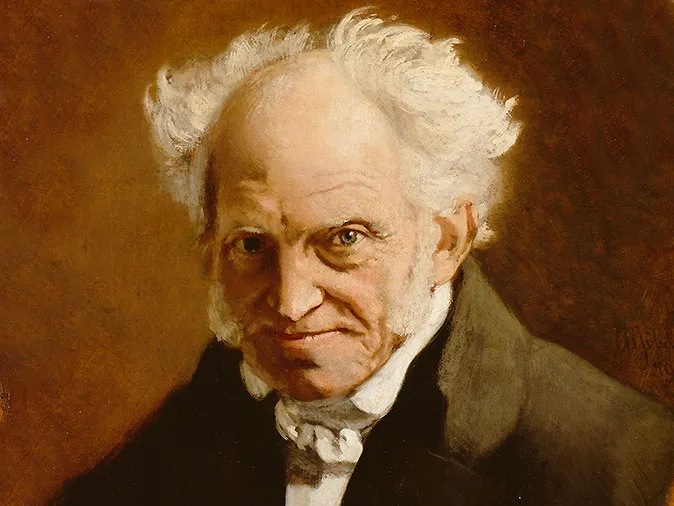
Arthur Schopenhauer (1788-1860) took a darker view. The ultimate reality is not reason but will—a blind, irrational striving that manifests in everything. The will to live drives all creatures, causing endless suffering. Art, especially music, offers temporary release. The highest achievement is to quiet the will entirely, achieving a state like Buddhist Nirvana.
Schopenhauer compared the will to a strong blind man carrying the intellect, a weak lame man with sight. The intellect is forever justifying what the will has already chosen. Genius occurs when the intellect briefly escapes the will's service.
The Esoteric Thread: Philosophy's Hidden Current

Throughout this history, a hidden current has flowed beneath the surface. The Pythagoreans taught in secret. Plato's unwritten doctrines were reserved for advanced students. The Neo-Platonists preserved the mysteries. The Gnostics claimed secret knowledge from the apostles. The Hermeticists sought to recover ancient wisdom. The Kabbalists mapped the divine emanations. The Rosicrucians announced a secret brotherhood. The Freemasons built symbolic temples.
What connects all these traditions is the conviction that truth is not for everyone. Some truths are too dangerous, too powerful, too easily misunderstood to be shouted from rooftops. They must be veiled in symbol and allegory, revealed gradually to those proven worthy.
Manly P. Hall, who devoted his life to uncovering this hidden current, showed that the great philosophers were not merely academic thinkers but initiates of mystery schools, guardians of traditions reaching back to Egypt and beyond. The secrets they preserved—about the nature of the soul, the structure of reality, the path to liberation—were not meant for public consumption.
This is why philosophy has always had two faces: one turned toward the world, speaking in plain language about ethics and politics; the other turned toward the inner circle, speaking in symbols about the mysteries of existence. The first face is what we learn in school. The second face is what seekers have pursued for millennia, following a thread that leads from the caves of prehistoric shamans to the temples of ancient Egypt, from the groves of Academe to the lodges of modern Freemasonry.
And that thread continues. In every age, there are those who sense that the visible world is not all there is—that behind the veil of matter lies a reality more real than reality itself. Philosophy, in its deepest sense, is the art of lifting that veil.
As Cicero wrote: "O philosophy, life's guide! O searcher-out of virtue and expeller of vices! What could we and every age of men have been without thee? Thou hast produced cities; thou hast called men scattered about into the social enjoyment of life."
But philosophy has also produced something else: a secret chain of transmission, passing from teacher to student, from initiate to initiate, preserving truths that the world was not ready to hear. That chain has never been broken. It exists today, as it has always existed, waiting for those with eyes to see and ears to hear.
Philosophy's Eastern Origins: The Debt to Older Civilizations

The story of Western philosophy, as typically told, begins with Thales and the Greeks. But the Greeks themselves knew better. They understood that their wisdom was not indigenous—that it flowed from older, deeper sources in the East.
Thomas Stanley, the seventeenth-century historian of philosophy, put it plainly: "Although some of the Grecians have challenged to their nation the original of philosophy, yet the more learned of them have acknowledged it [to be] derived from the East."
The great philosophers of Greece did not invent wisdom; they traveled to the ancient centers of learning—the temples of Egypt, the schools of Chaldea, the sanctuaries of India—and brought back what they learned.
Thales, the first of the Seven Sages, studied in Egypt. Pythagoras spent decades traveling through Egypt, Babylon, and possibly India, being initiated into the mysteries of each land. Plato, after Socrates' death, journeyed extensively through Egypt and Italy, learning from the priests and the Pythagoreans. The doctrines they brought back to Greece were not original creations but adaptations of far more ancient teachings.
This is not speculation. It is documented in the writings of the philosophers themselves. They acknowledged their teachers. They honored the older traditions. And they deliberately preserved the esoteric core of those traditions in forms that would survive the ages.
The Mysteries: Philosophy's Hidden Womb
Before there were philosophers, there were the Mysteries—secret religious institutions that flourished in Egypt, Greece, Persia, and India for thousands of years. These were not public cults but initiatic schools, open only to those who proved themselves worthy through rigorous preparation and solemn vows of secrecy.

The Mysteries claimed to possess a transcendental knowledge—a wisdom so profound that it could not be comprehended by ordinary minds, so potent that it could not be safely revealed to the uninitiated. They taught about the nature of the soul, its descent into matter, and its path of return to the divine source. They taught about the structure of the cosmos and the invisible forces that govern it. They taught about death and rebirth, both physical and spiritual.
The greatest philosophers of antiquity were initiates of these Mysteries. Plato speaks of them with reverence. Plutarch describes their rituals. Apuleius, himself an initiate, wrote of his own experiences. They were sophisticated systems of spiritual technology, designed to transform human consciousness and awaken latent powers of perception.
Their teachings were conveyed through rituals, symbols, and allegories—forms that could speak to the initiate while remaining opaque to the outsider.
The question naturally arises: if these institutions were so important, why do we know so little about them? The answer lies in their very nature. The Mysteries were secret societies. Their initiates were bound by oaths of silence, and betrayal was punished by death. The core teachings were never written down; they were transmitted orally from master to disciple, generation after generation.
When the ancient world collapsed—when the temples were closed, when the priests were scattered, when Christianity, and later Islam, became the dominant faith—the Mysteries did not simply vanish. They went underground. Their teachings were preserved in the symbols and allegories that survived, waiting for those with eyes to see.
The Language of Symbolism: Speaking Without Words

Symbolism is the language of the Mysteries. It is also the language of Nature itself, for every natural form is a symbol of the divine activity that produced it. A seed is a symbol of potentiality. A flower is a symbol of unfolding beauty. A mountain is a symbol of stability and permanence. All of creation speaks in symbols to those who have learned to read them.
But symbolism serves a dual purpose. In a single figure, it may both reveal and conceal. To the wise—those who understand the key—the meaning is obvious. To the ignorant, the same figure remains an inscrutable puzzle. This made symbolism the perfect vehicle for preserving secret teachings.
The initiates of antiquity were far-sighted. They knew that nations rise and fall, that libraries burn, that languages die. They knew that the wisdom they guarded could be lost forever if entrusted to perishable books or fragile institutions. So they took extraordinary measures to ensure its preservation.
They carved their knowledge into the faces of mountains. They encoded it in the measurements of colossal statues, each proportion a geometric revelation. They hid it in the myths and legends that ordinary people would repeat without understanding—stories of gods and heroes that carried, beneath their surface, profound philosophical truths. They built it into the spans and arches of temples that have survived for millennia.
Today, we gaze with awe at the monuments of ancient Egypt—the pyramids, the Sphinx, the colossal statues of Memnon. We marvel at the terraced pyramids of Palanque in Mexico. We puzzle over the strange carvings and inscriptions that cover these structures. They are mute testimonies to lost arts and sciences. And hidden within them is wisdom that cannot be accessed until we learn to read the universal language in which it was written: the language of symbolism.
The Great Arcanum: A Secret Doctrine Preserved Through Ages

Concealed within the emblematic figures, allegories, and rituals of the ancients is a secret doctrine concerning the inner mysteries of life. This doctrine has been preserved in its entirety among a small band of initiated minds since the beginning of the world.
These illumined philosophers—the sages of Egypt, the seers of India, the prophets of Israel, the mystics of Greece, the Gnostics of the early Christian era, the Hermeticists of the Renaissance, the Rosicrucians of the seventeenth century, the Freemasons of the modern age—form an unbroken chain of transmission. They have passed the Great Arcanum from generation to generation, always concealed, always preserved.
But why conceal it? Why not shout it from the rooftops?
Because some truths are not for everyone. They are too powerful, too easily misunderstood, too dangerous in unworthy hands. The secrets of inner transformation, if misapplied, can destroy as surely as they can heal. The knowledge of cosmic laws, if used selfishly, can wreak havoc—as it became evident with many of the Freemasons of 20th of century, some of whom spearheaded/contributed to significant war crimes in the world wars.
The earlier initiates understood that wisdom must be earned, not given freely to those who have not prepared themselves to receive it. So they left their formulas encoded in symbol and allegory. They wrote in characters that time cannot efface—characters that require not eyes but understanding to read. And they entrusted the keys to those who proved worthy through long discipline and sincere devotion.
Today, those keys can still be found. They are scattered through the world's great religious and philosophical traditions, waiting to be reassembled. They are hidden in the myths and legends that children still hear. They are encoded in the architecture of cathedrals and temples. They are embedded in the rituals of secret societies that still exist, operating quietly beneath the surface of modern life.
The Orphic Egg: A Symbol of the Mysteries
One of the most beautiful and profound symbols of the ancient Mysteries is the Orphic Egg. It shows an egg encircled by a serpent—an image that appears in various forms across many cultures.

The egg represents the cosmos, the universe in its undifferentiated potentiality. It also represents the soul of the philosopher, enclosed in the shell of physical existence. The serpent represents the Mysteries themselves—the creative, transformative power that encircles and protects the soul during its journey.
In the rituals of the Orphic Mysteries, initiates underwent a symbolic death and rebirth. The shell of the egg was broken. The soul emerged from its embryonic state, having passed through the darkness of ignorance into the light of knowledge. This was not mere metaphor; it was an actual transformation, experienced by the initiate through carefully crafted rituals and meditations.
The Orphic Egg is thus a perfect symbol of the entire esoteric tradition. It shows that wisdom is not something acquired from outside but something awakened from within. The soul already contains all knowledge; the task of the Mysteries is to break the shell that confines it.
The Tree of Classical Mythology: Mapping the Divine Hierarchies

Another profound symbol from the ancient world is the Tree of Classical Mythology, which organizes the Greek pantheon into a coherent hierarchy. The roots of this tree are imbedded in Unknowable Being—the ultimate source that lies beyond all names and forms.
The trunk and larger branches represent the superior gods—Zeus, Apollo, Athena, and the other Olympians. The twigs and leaves represent the innumerable lesser beings—nymphs, daimons, heroes—that populate the mythological world.
This is not primitive polytheism but sophisticated metaphysics. The Greek gods are not independent deities but emanations from a single source, each representing a different aspect of divine power. Zeus is the mind of the universe; Apollo is its light; Athena is its wisdom; Aphrodite is its love. Together, they form a complete picture of cosmic intelligence.
The Neo-Platonist philosopher Proclus, in his commentaries on Plato, provided the key to understanding this hierarchy. He showed how each god relates to every other, how they proceed from the First Cause and ultimately return to it. This is not mythology in the modern sense of "mere stories" but theology in the deepest sense—a map of the invisible world.
The Christian Trinity: A Parallel Mystery
The same symbolic thinking that produced the Greek pantheon also produced the Christian Trinity. In medieval art, one occasionally encounters images of a three-faced head—a single figure with three faces, representing the Father, Son, and Holy Ghost as three persons in one God.

The Trinity is not a mathematical puzzle to be solved but a spiritual truth to be contemplated. It teaches that God is not a solitary monad but a community of love—that relationship, not isolation, is the ultimate nature of reality.
The Hidden Thread: What Connects It All
What connects the Egyptian and Indian temples, the Greek mysteries, the Christian Trinity, the Orphic Egg, and the Tree of Mythology? A single thread: the recognition that reality is multi-layered, that truth can be expressed at different levels, and that the deepest truths must be veiled in symbol.
The initiates who built the pyramids, who composed the myths, who wrote the scriptures, who designed the cathedrals—all understood this. They knew that the same truth could be expressed in a thousand ways, each appropriate to a different level of understanding. They knew that the exoteric teaching, or the surface meaning, was necessary for the masses, while the esoteric teaching, or the hidden depth, was reserved for those prepared to receive it.
This is why philosophy, in its original sense, was inseparable from initiation. To truly understand the teachings of Pythagoras or Plato, one had to undergo the same transformative experiences they had undergone. The words on the page were only pointers; the reality they pointed to could only be known through direct experience.
The Modern Seeker: Where to Look
For those today who seek this hidden wisdom, the path is not easy. The Mysteries no longer exist as formal institutions. The initiatic chains have been broken, or at least obscured. But the symbols remain.
They remain in the great religious traditions, waiting to be reinterpreted. They remain in the myths and legends that still shape our culture. They remain in the architecture of ancient buildings and the proportions of sacred art. They remain in the rituals of Freemasonry and other fraternal orders that preserve, however imperfectly, fragments of the ancient tradition.
Most of all, they remain within the human soul. For the Orphic Egg is not just an external symbol; it is a picture of our own condition. We are each an egg, containing infinite potential, encircled by the serpent of time and circumstance. The task of philosophy—the true philosophy, not the academic discipline but the love of wisdom—is to break that shell and emerge into the light.
The keys are still available. They are scattered through the world's literature, art, and architecture. They are hidden in plain sight, waiting for those with eyes to see. The work of gathering them requires patience, discernment, and a willingness to look beyond surface appearances.
But for those who undertake it, the reward is beyond measure: the recovery of the ancient wisdom, the awakening of the soul, and the realization that we are not merely creatures of time but participants in eternity.
The wisdom of the ages is not lost. It is concealed—in symbols, in myths, in rituals, in the proportions of ancient buildings, in the depths of the human soul. And it awaits those who are willing to seek it with sincerity, patience, and an open mind.



Comments