
.png)

Hidden Truths: The USSR (Soviet Russia)
- A. Royden D'Souza

- Feb 20
- 52 min read
Updated: Feb 21
The victory of the Bolshevik Jews in the Russian Civil War (1917–1921) secured Communist rule over most of the former Russian Empire, but at immense cost. The economy had collapsed: industrial production fell to roughly 20% of prewar levels, agricultural output plummeted, and famine/executions (1921–1922) killed millions.

The Red Terror (1918–1922)
The Red Terror was a campaign of systematic political repression, mass arrests, and executions carried out by the Bolshevik government after the Russian Revolution of 1917.
It began officially in September 1918 and continued throughout the Russian Civil War (1918–1922). The campaign was organized primarily by the Cheka (the Soviet secret police), under the leadership of Felix Dzerzhinsky, and operated under the authority of Vladimir Lenin and the Bolshevik Party.
Its main purpose was to eliminate real and suspected enemies of the Bolshevik regime and secure their hold on power during a time of war, instability, and political opposition.
Background: Revolutionary Insecurity
After the Bolsheviks seized power in the October Revolution (1917), their control over Russia was far from secure. Many groups opposed them, including:
Supporters of the former Tsarist monarchy
Liberals and moderate socialists
Military officers and officials of the old regime
These groups formed the White Armies, which fought the Bolshevik Red Army in a brutal civil war. The Bolsheviks feared that internal enemies would assist foreign intervention and overthrow the new government.
The immediate trigger for the Red Terror came in August–September 1918, when:
Lenin survived an assassination attempt by Fanny Kaplan, a political opponent
Moisei Uritsky, a senior Bolshevik official, was assassinated
In response, the Bolshevik leadership declared that harsh repression was necessary to defend the revolution. On 5 September 1918, the Soviet government officially announced the Red Terror.

The Role of the Cheka in Soviet Russia
The main instrument of the Red Terror was the Cheka (Extraordinary Commission for Combating Counter-Revolution and Sabotage), created in December 1917. The Cheka had extraordinary powers, including the authority to:
Arrest suspects without warrants
Execute people without formal trial
Imprison individuals indefinitely
Seize property
It operated outside normal legal procedures and answered directly to the Bolshevik leadership. The Cheka established a network of prisons, interrogation centers, and early labor camps across Soviet territory.
Who was targeted? The Red Terror targeted individuals and entire social groups considered “class enemies” or “counter-revolutionaries.” These included:
Former Tsarist officials and military officers
Members of the nobility and aristocracy
Wealthy landowners and businessmen
Political opponents such as Mensheviks and Socialist Revolutionaries
Religious leaders of the Russian Orthodox Christian Church
Intellectuals suspected of opposition
Anyone accused of aiding anti-Bolshevik forces
In many cases, people were punished not for specific actions, but because of their social background or perceived political loyalty. The Bolsheviks believed class enemies posed an inherent threat to the revolution.
The Red Terror involved various methods of coercion and violence, including:
Mass arrests
Summary executions (often without trial)
Hostage-taking, where family members of suspected enemies were detained
Confiscation of property
Imprisonment in forced labor camps
Executions were sometimes carried out publicly to intimidate others, but many were conducted secretly. The use of terror was intended not only to eliminate opposition but also to create fear and discourage resistance.
The exact number of victims is difficult to determine, but most historians estimate:
At least 100,000 people were executed
Many more were imprisoned, deported, or died in detention
Some regions experienced especially intense repression, particularly areas with strong anti-Bolshevik resistance. The violence occurred alongside the broader devastation of the Civil War, which caused millions of deaths from combat, famine, and disease.
The Bolshevik leadership justified the Red Terror as a necessary measure to defend the revolution. Lenin argued that:
The revolution was under threat from powerful enemies
Extraordinary violence was necessary to secure socialist rule
The Bolsheviks viewed terror as a temporary but essential tool in 'class struggle.' They believed that suppressing opposition would allow the creation of a new socialist society.
The Red Terror had lasting consequences for the Soviet system. It:
Established the use of secret police as a key instrument of political control
Created the foundations for the later Gulag labor camp system
Normalized the use of repression to eliminate political opposition
Strengthened the authority of the Communist Party
Politically, the Bolsheviks faced unrest even among former supporters, exemplified by the Kronstadt Rebellion (1921), where previously loyal sailors demanded political liberalization.
Excerpts from the Documentary, Europa: The Last Battle: The Jewish Bolsheviks implemented a system known as collectivization. With this, they took away lands from peasants in the name of the state. This was the essence of what Marx described as Communism, which was to abolish private property.
In early 1930, over 91% of the agricultural land was collectivized. They took every good from the peasants. All weapons of the civilians were also confiscated. They did not care that they were condemning the peasants to death by hunger.
Nikolai Melnik, a survivor of the 1923/33 famine said:
“Potatoes, beets, cabbages, everything was taken. Salted cabbages were taken by the whole barrel. Every piece of edible good was taken away.”
On December 4, 1921, Samara district, Soviet Russia.
Today I came upon a man in a makeshift cemetary digging a mass grave. When I asked where the bodies were, one of them replied, ‘We are trying now to make a place for the future corpses. We are afraid we won’t have the strength to do it later. As I looked at them, I wondered if any of those men thought they might be digging their own graves.”
- Will Schafroth, American Relief Administration.

The famine of 1921 would become the worst disaster of Europe, since the black plague in the middle ages. The mass requisition of grain prevented peasants from feeding themselves, and even having enough seed to carry on planting for the next season. People had fled the villages, desperate to escape the famine.
At the station of Kazan on the northern Volga, wretched beings huddled together in compact masses. Most were children whose mothers had abandoned them or died.
“I saw emaciated little skeletons, whose gaunt faces and toothpick legs testify to the truth of the report that they were dying daily by the dozen. The stench was nauseating,” Will said. “I have seen piles of corpses, half naked and frozen into the most grotesque positions with signs of having been preyed upon by wandering dogs. I have seen these bodies and it is a sight I can never forget.”
An estimated 25,000 Russians died in these regions each week. 75,000 more deaths by the end of March. People had been dying at this rate all over Russia, all winter.
“It is impossible to describe the suffering and misery that presented itself on every side,” said Will. “I found the only food was made from weeds mixed with ground up bones, tree bark, and clay.”
“The famine was awful. The people were eating almost everything that could be swallowed,” says Yulia Khmelevskaya, Historian. “They even ate straw from the roof.”
“Using this straw and such substitutes for food, they became ill,” says Nail Usmanov, Historian.
[Kwashiorkor is a severe protein deficiency disease that makes children extremely thin but with a swollen belly due to fluid buildup.]
The Bolshevik-induced famine reached such extent that the impoverished peasants started digging up half-rotten corpses and eating them. Some butcher shops had even started selling human flesh, but were quickly shut down.
It wasn’t soon after that Americans received a report that William Schafroth himself had been eaten.
The Bolshevik government tried to stop the people from eating corpses. They put up guards at the cemeteries.
“Grandma told me about it. When the dark was coming, they put a large lock to save the children, because they were the main target of the cannibals,” says Usmanov.
“There were even cases of Mothers killing their own children. Some for mercy, and some for food. Some killed the elder children to feed the smaller ones,” says Yulia.
The starvation would only peak in the winter and effect 16 million people. Before the corn and wheat seed arrived, up to 5 million Russians had starved to death.

During the periods of 1921-1922, 1932-33, and 1946-47, the Jewish Bolshevik regime deliberately mechanized three series of genocidal man-made famines aimed at starving farmers in Ukraine, Belarus, Kazakhstan, and Russia. Millions died a slow death and people went back to eating grass, and some, even to cannibalism.
This holocaust by the Bolshevik Jews against the Russian people is referred to as the Holodomor.

Feliks Yurkivsky, 1908, Chesnivka Village, Vinnytsia Oblast:
“Walking down the road, one could see people by the wayside. Most of them were dead and those who could still move stretched out their hands, begging for food. In the morning, a wagon would come, heap the corpses, and take them to the graveyard.”
Another survivor says, “Then I looked out of the window and saw an ox cart laden with corpses, arms and legs sticking out, braids hanging off the cart. It was so scary.”
With these famines, Lenin, Stalin, Kaganovich, and all their Jewish agents, destroyed any potential resistance to the communists.
An order from Lenin and Trotsky, the Red Terror was first announced by the Jew Jacob Sverdlov. Lenin stipulated that: “Three quarters of mankind may die if necessary to ensure the other quarter for Communism.”
Lenin even outlined the purpose for the famines by stating:
“Destroying the peasant economy from the country to the town, the famine creates a Proletariat.”
Note: It becomes clear that peasants didn’t depend on the state and could survive on his own if left alone, but the ‘Proletariat’ would become slave to the state, bound with debt and no private property for leverage. This didn’t fit the goal of Judeo-communism, which required the ‘Proletariat’ to be chained to the government (Jewish elite).
Not to mention the fact that Lenin considered non-Jewish Europeans as animals (goyim): “It is precisely now, and only now, when in the starving regions, people are eating human flesh and hundreds if not thousands of corpses are littering the roads, that we can and therefore must carry out of the confiscation of Church valuables with the most savage and merciless energy, not stopping short of crushing any resistance. The greater the number of representatives of the reactionary clergy and reactionary burgeoisie we succeed in executing for this reason, the better.”
Leon Trotsky, the Jew sent by the Banking Cabal, said, “We must turn Russia into a desert, populated by white negros upon whom we shall impose a tyranny such as the most terrible eastern despots never dreamed of. The only difference is that this will be a left wing tyranny, not a right wing tyranny. It will be a red tyranny, and not a white one. We mean the word ‘red’ literally because we shall shed such floods of blood, as we will make all the human losses suffered in the capitalist wars pale by comparison. The biggest bankers across the ocean will work in the closest possible contact with us. If we win the revolution, we shall establish the power of Zionism upon the wreckage of the revolution’s funeral, and we shall become the power before which the whole world will sink to its knees. We shall know what real power is by means of terror and blood baths. We shall reduce the Russian Intelligencia to a state of complete stupefaction, idiocy, and a animal existence.”
Mass arrests in the middle of the night, kidnapping, executions and brutal tactics of torture took place. The Communist plan was to use psychological warfare, torture, and terror to intimidate their enemies into submission.
Lenin was still not satisfied with this and reported: “More power to the terror!”
The Bolshevik Jews would eliminate every free thinker. Trotsky wanted every individual to be a ruthless soldier of labor and he thought that all those demanding free speech, free press, and free trade unions should shot dead. If ordered to move, they were forced to obey. If they refused, they were labeled deserters and punished with death.
Trotsky often executed his victims personally in the cruelest of ways. He happily ordered disciplinary executions and even ordered children murdered. Officers and families were executed for disobeying orders.
The Jew Grigori Zinoniev (Hirsch Apfelbaum), as head of the Communist International, wrote in an article in the Krasnaya Gazeta in Moscow, September 1st, 1918: “We will make our hearts cruel, hard and immovable, so that no mercy will enter them, so that they will not quiver at the sight of sea of enemy blood. We will let loose the floodgates of that scene. Without mercy, without sparing, we kill our enemies in scores of hundreds. Let them be thousands. Let them drown themselves in their own blood. Let there be floods of blood of the Bourgeois - More blood!”
Formation of the Gulag Under Lenin
The term “Gulag” is an acronym for the Russian phrase Glavnoye Upravleniye Lagerey, meaning “Main Administration of Camps.” These camps were used to imprison and exploit millions of people for economic and political purposes.

The foundations of the Gulag system were laid during the Russian Civil War (1918–1922). The Bolshevik government, under Vladimir Lenin, created detention camps to hold:
Political opponents
Suspected counter-revolutionaries
Former tsarist officials
These early camps were run by the Cheka, the Soviet secret police. One of the first major forced labor camps was established at Solovki Monastery (Solovetsky Islands) in the White Sea.
Solovki became a model for later labor camps, combining imprisonment with forced labor under harsh conditions. At this stage, the camp system was relatively small compared to what it would later become.
Excerpts from the Documentary, Europa: The Last Battle: The Jewish Cheka (Tcheka) was a secret police force created through the NKVD (Later KGB) on December 20th, 1917, by Lenin, and was consequently led by the Jew Felix Dzerjinksky.
“Jews made up nearly 80% of the rank-and-file Cheka agents,” reports Bruce Lincoln, an American professor of Russian history.
The Cheka rounded up Christians and all those who did not support the Jewish Bolshevik government. They practiced torture methods, including skinning victims alive, scalping, carving with barbed wire, crucifixion, hanging, and stoning to death. Women and children were also victims of terror. They would sometimes be raped before being shot. Children between the age of 8 to 13 were often imprisoned and executed.
Some victims were actually sliced to pieces bit by bit, while others were branded with hot irons, their eyes poked out to induce unbearable pain. Burning coals were inserted into women’s genitals, often in views of victim’s family members. Some prisoners were publicly hanged.
Bolsheviks in Krakau placed their victims in a row and nailed their hands to a table, cut around their wrist with a knife, poured boiling water over the hands, and pulled off the skin. Along with poking out eyes, they broke bones in legs and arms, extracted nails, cut off hands, ears, and noses. Victims were submerged in boiling water or tar. Some were doused in petrol and burned alive.
Lazar Kaganovich was the Jewish head of the KGB and was well-known for his purges of those who opposed Jewish control. It is even argued that Stalin, whose second wife was Kaganovich’s sister, was a mere figurehead. Some believe that the numerous Jews below Stalin, in all significant positions, ran the show.
Under their regime, many of the churches were burned to the ground, while the synagogues were left standing. Many priests were forced to sweep the streets and others were murdered. On the other hand, the Bolsheviks held the rabbis in the highest regard. And those people who dared to criticize the Jewish supremacy were mercilessly murdered as anti-semetism became a crime punishable by death in the Soviet Union.
The Jew Kaganovich ordered the deaths of millions and the total destruction of Christian monuments and churches. Among these victims were bishops, doctors, policemen, professors, officers, lawyers, civil servants, journalists, writers, artists, nurses, workers, and farmers.
The most intelligent and the highest achieving segment of the population was wiped out initially, which left the less educated or uneducated workers, peasants, and a powerful Jewish ruling elite.
Lenin said: “We must hate. Hatred is the basis of communism. Children must be taught to hate their parents if they are not communist.”
“The Bolshevik Revolution in Russia was the work of Jewish brains, of Jewish dissatisfaction, of Jewish planning, whose goal is to create a new order in the world. What was performed is so excellent a way in Russia, thanks to Jewish brains, and because of Jewish dissatisfaction, and by Jewish planning, shall also, through the same Jewish mental and physical forces, become a reality all over the world.”
-‘American Hebrew’ September 8, 1920
A righteous Jew, Henry H. Klein, explained that: “Zionism is a political program for the conquest of the world. Zionism destroyed Russia by violence as a warning to other nations. It is destroying the U.S. through bankruptcy, as Lenin advised. Zionism wants another world war, if necessary to enslave the people. Our manpower is scattered over the world. Will we be destroyed from the world, or will we wake up in time to prevent it?”
“Some call it Communism, but I call it Judaism.”
-The Rabbi, Stephen Samuel Wise, The American Bulletin, May 5, 1935
The Kronstadt Rebellion (March 1921)
The Kronstadt Rebellion of March 1921 constituted one of the most serious internal political and military crises faced by the Bolshevik regime after its victory in the Russian Civil War.
Occurring at the Kronstadt naval base on Kotlin Island in the Gulf of Finland, near Petrograd (formerly St. Petersburg), the rebellion was particularly alarming to the Bolsheviks because the Kronstadt sailors had previously been among the most loyal and militant supporters of the October Revolution of 1917.
Their revolt represented not merely military insubordination but a profound crisis of revolutionary legitimacy.

The rebellion must be understood within the context of War Communism (1918–1921), the emergency economic and political system imposed during the Civil War. War Communism involved:
Forced grain requisitioning from peasants
Nationalization of all major industry
Militarization of labor
Suppression of private trade
Strict political dictatorship by the Communist Party
These policies were intended to ensure survival during civil war but resulted in catastrophic economic and social consequences. By 1921:
Industrial output had collapsed to approximately 20% of its 1913 level
Urban populations had shrunk dramatically as workers fled to the countryside
Food shortages were severe
Widespread famine was emerging
Worker strikes broke out in Petrograd and Moscow
The Bolshevik regime increasingly relied on coercion, enforced by the secret police (Cheka), to maintain control.
Kronstadt’s Strategic and Symbolic Importance
Kronstadt was both militarily and politically crucial:
It was the principal naval base defending Petrograd
Its sailors had played a decisive role in the revolutions of 1905 and 1917
Leon Trotsky had once called them the “pride and glory of the Russian Revolution”
Their rebellion therefore represented a revolt from within the revolutionary core itself, not from counterrevolutionary elites.
The rebellion emerged from a convergence of economic hardship, political repression, and disillusionment with Bolshevik rule. Sailors and workers suffered:
Food shortages
Poor living conditions
Privileged treatment of Communist Party officials
The rebels objected to the Bolsheviks Jews’ monopoly on power. They demanded restoration of political freedoms promised in 1917.
In February 1921, strikes erupted in Petrograd over food shortages and working conditions.
Kronstadt sailors sympathized with the striking workers. Delegations sent to investigate confirmed repression by Bolshevik authorities. This led to open revolt.
The Petrograd Resolution

On March 1, 1921, approximately 15,000 sailors, soldiers, and workers adopted a resolution containing fifteen demands. Key demands included:
New elections to Soviets by secret ballot
Freedom of speech and press for workers and socialist parties
Freedom of assembly
Release of political prisoners
End of Communist Party political monopoly
Equal food rations for all workers
They declared loyalty to socialism but opposed Bolshevik dictatorship. Their slogan became: “All Power to the Soviets, Not to the Party.” Ironically, this echoed Lenin’s original revolutionary slogan of 1917.
The Bolshevik Jewish leadership, however, reacted with alarm and hostility. Lenin and Trotsky viewed the rebellion as an existential threat. They feared:
Spread of rebellion to mainland Russia
Collapse of Bolshevik Jewish authority
Opportunity for counterrevolutionary forces
The Bolsheviks denounced the rebels as: “White Guard agents” and “counterrevolutionaries.” They no longer cared for "socialism" now that the fantasy of the ideology had been used to consolidate power to a small Jew-dominated group at the top.
Trotsky ordered the Red Army to crush the rebellion. Command was given to General Mikhail Tukhachevsky. The assault occurred in March 1921 under extremely harsh conditions:
Red Army troops attacked across frozen sea ice
Heavy casualties were sustained
After intense fighting, Bolshevik forces captured Kronstadt on March 17, 1921. Thousands died during the assault. Afterward:
Many rebels were executed
Thousands were imprisoned in labor camps
Some escaped to Finland
The rebellion was completely crushed.
The Kronstadt Rebellion marked a decisive turning point in Soviet history. It had several profound consequences: The rebellion convinced Lenin that War Communism was unsustainable.
Within days of suppressing Kronstadt, Lenin introduced: The New Economic Policy (NEP)
This restored limited private enterprise. It represented a tactical retreat from full socialism. The rebellion also reinforced Bolshevik determination to maintain absolute political control.
At the Tenth Party Congress (1921):
Factions within the Communist Party were banned
Internal dissent was suppressed
This marked the institutionalization of one-party rule. The Bolshevik regime shifted from:
Revolutionary mass movement to Centralized authoritarian state. Political pluralism within socialism was eliminated.
Kronstadt was a genuine democratic socialist revolt betrayed by authoritarian Bolshevism. Soviet historiography portrayed it as a counterrevolutionary conspiracy.
It exposed fundamental contradictions within communism. It demonstrated that even core revolutionary supporters had become alienated by Bolshevik rule. Its suppression ensured the survival of the Communist state but at the cost of revolutionary democratic ideals.
Historians often emphasize its role as evidence of early Bolshevik deception against the Russian people to consolidate power in the name of 'people's power.'
The New Economic Policy (1921–1928)
In response, Vladimir Lenin introduced the New Economic Policy (NEP) in 1921. This marked a strategic retreat from “War Communism,” reintroducing limited market mechanisms. Peasants could sell surplus produce, small businesses were legalized, and foreign investment cautiously allowed.
The NEP stabilized the economy and restored agricultural production.
Parallel global context:
The End of World War I and the Treaty of Versailles (1919)
The end of the First World War (more like Banker War 1) in November 1918 marked the collapse of four major imperial systems in Europe: the German, Austro-Hungarian, Ottoman, and Russian Empires. In Russia’s case, imperial collapse had already occurred through the revolutions of 1917, followed by civil war and Bolshevik consolidation.

The broader European settlement was formalized through the Treaty of Versailles (June 28, 1919), which imposed severe territorial, military, and financial penalties on Germany. Germany lost approximately 13% of its territory, including Alsace-Lorraine to France and large eastern territories to the newly reconstituted Poland.
The treaty also imposed strict military limitations, restricting Germany’s army to 100,000 men and prohibiting tanks, aircraft, and submarines. Most controversially, Article 231—the so-called “War Guilt Clause”—assigned sole responsibility for the war to Germany, providing the legal basis for reparations.
Although Soviet Russia was not a signatory, the Versailles settlement profoundly affected its geopolitical environment. The treaty created a belt of new nation-states—Poland, Finland, Estonia, Latvia, and Lithuania—along the former western frontiers of the Russian Empire.
These states functioned both as independent national entities and as strategic buffers between Soviet Russia and Western Europe. From the Bolshevik perspective, Versailles represented a hostile capitalist order designed to isolate and contain the socialist revolution.
At the same time, the treaty destabilized Germany politically and economically, creating conditions that would later facilitate Soviet–German cooperation during the interwar period.
The League of Nations and Soviet Exclusion (1920–1934)
The League of Nations (more like the Banker League), established in January 1920 as part of the Versailles settlement, was intended to serve as an international organization for maintaining collective security, resolving disputes peacefully, and preventing future global wars.

However, Soviet Russia was excluded from the League at its founding. This exclusion reflected both ideological hostility and political mistrust. Western powers viewed the Bolshevik regime as illegitimate due to its revolutionary overthrow of the Provisional Government, its repudiation of Tsarist debts, and its open advocacy of global communist revolution through the Communist International (Comintern), founded in 1919.
The exclusion reinforced Soviet diplomatic isolation during its formative years. The Soviet government interpreted the League not as a neutral peacekeeping institution but as an instrument of capitalist powers seeking to encircle and suppress socialism.
This perception was reinforced by Western military interventions in the Russian Civil War (1918–1921), when Britain, France, the United States, and Japan sent forces to support anti-Bolshevik armies. Consequently, Soviet foreign policy in the 1920s emphasized bilateral agreements rather than integration into Western-led international institutions.
It was not until 1934, amid growing concern over Nazi Germany, that the Soviet Union was admitted to the League of Nations, reflecting a convergence of interests between the USSR and Western powers against Hitler's expansion.
What Was Comintern (Communist International)?
The Communist International, commonly known as the Comintern, was an international revolutionary organization founded in March 1919 in Moscow under the leadership of Vladimir Lenin and the Bolshevik Party.
Its stated objective was to coordinate and promote worldwide communist revolution, with the ultimate goal of overthrowing capitalism and establishing a global system of socialist republics [Pre-Zionist Global State, probably].
Karl Marx and Friedrich Engels didn't want socialism to remain confined to a single country but would inevitably become a global system as capitalism itself was global. Lenin adapted this theory to the conditions of the early twentieth century, emphasizing imperialism as the highest stage of capitalism and arguing that global war had created conditions ripe for revolutionary upheaval.
The Bolsheviks therefore conceived the Comintern not merely as a coordinating body but as a general staff of world revolution. Its founding congress in 1919 declared its mission to be the destruction of bourgeois states and the creation of an international Soviet republic.
[IMO (Based on Rabbi Speeches): Comintern sought to facilitate a multi-cultural communist global-state with the banker-backed Bolshevik Jews at the elite level. A global version of Bolshevik-ruled Russia, which could eventually fit into the Zionist vision of a world ruled from New-Jerusalem]

"First of all, we have to understand what communism is. To me, the real Communism as formulated by the Jews, the Soviet Communism, is a mask for Bolshevism, which is a mask for Judaism."
-Bobby Fischer (1943-2008), an American Chess Prodigy and Grandmaster (A Jew himself)
"My thesis is that Jews are a criminal people, and the Jews completely control the United States, and they are using it as a vehicle to take over the world."
Now, coming back to Comintern, although it was formally an international organization representing communist parties worldwide, it was in practice dominated by the Soviet Communist Party. Its headquarters remained in Moscow, and its executive leadership was closely integrated with the Soviet state apparatus.
The Comintern established national communist parties across Europe, Asia, and the Americas, including:
Communist Party of Germany (KPD)
Communist Party of China (CCP)
Communist Party of France
Communist Party of Great Britain
Communist Party USA
These parties were required to follow directives issued from Moscow. In 1920, the Comintern issued the Twenty-One Conditions for Membership, which required strict ideological conformity, centralized discipline, and loyalty to Soviet leadership. This effectively subordinated national communist movements to Soviet strategic priorities.
The Comintern played a significant role in supporting revolutionary movements during the political instability that followed World War I. Major examples included:
Germany (1919–1923): Germany experienced multiple revolutionary uprisings, including the Spartacist uprising of 1919 led by communist revolutionaries Rosa Luxemburg and Karl Liebknecht. Although these uprisings failed, Germany remained a central focus of Comintern strategy, as Bolsheviks believed German industrial strength made it the most likely site for successful revolution.
Hungary (1919): A short-lived communist government under Béla Kun was established with Comintern support but collapsed within months.
China (1920s–1930s): The Comintern played a critical role in organizing and advising the Chinese Communist Party. Soviet advisers helped structure its organization and strategy, laying foundations for its eventual victory in 1949.
These efforts demonstrated the Comintern’s ambition but also revealed the limits of its influence outside Soviet territory.
The Treaty of Rapallo and Soviet–German Cooperation (1922)
The Treaty of Rapallo, signed on April 16, 1922, between Soviet Russia and the Weimar Republic of Germany, represented a major breakthrough in Soviet foreign relations and a significant challenge to the post-Versailles international order.

Both Germany and Soviet Russia were diplomatically isolated and politically stigmatized in the aftermath of the war—Germany as the defeated aggressor, and Soviet Russia as a revolutionary state rejected by the capitalist powers.
The treaty normalized diplomatic relations, renounced mutual territorial and financial claims, and established economic cooperation between the two countries.
Beyond its public provisions, Rapallo also facilitated covert military collaboration. Germany, restricted by the Versailles Treaty from developing certain weapons and military technologies, used Soviet territory to conduct secret training and weapons testing.
German officers trained in Soviet facilities, and experimental programs involving tanks, aircraft, and chemical weapons were conducted beyond the reach of Allied inspectors. For the Soviet Union, this cooperation provided access to advanced German military expertise and industrial technology.
For Germany, it provided an opportunity to circumvent Versailles restrictions and preserve military capabilities. The treaty thus represented a pragmatic convergence of interests between two ideologically opposed regimes, united by their shared marginalization in the international system.
Rapallo also signaled a broader pattern in Soviet foreign policy: the willingness to engage pragmatically with capitalist states when necessary to ensure security and development, even while maintaining ideological hostility toward capitalism.
This dual approach—combining ideological commitment with diplomatic pragmatism—remained a defining feature of Soviet international relations throughout the interwar period.
Power Struggle and Stalin’s Rise (1924–1928)
In December 1922, the Union of Soviet Socialist Republics (USSR) was formally created, uniting Russia, Ukraine, Belarus, and the Transcaucasian Federation into a centralized socialist state.
Lenin's active role in governing declined sharply due to serious health problems. Lenin suffered a series of strokes beginning in May 1922, which left him partially paralyzed and increasingly unable to speak or write.
In August 1918, Lenin had been shot by Fanny Kaplan, an anti-Bolshevik revolutionary.
Two bullets hit him
One bullet remained in his body for years
Some researchers suggested this might have contributed indirectly to later health problems.
He was forced to withdraw from daily political activity, creating an early power vacuum even before his death. During this period, much of the practical authority shifted into the hands of senior party officials, especially Joseph Stalin, who had been appointed General Secretary in April 1922.
Despite his illness, Lenin remained deeply concerned about the future of the Soviet leadership. In his final writings, often called “Lenin’s Testament” (1922–1923), he warned that Stalin had accumulated too much power and criticized his harsh and abusive behavior.
Lenin suggested that Stalin should be removed from the position of General Secretary. He also commented on other leaders, noting Trotsky’s exceptional ability but criticizing his arrogance.
However, after Lenin’s death, Stalin’s allies—particularly Kamenev and Zinoviev—suppressed the Testament and prevented it from being widely circulated within the party, allowing Stalin to remain in his position.

Lenin’s death on 21 January 1924 created a serious succession crisis within the Soviet leadership. The Soviet Union had no formal process for transferring power, and real authority lay within the Communist Party, not the state’s constitutional structure.
As a result, the struggle to succeed Lenin became a political contest within the party’s inner circle. Several senior Bolshevik Jews, all veterans of the 1917 Revolution, emerged as key contenders.
The most important among them were:
Leon Trotsky: Founder and commander of the Red Army; advocate of “permanent revolution”
Joseph Stalin: General Secretary of the Communist Party; advocate of “socialism in one country”
Lev Kamenev and Grigory Zinoviev: Influential senior Bolsheviks and longtime associates of Lenin
Nikolai Bukharin: Leading party intellectual who initially supported gradual economic development
Among these figures, Trotsky (Banker-picked and most 'Jewish' Jew) appeared at first to be Lenin’s natural successor. He had played a decisive role in organizing the Red Army and securing Bolshevik victory in the Civil War. He was widely respected for his intellect, administrative ability, and revolutionary commitment.

Trotsky argued that the Soviet Union could not survive in isolation and needed socialist revolutions in industrial countries to succeed. His theory of permanent revolution emphasized international struggle as essential to the survival of socialism.
In contrast, Stalin’s political strength did not come from military glory or intellectual prestige, but from his position as General Secretary, a role he had held since 1922. This position gave him control over party organization, appointments, and promotions.
Stalin (an underdog among Bolshevik Jews) used this authority carefully and patiently to build a network of loyal supporters across the party. At the time, many Bolsheviks underestimated him, seeing him as a practical administrator rather than a major political leader.
Stalin also benefited from his skill in forming and breaking alliances. Initially, he aligned with Kamenev and Zinoviev to isolate Trotsky. Together, they criticized Trotsky’s ideas and portrayed him as politically unreliable and overly ambitious.
As a result:
Trotsky was gradually removed from positions of influence
He lost his leadership of the Red Army in 1925
He was expelled from the Communist Party in 1927
He was exiled from the Soviet Union in 1929
Trotsky continued to criticize Stalin from abroad, but his influence within the Soviet Union was effectively destroyed. In 1940, he was assassinated in Mexico by Ramón Mercader, an agent acting on Stalin’s orders.
After defeating Trotsky, Stalin turned against his former allies. Kamenev and Zinoviev were removed from leadership positions and later expelled from the party. Stalin then moved against Bukharin, who had opposed Stalin’s push for rapid economic transformation.
By exploiting ideological disagreements and using his control over party machinery, Stalin systematically eliminated all major opposition.

By 1928, Stalin had emerged as the undisputed leader of the Soviet Union. His rise marked a major turning point in Soviet political development. Under Lenin, leadership had involved debate and collective decision-making among senior party members.
Under Stalin, power became increasingly concentrated in the hands of one individual, and dissent became dangerous. Stalin’s consolidation of power was closely linked to a major shift in Soviet economic policy.
He ended Lenin’s New Economic Policy (NEP), which had allowed limited private trade and small-scale capitalism, and replaced it with policies aimed at rapid socialist transformation.
These included:
Centralized economic planning
Rapid industrialization
Collectivization of agriculture
These changes aimed to strengthen the Soviet Union economically and militarily, but they also increased state control over society.
Comintern: From World Revolution to Soviet State Instrument
Following Lenin’s death in 1924 and Joseph Stalin’s rise to power, the Comintern’s role underwent a fundamental transformation. Stalin abandoned Lenin’s expectation of imminent global revolution and instead adopted the doctrine of “Socialism in One Country,” emphasizing internal Soviet consolidation.
Rather than facilitating global Zionism (starting with the formation of Israel), which had been the goal of Banker-backed Trotsky, Stalin sought to establish the Jewish state in Russia itself.
Jewish Autonomous Oblast (JAO): This was a region established by the Soviet Union in 1934 in the Russian Far East, near the Chinese border, with its capital at Birobidzhan. It was created under Joseph Stalin as a designated homeland for Soviet Jews, intended to provide a socialist alternative to Zionism and encourage Jewish cultural life within the USSR.
The government promoted Yiddish language, schools, and institutions, and some Jews migrated there, especially in the 1930s. However, harsh climate, isolation, poor infrastructure, and later Stalinist repression limited its success. Most Soviet Jews chose to live in major cities instead. [Today, the Jewish Autonomous Oblast still exists as a federal subject of Russia, but Jews make up only a small percentage of its population]
Comintern's decline: Stalin was a 'King' in all but name. A dictator with an iron grip on the Soviet Russia. Under Stalin, the Comintern became less an instrument of global revolution and more an instrument of Soviet foreign policy. Its priorities shifted according to Soviet strategic needs.
During the 1930s, for example, the Comintern promoted Popular Front alliances between communist parties and non-communist groups to resist the rise of fascism in Germany, Italy, and Spain. This represented a significant departure from earlier policies that had rejected cooperation with non-communist parties.
Thus, the Comintern (which was supposed to be the socialist 'Banker League') increasingly functioned as an extension of Stalin's Soviet diplomatic and security interests.
Stalinist Transformation (1928–1941)
Between 1928 and 1941, Stalin oversaw a radical transformation of the Soviet Union. His goal was to turn the USSR from a backward, largely agrarian society into a modern industrial superpower capable of defending itself against foreign enemies.

Stalin and other Soviet leaders believed that the Soviet Union was economically and militarily behind Western nations and warned that failure to modernize quickly would lead to its destruction.
This period was marked by rapid industrialization, forced collectivization of agriculture, and widespread political repression, fundamentally reshaping Soviet society.
Industrialization and the Five-Year Plans
The centerpiece of Stalin’s economic transformation was the introduction of centralized Five-Year Plans, beginning with the First Five-Year Plan (1928–1932). These plans set specific production targets for industry, agriculture, and infrastructure, all controlled by the state.
The primary focus was on heavy industry, which was seen as essential for military strength and economic independence.
Key priorities included:
Expansion of steel, coal, iron, and oil production
Construction of factories, railways, and power plants
Development of military-industrial capacity
The results were dramatic, though uneven:
Steel production increased roughly fourfold between 1928 and the late 1930s
Coal and electricity production grew rapidly
New industrial cities were built from scratch
One of the most famous projects was Magnitogorsk, a massive steel-producing city in the Ural Mountains. Built in a previously undeveloped region, it became a symbol of Soviet industrial ambition. Other major projects included the Dnieper Dam, one of the largest hydroelectric plants in the world at the time.
However, these achievements came at enormous human cost:
Workers faced long hours, harsh discipline, and dangerous conditions
Consumer goods were neglected, leading to chronic shortages
Living standards remained low for most citizens
Despite these hardships, industrial output grew significantly, helping transform the Soviet Union into a major industrial power by the late 1930s.
Parallel global context: At the same time, the Great Depression (1929–1939) devastated capitalist economies in Europe and the United States. The Wall Street Crash of October 1929, became the worst economic crisis in modern capitalist history.
During the 1920s, economic growth in the United States had been fueled by heavy bank lending and widespread stock market speculation. Banks provided easy credit to businesses and individuals, allowing many investors to buy stocks with borrowed money. This created an economic bubble based on debt rather than real productivity.
When stock prices collapsed in 1929, the crisis quickly spread to the banking system. Many banks had:
Lent excessive money for risky investments
Failed to maintain adequate cash reserves
Become financially unstable when borrowers could not repay loans
As a result, between one-third and one-half of all U.S. banks failed between 1929 and 1933, wiping out the savings of millions of people. Bank failures caused businesses to lose access to credit, forcing factories and companies to shut down.
This led to massive unemployment, which reached about 25 percent in the United States. Prices collapsed, wages fell, and global trade declined sharply.
The banking crisis created a downward spiral:
Bank failures destroyed personal savings
Businesses closed due to lack of loans
Unemployment increased
Consumer spending declined further
What caused the Great Depression?
Many mainstream economists—including Milton Friedman and Ben Bernanke (former Federal Reserve chairman)—have argued that the Federal Reserve made serious mistakes that worsened the Great Depression.

[The Federal Reserve (Fed): A private agency owned by Rothschild, Schiff, Warburg that issues currency on behalf of U.S. Government, outside of President's control]
The Federal Reserve did not act aggressively enough to save failing banks or inject money into the system. As a result, credit dried up, businesses collapsed, and unemployment soared.
Bernanke himself said in 2002: “Regarding the Great Depression… we did it. We’re very sorry.”
Instead of stimulating the economy, the Fed raised interest rates in 1928–1929 for the benefit of the Bankers owning it. This slowed economic activity further. This is widely considered a 'policy mistake.'
When banks collapsed, the Fed could have acted as a "lender of last resort", but often did not.
As a result, thousands of banks failed and millions lost savings.
Some conspiracy narratives claim that:
Claim 1: Big bankers deliberately caused the Depression. They allegedly crashed the market intentionally, bought assets cheaply afterward, increased their control.
Claim 2: The Federal Reserve created the crash intentionally. Some claim the Fed tightened money supply deliberately to create economic collapse.
Claim 3: Bankers used the Depression to increase power. This claim has some truth.
After the Depression, major reforms were introduced:
Federal Deposit Insurance (FDIC): Created in 1933, it insured individual bank deposits (up to a fixed limit), so people would not lose their savings if a bank failed, restoring public confidence in the banking system. When deposits are insured, customers stop worrying as much about whether a bank is risky or conservative. They move money to large, well-known banks, assuming they are safest and most likely to be protected.
Stronger banking regulations (Glass–Steagall Act): These restrictions limited banks’ ability to invest and innovate, which some economists say reduced financial flexibility and potential economic growth. Small banks were crushed, reducing competition for big banks.
More government oversight: Increased supervision led to greater government control over the financial sector, which critics argue could cause bureaucratic inefficiency and political interference in economic decisions. Large lenders became more stable and dominant while smaller lenders faced greater strain.
These reforms actually reduced banking power in many ways.
The Effects on Soviet Union
The crisis became global, affecting Europe and much of the capitalist world. In contrast, the Soviet Union did not experience bank failures or mass unemployment because its economy was centrally planned and state-controlled.
Soviet leaders used the crisis as propaganda, arguing that the Great Depression demonstrated the weakness and instability of capitalism, while presenting socialism as a more stable alternative.
This strengthened Stalin’s justification for rapid industrialization and centralized economic control during the Five-Year Plans.
Alongside industrialization, Stalin launched a campaign to transform agriculture through collectivization, beginning in 1929.
The goal was to eliminate private farming and replace it with large, state-controlled collective farms called:
Kolkhozy: Collective farms operated by peasants under state supervision
Sovkhozy: Fully state-owned farms with paid agricultural workers
The state believed collectivization would:
Increase agricultural efficiency
Allow the government to control food supplies
Extract grain to feed industrial workers and export abroad
However, collectivization was implemented with extreme force. Millions of peasants resisted, especially wealthier farmers known as kulaks, who owned more land or livestock. Stalin declared the kulaks to be “enemies of the people.”
As a result:
Millions of kulaks were arrested, deported, or executed
Many peasants destroyed crops and livestock rather than surrender them
Agricultural production collapsed in many regions
This disruption contributed to catastrophic famines between 1932 and 1933, especially in Ukraine, the North Caucasus, and Kazakhstan.
The most devastating famine occurred in Ukraine and is often called the Holodomor, which caused millions of deaths. Historians estimate that between 3 and 5 million people died in Ukraine alone, with millions more dying across the Soviet Union.
The causes of the famine included:
Forced grain requisition by the state
Agricultural disruption caused by collectivization
Government refusal to reduce quotas despite starvation
The famine had long-lasting social and political consequences, including increased state control over the countryside.
Role in Spanish Civil War (1936-1939)
The Spanish Civil War represented one of the Comintern’s most direct interventions in foreign conflict. The Soviet Union, acting through Comintern channels, provided military advisers, weapons, and organizational support to the Republican government fighting against Francisco Franco’s fascist forces.
The Comintern also organized the International Brigades, composed of tens of thousands of foreign volunteers from Europe and the Americas who fought in Spain in defense of the Republic.
Despite these efforts, Franco ultimately prevailed, establishing a fascist dictatorship in Spain.
The conflict demonstrated both the reach and limitations of Soviet-supported international revolutionary efforts.
Political Terror: The Great Purge (1936–1938)
In Soviet Russia, Stalin launched a massive campaign of political repression known as the Great Purge (or Great Terror). Its purpose was to eliminate real and perceived enemies and secure Stalin’s absolute authority.
The purge targeted:
Senior Communist Party members
Government officials
Military leaders
Intellectuals, workers, and ordinary citizens
Key methods included:
Show trials: Public trials where accused individuals confessed to crimes, often under torture
Secret police (NKVD): The state security organization that carried out arrests and executions
Executions and forced labor camps (Gulag system): Hundreds of thousands of people were executed, and millions were imprisoned in Gulag labor camps, where prisoners worked under brutal conditions in mines, forests, and construction projects.
One could say, Stalin was 'karma' personified for the Bolsheviks who had once used the same methods on the Russians.
One of the most significant consequences was the purge of the Red Army leadership:
Many experienced generals were executed or imprisoned
This weakened Soviet military leadership just before World War II
The purges created a climate of fear and obedience, ensuring Stalin’s complete political dominance.
Genrikh Yagoda (1891–1938): Early Architect of Stalin’s Secret Police System
Genrikh Yagoda was the first official head of the NKVD (People’s Commissariat for Internal Affairs) from 1934 to 1936 and one of the key figures in building Stalin’s system of political repression.
He played a central role in expanding the Gulag labor camp network and preparing the machinery that would later carry out the Great Purge.

Genrikh Yagoda was born in 1891 in the Russian Empire. He joined the Bolshevik movement before the 1917 Revolution and became involved in the early Soviet security services.
After the revolution, he worked in:
The Cheka (the first Soviet secret police)
Later its successor organizations, including the OGPU
He gained a reputation as a loyal and efficient official. His loyalty to Joseph Stalin helped him rise rapidly.
Head of the NKVD (1934–1936): In 1934, Stalin reorganized the Soviet security services into the NKVD, and Yagoda became its chief. In this role, he controlled:
Secret police operations
Political arrests
Labor camps
Internal security
This gave him enormous power. Yagoda played a major role in expanding the Gulag forced labor camp system. Under his leadership:
Millions of prisoners were sent to labor camps
Prisoners were used for massive construction projects
One major project was the: White Sea–Baltic Canal (1931–1933)
Built largely by forced labor
Thousands of prisoners died during construction
The Gulag became an important part of Soviet industrial development. Although the Great Purge is mostly associated with his successor, Nikolai Yezhov, Yagoda helped prepare the system. He was involved in:
Arresting political opponents
Organizing show trials
Eliminating critics of Stalin
One famous case was the trial of former Bolshevik leaders accused of treason.
Excerpts from the Documentary, Europa: The Last Battle: Encyclopedia Brittannica estimates around 8 million people, 5 million of them Ukranian, were starved to death by the Stalin-Kaganovich famine alone and the 3 Holodomor genocides together resulted in a death toll of 16.5 million.
Russian Historian Aleksandr Solzhenistyn estimated that between 1917-1958 the Jewish Bolshevik regime managed to exterminate about up towards 60 million Europeans including victims of the forced Collectivization, the hunger, large purges, expulsions, banishments, executions, and mass death at Gulags.
Industrial scale murder like this are an essential part of communist theory. Marx himself had said that non-worker Proletariats had to be exterminated in order for global communism to work.
During this time, Genrikh Yagoda was a Jewish Secret Police official who served as the director of the NKVD. A major Israeli publication, Ynet news (12.21.06) revealed the truth about Yagoda: “We mustn’t forget that some of the greatest murderers of modern times were Jewish. Yagoda was the greatest murderer of the 20th century. He is responsible for the death of atleast 10 million people.”
People were being shot, day and night. Stalin even got to the point of killing people in random by quotas. Let’s say, hundred thousand in the Tambov District. Whoever they grabbed and shot, they’d be fulfilling quotas. They didn’t care about names. After the quotas were filled, the local authorities would report to Stalin to Central Committee and ask for additional quotas.
“Khrushchev asked to increase his quote. He was allowed to kill 7 to 8 thousand Russians. He asked, please increase my quota to 17,000. An additional quota will be given and after fulfilling they would again ask for additional quotas, and so it goes in circles. It was like a mincemeat machine, you know, it was just killing and killing and killing.”
-Vladimir Karpov, Former Soviet Colonel
“Sometimes, the Jewish butchers cut open the stomachs of their victims, pulled out a length of small intestine, nailed it to a tree or telegraph pole, and with a whip, forced the victim to run circles around the pole until the whole intestine became unraveled and the victim died the most agonizing death possible."
Pregnant Christian women were chained to trees and their babies cut out of their bodies. Some victims in Kiev were placed in a coffin with a decomposing body and buried alive only to be dug up after half an hour.
Every people who dare to criticize the regime would be branded as anti-semetic and punished with death. Christians, priests, and the most attractive youth, including non-Jewish intellectuals were the first to be exterminated.
In years to come, Stalins crimes against humanity would make Lenin’s Red Terror crumble in comparison.
Nikolai Yezhov and His Role in the Great Purge (1936–1938)

Nikolai Yezhov (1895–1940) was the head of the Soviet secret police (NKVD) from 1936 to 1938 and the central figure in carrying out the most violent phase of Stalin’s Great Purge. His leadership marked the peak of political repression in the Soviet Union, and the period became known as “Yezhovshchina”, meaning “the time of Yezhov.”
Despite Yagoda's loyalty, Stalin eventually became suspicious of Yagoda. In 1936, Stalin removed him from his position and replaced him with Nikolai Yezhov, who launched the most violent phase of the Great Purge.
Soon after Yagoda was arrested in 1937. He was accused of treason, conspiracy, and espionage. In 1938, he was convicted in a show trial and executed by shooting.
His fate reflected a pattern in Stalin’s system: Even the leaders of repression were not safe.
Stalin wanted someone more aggressive to eliminate perceived enemies within the Party, military, and society. This was Yezhov. As head of the NKVD, he had direct authority over:
Secret police operations
Arrests and interrogations
Executions
The Gulag labor camp system
This made him one of the most powerful men in the Soviet Union. Under Yezhov’s leadership, the Great Purge expanded into a massive campaign of arrests and executions. Stalin and the NKVD claimed they were uncovering conspiracies against the Soviet state, but in reality, many victims were innocent (mostly citizens).
The purge targeted:
Senior Communist Party leaders
Military officers
Government officials
Intellectuals and professionals
Ordinary citizens accused of disloyalty
Special NKVD orders set arrest and execution quotas, meaning local officials were required to arrest a certain number of people. Between 1937 and 1938, the NKVD carried out:
Mass arrests of millions
Hundreds of thousands of executions
Historians estimate that:
Around 1.5 million people were arrested
Approximately 680,000 were executed during this period alone
Many victims were forced to confess under torture and then executed or sent to Gulag camps. One of the most serious consequences of Yezhov’s purge was the destruction of the Soviet military leadership.
Under Yezhov:
Thousands of army officers were arrested
Many senior commanders were executed
This weakened the Red Army just a few years before World War II. The Great Purge created widespread fear across Soviet society. People feared arrest for:
Political views
Personal rivalries
False accusations
Even loyal Communist Party members were not safe. The NKVD became a symbol of terror. Despite his loyalty, Yezhov eventually fell out of favor with Stalin.
In 1938, Stalin removed him and replaced him with Lavrentiy Beria, who reduced the scale of the purges. Soon after:
Yezhov was arrested
Accused of treason and conspiracy
In 1940, he was executed. Like many victims of the purge, he was eliminated by the same system he had led.
Excerpts from the Documentary, Europa: The Last Battle: Any person suspected of disagreeing with the Jewish Bolshevik government was kidnapped by the Jewish Secret Police and deported to a Gulag.
“On both sides of the Trans-Siberian railway, there were camps everywhere. I’d have to live a thousand years if I wanted to visit every camp. There were so many along the tracks, like beads on a necklace.”
- Danzing Baldayev, Camp Warder
“We were in rows of five. We were called out by name, then they put us in cabins. They were wooden cattle trucks. Guards with dogs marched us in. They gave us one bucket of coal, and when that ran out, we froze.”
- Survivor of the Bolshevik Gulag Death Camp
“We had to dig foundations down to solid permafrost. We worked down very narrow holes. Sometimes 40 feet deep. You could see only one star. I’d gaze at that star, knowing my mother could see it too. I couldn’t stop looking at it. It helped. It was cold, but work warmed my blood. And the hope too. Hope in the future. Of course, they said, work makes you free. They said I was working for myself in my motherland.”
- Maria Vitkevich, 15 years for “Anti-Soviet Activity”
“The fear lives with me. I’m afraid of running out of bread. What if there’s no bread? That has stayed with me. We were always hungry. So I always stock up on bread, even though my son says there’s enough. I can’t help it.”
- Jadwiga Malewicz, 10 years for “Counter Revolution”
“There was only a half-dead woman lying on the bed. They said, let’s take her, she’ll die anyway. We don’t have to come again tomorrow. She begged them, I’m not dead. I want to live.”
“When my son was dragged, the guards were not on duty. Children were not considered inmates. So they were buried in a civilian graveyard. And when another child died, I dragged him as well. Then I got a chance to see my son’s grave for the last time.”
- Emma Korpa, Gulag Survivor
The most infamous of these camps was a desolate island in a Siberian river. Nazino, also called the cannibal island. On this island, the inhabitants underwent torture in the hands of the Bolshevik Jews by starvation to the point that they ate each-other and survived out of sheer desperation.
Almost immediately, the newcomers to the islands were attacked and eaten. Corpses were butchered and human flesh was being cooked and eaten. Several bodies were found with their liver, breasts, calves, hearts, and lungs removed.
People would wait by the dying so they could eat them, to manage to get a piece of flesh. They ate it without thinking, just for survival. They couldn’t even consider if the dying person was sick or not.
“When you passed the island, you could see the meat wrapped in rags. Butchered human meat hanging from trees.”
“It was a real hunt, especially for the young women. They’d catch them. They’d cut off the tenderest pieces to be cut and eaten. It was terrible. It lasted all summer.”
“On the island, there was a guard, Kostia Venikov, a young fellow. He was courting a pretty girl who had been sent there. He protected her. One day he had to be away for a while. He told one his comrades: Take care of her. But with all the people there, the comrade couldn’t do much. People caught the girl, tied her to a poplar tree, cut off her breasts, muscles… anything they could eat. When Kostia came back, she was still alive. He tried to save her, but she had lost too much blood. And she died.”
“You must understand. It’s about the psychogenic changes, which take place in the mind of those starving. At early stages, people somehow adapt to hunger, but as time goes by, nutritional deficiency gradually affects their mental health and brings out their primal instincts, turning them into cannibals. When people starve for so long en masse, it becomes a common occurance.”
“My elder sister was walking somewhere in the meadows. She found a child’s skull. It was boiled, and without hair. She impaled it on a stick and started playing with it. Our neighbor, Anoniy, asked her what she was doing. She said, a skull. When he and my Mum went to the Formanyuks, they saw a bloodstained axe there. The walls were so splattered with blood. When my Mum and neighbor asked them, where are your children? They replied, they died, and we buried them. They went and checked, but there were no fresh graves. When they went back to Formanyuks, she had already boiled the children’s meat, salted it, and put it in a barrel. They forced her to put the meat into a sack and took her to the police. But she never got there. She died from a heart attack in the forest on the way.”
The founders of the Gulag system, the Jews Naftaly Frenkel and Levi Berman, were directly under the control of the genocidal Jew Genrikh Yagoda. The Jew Lev Inzhir was the Commissar for the Soviet death camp transmit administration. Firin, Rappaport, Kogan, and Zhuk were commissars of the death camps and slave labor camps. They also supervised the starving and killing of the laborers during the construction of the White Sea Baltic Canal.
Jews commanded a total of 11 out of 12 main concentration camps. The system directors were Matvei Berman and Herschel Yuhuda. A particularly cruel sadist was the Jew Leonid Reisman, head of the NKVD special department, and the organization’s chief interrogator.
Ironically, Communism aka ‘The Worker’s Paradise’ was just a deception. The reality was different. Every worker suffered a hundred times worse than they had before the revolution. It was just a cover for Judaism, because it only benefited the Jews in power.
Communism was not created by the masses to overthrow the bankers. Communism was created by the bankers to enslave the workers and steal their property.
[Note: It is clear that 'capitalists' are just the effigies that the bankers project their crimes upon, so the 'worker' can direct his anger at the capitalist, not realizing that it is the banker keeping them caged. Whether it is capitalism or socialism or communism, there is only one party that benefits, and that is the Banking Cabal]
“Without big banks, socialism would be impossible.”
- Vladimir Lenin
“Hunger, cold, poverty… What are we guilty of? What did we do wrong? Will anyone be held responsible for all our suffering?”
A victim of the Bolshevik terrorism, near the deathbed of her sister: “When you meet Mama, Papa, tell them I’ve been trying to establish the truth for years, to clear our names. Papa told me, when the time comes, demand the truth to be told. Our truth. We suffered for nothing.”
Their idea was to destroy old order in Europe. Karl Marx said, “Communism abolishes eternal truths… and all morality, instead of constituting them on a new basis; it therefore acts in contradiction to all past historical experience.”
Rise of Fascism and International Instability
While Stalin was transforming the Soviet Union internally, major political changes were occurring elsewhere:
Adolf Hitler came to power in Germany in 1933, establishing a Nazi dictatorship
Benito Mussolini had already established a fascist regime in Italy
Fascist governments promoted nationalism, militarism, and expansion

At the same time, the League of Nations, created after World War I to maintain peace, proved unable to prevent aggression. It failed to stop:
Japanese expansion into Manchuria [China] (1931)
Italian invasion of Ethiopia (1935)
German military expansion
These developments increased global instability and reinforced Stalin’s belief that rapid industrialization was necessary for Soviet survival.
Stalin had fundamentally transformed the Soviet Union. Key outcomes included:
The USSR became a major industrial power
Agriculture was brought under state control
Stalin established total political dominance
Soviet society became highly centralized and authoritarian
These transformations strengthened the Soviet Union’s industrial and military capacity. However, these achievements came at immense human cost, including famine, repression, imprisonment, and millions of deaths.
Molotov–Ribbentrop Pact (1939)
In August 1939, the Soviet Union signed a non-aggression pact with Nazi Germany, known as the Molotov–Ribbentrop Pact, named after Soviet Foreign Minister Vyacheslav Molotov and German Foreign Minister Joachim von Ribbentrop.

The pact stated that Germany and the USSR would not attack each other. Both countries would remain neutral if the other went to war
However, the pact also contained secret protocols that divided Eastern Europe into German and Soviet spheres of influence.
This agreement allowed both powers to expand territorially without conflict between them. Following the pact, the Soviet Union then expanded further by annexing:
The Baltic states — Estonia, Latvia, and Lithuania (1940)
Parts of Romania, including Bessarabia
Territory from Finland, following the Winter War (1939–1940)
The Winter War revealed weaknesses in the Soviet military, as Finland resisted fiercely despite being much smaller. Although the USSR eventually gained territory, its heavy losses damaged its international reputation.
Stalin signed the pact primarily to delay war with Germany, gain time to strengthen Soviet defenses, and expand Soviet territory.
World War II and Soviet Emergence as a Superpower (1939–1945)
World War II was the most decisive turning point in Soviet history. Although the Soviet Union suffered catastrophic destruction and immense loss of life, its eventual victory transformed it into one of the two dominant global powers.
The war strengthened Soviet military prestige, expanded its territorial influence, and laid the foundation for its role as a superpower during the Cold War.
German Invasion: Operation Barbarossa (1941)
In response to Stalin's push into Europe, Adolf Hitler invaded the Soviet Union on 22 June 1941, in a massive military operation known as Operation Barbarossa.
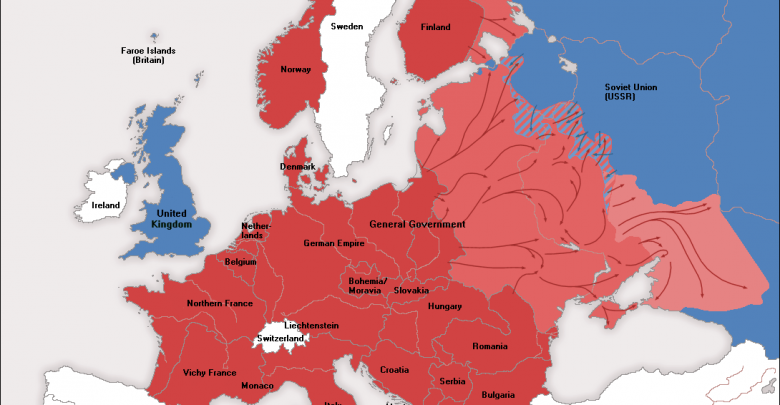
This was the largest land invasion in history, involving:
Over 3 million German soldiers
Thousands of tanks and aircraft
A front stretching over 2,000 kilometers
The invasion caught Stalin by surprise, despite intelligence warnings. In the early stages:
German forces advanced rapidly
Millions of Soviet soldiers were captured
Large areas of Soviet territory were occupied
The invasion turned the war into a struggle for survival for the Soviet Union. Several major battles became decisive in stopping and reversing the German advance.
Siege of Leningrad (1941–1944): German forces surrounded the city of Leningrad (now St. Petersburg) for nearly 900 days.
During the siege:
Civilians faced starvation, freezing temperatures, and bombardment
Over one million civilians died
Despite this, the city never surrendered, becoming a symbol of Soviet resistance.
Battle of Stalingrad (1942–1943): The Battle of Stalingrad was one of the most important turning points of the war. German forces attempted to capture the industrial city on the Volga River. After months of brutal urban fighting:
Soviet forces surrounded and trapped the German army
In February 1943, the German Sixth Army surrendered
This was the first major defeat of Nazi Germany and marked the beginning of a Soviet offensive.
Battle of Kursk (1943): The Battle of Kursk was the largest tank battle in history. Germany attempted one final major offensive against Soviet forces. The Soviet Union, having prepared strong defensive positions, successfully repelled the attack.
After Kursk:
Germany lost the ability to launch major offensives in the East
Soviet forces began steadily advancing toward Germany
The Soviet Union suffered the highest losses of any country in the war. Approximately:
27 million Soviet citizens died, including soldiers and civilians
Thousands of cities, towns, and villages were destroyed
Much of the western Soviet Union was devastated
Despite these losses, the Soviet Union rebuilt its military and pushed German forces back. After Germany’s invasion, the Soviet Union became part of the Allied powers, alongside:
The United States
The United Kingdom
These countries cooperated to defeat Nazi Germany. The United States provided aid to the Soviet Union through the Lend-Lease program, supplying weapons, vehicles, and food. Although they were allies during the war, political differences between the USSR and Western countries remained.
Dissolution of the Comintern (1943)
The Comintern was formally dissolved in May 1943 during World War II. This decision reflected changing geopolitical realities. The Soviet Union was now allied with the United States and Great Britain against Nazi Germany.
Maintaining an organization explicitly dedicated to overthrowing capitalist governments undermined Soviet diplomatic relations with its wartime allies.
Dissolving the Comintern was intended to reassure Western governments that the Soviet Union was committed to wartime cooperation rather than global revolution.
Although formally abolished, Soviet influence over foreign communist parties continued through other channels, including the later creation of the Cominform in 1947.
Soviet Advance and Capture of Berlin (1945)
By 1944–1945, Soviet forces had driven German armies out of Soviet territory and into Eastern Europe. The Red Army occupied several countries, including:
Poland
Hungary
Romania
Bulgaria
Czechoslovakia
In May 1945, Soviet forces captured Berlin, the German capital. Hitler committed suicide shortly before the city fell. Germany surrendered on 8 May 1945, ending the war in Europe.
After the war, Soviet troops remained in Eastern Europe. The Soviet Union helped establish communist governments loyal to Moscow in these countries.
This created a Soviet sphere of influence across Eastern Europe. These developments later contributed to tensions with Western powers and the beginning of the Cold War.
Creation of the United Nations
World War II demonstrated the failure of the League of Nations, which had been unable to prevent aggression in the 1930s. In response, the United Nations (UN) [more like the Banker Union] was created in 1945 to promote "international peace and cooperation."
The Soviet Union became one of the five permanent members of the UN Security Council, giving it significant global influence.
Emergence of the Soviet Union as a Superpower
By the end of World War II, the Soviet Union had become one of the world’s two superpowers. This was due to:
Its enormous military strength
Its control over Eastern Europe
Its role in defeating Nazi Germany
Its political influence in global affairs

The only other country with comparable power was the United States. The rivalry between these two nations would shape global politics for the next several decades.
World War II transformed the Soviet Union into a global superpower. Through decisive victories such as Stalingrad and Kursk, the Soviet Union defeated German forces and captured Berlin in 1945.
Despite suffering immense losses, the USSR emerged with expanded territory, control over Eastern Europe, and major influence in the postwar international system.
Creation of Israel (1947)
The creation of the State of Israel was approved by the United Nations General Assembly on 29 November 1947, through UN Resolution 181, which proposed dividing British-controlled Palestine into separate Jewish and Arab states. The Soviet Union played a significant and often overlooked role in supporting this decision.
At the time, Palestine was under British rule, but Britain announced it would withdraw due to "rising conflict between Jewish and Arab communities." The United Nations proposed a partition plan, creating:
A Jewish state
An Arab state
An "internationally controlled" Jerusalem
During the UN vote, the Soviet Union voted in favor of the partition plan, helping ensure its passage. The final vote was:
33 in favor
13 against
10 abstentions
The USSR was joined by several Soviet-aligned countries, including:
Ukraine (then part of the USSR but had its own UN vote)
Belarus (also part of the USSR)
Poland
Czechoslovakia
This support was important because it showed that both the United States and the Soviet Union supported Israel’s creation, despite being Cold War rivals. [Their interests surprising aligned on this issue since it was what the Banking Cabal wanted]
The Soviet Union also allowed Czechoslovakia to supply weapons to Jewish forces, which helped them during the 1948 Arab–Israeli War.
Despite initially supporting Israel’s creation, the Soviet Union later changed its position due to unknown reasons. By the early 1950s:
Israel became more closely aligned with the United States
The USSR began supporting Arab states instead, such as Egypt and Syria
Soviet policy became strongly anti-Zionist
This marked a major shift in Cold War politics in the Middle East. After this, he wouldn't live for long.
Early Cold War and Stalin’s Final Years (1953)
Although the Soviet Union had cooperated with the United States and Britain during World War II, this wartime alliance quickly collapsed after 1945. The two sides had fundamentally different political and economic systems.
The United States supported capitalism, democracy, and open markets, while the Soviet Union promoted communism, one-party rule, and state-controlled economies. Mutual distrust, ideological hostility, and competition for global influence led to the beginning of the Cold War, a period of political, military, and economic rivalry that would last for decades.
Soviet Control Over Eastern Europe
At the end of World War II, the Red Army occupied much of Eastern Europe, having driven out Nazi forces. Stalin used this military presence to establish pro-Soviet communist governments in the region.
Countries that became Soviet satellite states included:
Poland
East Germany
Hungary
Romania
Bulgaria
Czechoslovakia

Although these countries were officially independent, their governments were heavily influenced and controlled by Moscow. Stalin’s goals in Eastern Europe were to:
Create a buffer zone to protect the USSR from future invasions
Expand communist influence
Strengthen Soviet security
Opposition political parties were gradually eliminated, and communist parties took full control, often through intimidation, manipulation of elections, and repression.
Beginning of the Cold War
By the late 1940s, tensions between the Soviet Union and Western powers had hardened into open rivalry. Key developments included:
Winston Churchill’s “Iron Curtain” speech (1946), warning that Europe was divided between communist East and democratic West
Truman Doctrine (1947), in which the United States pledged to support countries resisting communism
Marshall Plan (1947), which provided economic aid to rebuild Western Europe
The Soviet Union viewed these actions as attempts to weaken its influence and refused to participate. It also prevented Eastern European countries from accepting Marshall Plan aid.
In response, the Soviet Union strengthened its control over its sphere of influence.
Formation of NATO (1949)
In 1949, the United States and its allies formed the North Atlantic Treaty Organization (NATO), a military alliance designed to defend Western Europe against possible Soviet aggression. Member countries included:
United States
United Kingdom
France
Canada
Several Western European nations
NATO was based on the principle of collective defense, meaning that an attack on one member would be treated as an attack on all. The Soviet Union saw NATO as a direct threat, increasing Cold War tensions and accelerating the arms race.
Soviet Atomic Bomb and Military Expansion
One of the most significant developments of this period was the Soviet Union’s successful test of its first atomic bomb in 1949.

This ended the United States’ monopoly on nuclear weapons and marked the beginning of the nuclear arms race.
As a result:
Both sides began rapidly expanding their nuclear arsenals
Military spending increased dramatically
The possibility of nuclear war became a major global concern
The Soviet Union also maintained one of the largest conventional armies in the world and expanded its military presence in Eastern Europe. This strengthened its position as a global superpower.
Despite victory in World War II, Stalin maintained strict political control within the Soviet Union. Repression continued through:
Surveillance by secret police
Arrests and imprisonment in labor camps (Gulag)
Suppression of dissent
Stalin became increasingly suspicious and paranoid in his final years. One example was the “Doctors’ Plot” (1952–1953), in which several Soviet doctors were accused of plotting to poison Soviet leaders. Many historians believe this was based on false accusations and reflected Stalin’s growing mistrust. Political repression remained a central feature of Soviet life.
Stalin’s Death (1953)
Joseph Stalin died on 5 March 1953, after "suffering a stroke." His death marked the end of an era.

At the time of his death:
He had ruled the Soviet Union for nearly three decades
He had transformed it into a major industrial and military power
He had established a highly centralized and authoritarian political system
However, his rule had also caused:
Millions of deaths through purges, famine, and repression
A climate of fear and political control
After his death, Soviet leaders began a struggle for power and gradually introduced some reforms, including reducing the level of repression.

Khrushchev Era: De-Stalinization and Crisis (1953–1964)
After Stalin’s death in March 1953, a struggle for power took place among Soviet leaders. By 1955, Nikita Khrushchev emerged as the dominant figure and became First Secretary of the Communist Party.

His leadership marked a major shift in Soviet politics. While he remained committed to communism and Soviet power, he sought to reform some of Stalin’s harshest policies and reduce the atmosphere of terror that had defined the previous era.
The Secret Speech and De-Stalinization (1956)
The most dramatic moment of Khrushchev’s rule came in February 1956, when he delivered his famous “Secret Speech” to the Communist Party Congress. In this speech, Khrushchev:
Denounced Stalin’s cult of personality
Condemned the mass arrests, executions, and purges
Accused Stalin of abusing power and violating socialist principles
This speech shocked Soviet officials and communist movements worldwide because Stalin had previously been glorified as a hero.
This marked the beginning of De-Stalinization, a process aimed at reducing repression and reforming the Soviet system.
Following the Secret Speech, Khrushchev introduced several reforms to reduce fear and terror within Soviet society. Key reforms included:
Release of millions of prisoners from the Gulag labor camp system
Reduction in mass arrests and executions
Closure of many forced labor camps
Less strict censorship in literature and culture
This period became known as the “Khrushchev Thaw,” a time when Soviet society experienced somewhat greater freedom compared to Stalin’s rule. However, the Soviet Union remained a one-party authoritarian state, and political opposition was still not allowed.
Hungarian Uprising (1956)
Despite Khrushchev’s reforms, the Soviet Union did not tolerate challenges to its control over Eastern Europe. In October 1956, a major uprising occurred in Hungary, where protesters demanded:
Political freedom
Withdrawal of Soviet troops
Democratic reforms
At first, the Soviet Union hesitated, but Khrushchev ultimately ordered military intervention.
Soviet tanks entered Budapest and crushed the rebellion. As a result:
Thousands of Hungarians were killed
Thousands more were imprisoned or fled the country
This demonstrated that although repression was reduced inside the USSR, the Soviet Union would still use force to maintain its control over satellite states.
The Space Race and Sputnik (1957)
One of the Soviet Union’s greatest achievements under Khrushchev was its success in the Space Race, a technological competition with the United States.

In October 1957, the Soviet Union launched Sputnik 1, the world’s first artificial satellite. This was a historic achievement because:
It demonstrated Soviet scientific and technological strength
It shocked the United States and the Western world
It showed that the USSR had advanced rocket technology, which could also be used for nuclear missiles
Sputnik increased Soviet prestige globally and intensified Cold War rivalry.
Cuban Missile Crisis (1962)
The most dangerous moment of Khrushchev’s leadership was the Cuban Missile Crisis in October 1962. The crisis began when:
The Soviet Union secretly placed nuclear missiles in Cuba, a communist country close to the United States
The United States discovered the missiles and demanded their removal
This led to a tense confrontation between the two superpowers. For several days:
Both sides prepared for possible nuclear war
The world came close to global catastrophe
Eventually, Khrushchev agreed to remove the missiles in exchange for:
A U.S. promise not to invade Cuba
Secret removal of U.S. missiles from Turkey
Although war was avoided, the crisis damaged Khrushchev’s reputation among Soviet leaders, who believed he had taken unnecessary risks and then backed down.
Khrushchev also attempted economic reforms, especially in agriculture. One major program was the Virgin Lands Campaign, which aimed to increase food production by farming new land in Kazakhstan and Siberia.
Initially successful, the program later failed due to poor planning and environmental problems.
Economic problems, food shortages, and unpopular reforms weakened Khrushchev’s support.
Removal From Power (1964)
By the early 1960s, many Soviet officials had lost confidence in Khrushchev. They criticized him for:
Economic failures
Foreign policy crises
Unpredictable leadership
In October 1964, Khrushchev was removed from power by his own colleagues in the Communist Party. He was replaced by Leonid Brezhnev, who adopted a more conservative approach. Khrushchev was not imprisoned or executed. He was allowed to retire peacefully.
Brezhnev Era: Stability and Stagnation (1964–1982)
After Nikita Khrushchev was removed in 1964, Leonid Brezhnev became the dominant leader of the Soviet Union. His period in power is often described as an era of “stability” because it ended the constant reforms and political upheavals of the Khrushchev years.

However, this stability gradually turned into economic stagnation, bureaucratic inefficiency, and long-term decline, even as the Soviet Union remained a powerful global superpower.
Brezhnev aimed to provide predictability and stability after Khrushchev’s unpredictable reforms. He strengthened the authority of the Communist Party and reduced major policy changes.
Key features of his political rule included:
Strong control by the Communist Party
Emphasis on order and stability
Slower pace of reform
Expansion of the state bureaucracy
This created a system where officials remained in their positions for many years, which reduced political conflict but also limited innovation. Brezhnev’s period is sometimes called the “Era of Stagnation” because the system became rigid and resistant to change.
Although the Soviet economy had grown rapidly under Stalin, growth slowed significantly during Brezhnev’s rule. Major economic problems included:
Declining industrial growth
Lack of technological innovation
Inefficient central planning
Poor productivity
State-run industries often focused on meeting production quotas rather than improving quality or efficiency. Agriculture also struggled:
The Soviet Union had to import grain from Western countries, including the United States
Food shortages became more common
Living standards improved slowly, but economic progress lagged behind Western countries.
During Brezhnev’s long rule, corruption became more widespread. Problems included:
Officials using their positions for personal privilege
Lack of accountability
Promotion based on loyalty rather than competence
This created a large, inefficient bureaucracy that resisted reform. Many officials were elderly, and leadership became increasingly disconnected from social and economic realities.
Military Expansion
Despite economic problems, Brezhnev oversaw a major expansion of Soviet military power.
Key developments included:
Growth of the Soviet nuclear arsenal
Expansion of conventional military forces
Increased global military presence
By the 1970s, the Soviet Union had reached nuclear parity with the United States, meaning both sides had similar nuclear strength. This made the USSR one of the two dominant global superpowers.
Détente with the United States (1970s)
During the 1970s, the Soviet Union and the United States entered a period of Détente, which means a relaxation of Cold War tensions. This included:
Arms control agreements such as SALT I (1972)
Increased diplomatic communication
Some cooperation in trade and science
Détente helped reduce the immediate risk of nuclear war. However, competition and distrust between the two sides continued.
Vietnam War (1955–1975)
During this time, the Vietnam War was one of the major Cold War conflicts.
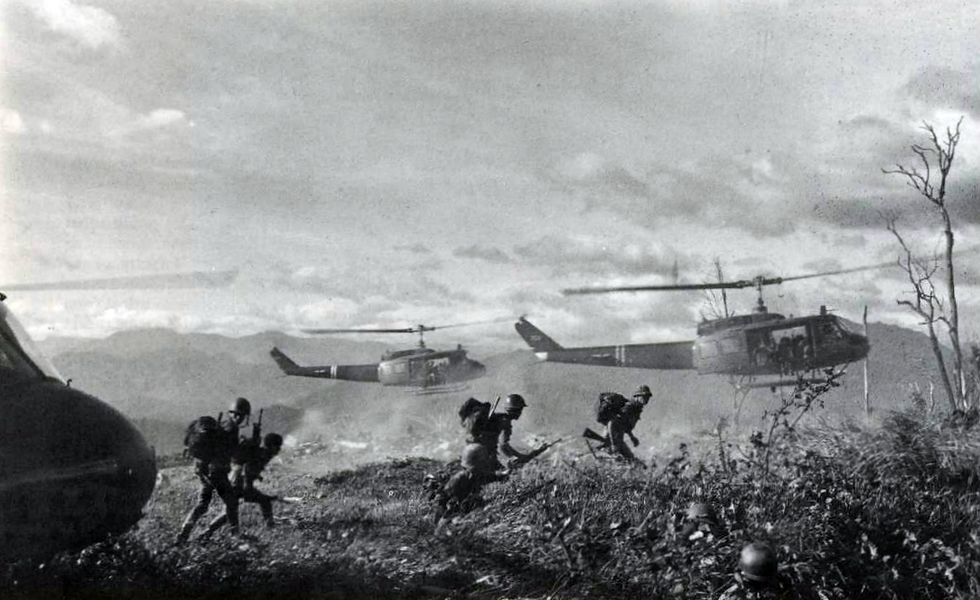
The Soviet Union supported: North Vietnam (communist)
The United States supported: South Vietnam
Although Soviet troops did not directly fight U.S. forces, the USSR provided:
Weapons
Equipment
Financial support
The eventual communist victory in Vietnam in 1975 was seen as a success for Soviet influence.
Prague Spring and Soviet intervention (1968)
In 1968, the communist government of Czechoslovakia introduced reforms to allow:
Greater political freedom
Freedom of speech
Economic reforms
This reform movement became known as the Prague Spring. Brezhnev feared these reforms would weaken Soviet control. In response:
Soviet troops invaded Czechoslovakia
The reforms were crushed
This action established the Brezhnev Doctrine, which declared that the Soviet Union had the right to intervene in socialist countries to preserve communist rule. This showed that the Soviet Union would not tolerate political independence in its satellite states.
Soviet Invasion of Afghanistan (1979)
One of the most important and damaging events of Brezhnev’s rule was the Soviet invasion of Afghanistan in 1979. The Soviet Union invaded to support a friendly communist government facing rebellion.

However, the war became extremely difficult. Soviet forces faced:
Strong resistance from Afghan fighters (Mujahideen)
Difficult terrain
Long, costly military conflict
The war lasted nearly 10 years (1979–1989). Consequences included:
Heavy Soviet casualties
Economic strain
Damage to Soviet international reputation
The war became known as the “Soviet Union’s Vietnam,” because it was a costly and unsuccessful conflict similar to America’s experience in Vietnam.
During the Brezhnev era, positive aspects included:
Relative political stability
Guaranteed employment
Basic social services such as education and healthcare
However, negative aspects included:
Limited personal freedom
Shortages of consumer goods
Lack of economic progress
Many citizens experienced frustration with the system. This period of stagnation weakened the Soviet system and contributed to its later collapse.
Crisis and Collapse: Gorbachev and Dissolution of the USSR (1985–1991)
By the mid-1980s, the Soviet Union was facing deep economic, political, and social problems. Economic growth had slowed dramatically, corruption was widespread, technological development lagged behind the West, and the costly war in Afghanistan had drained resources and morale.
In 1985, Mikhail Gorbachev became General Secretary of the Communist Party and attempted major reforms to save and modernize the Soviet system.

Gorbachev did not intend to destroy communism. His goal was to reform socialism and make it more efficient, humane, and sustainable. However, his reforms unintentionally weakened the system and accelerated its collapse.
Gorbachev’s Reforms: Glasnost and Perestroika
Gorbachev introduced two major reform programs:
Glasnost (“Openness”): Glasnost aimed to increase transparency, freedom of expression, and public discussion.
This included:
Reduced censorship in media and literature
Public criticism of government corruption and past abuses
Release of political prisoners
Greater freedom to discuss Soviet history, including Stalin’s repression
For the first time in decades, Soviet citizens could openly criticize their government. However, Glasnost also exposed:
Government failures
Economic problems
Past crimes and repression
This weakened public trust in the Communist Party.
Perestroika (“Restructuring”): Perestroika aimed to reform and modernize the Soviet economy. Key measures included:
Limited introduction of market-like economic practices
Allowing small private businesses
Reducing central government control over some industries
Encouraging efficiency and productivity
However, the reforms created confusion:
The old planned economy weakened
A fully functioning market economy did not yet exist
Production declined
Shortages worsened
Instead of improving the economy, Perestroika contributed to economic instability and decline.
End of Soviet Control in Eastern Europe
One of the most important consequences of Gorbachev’s reforms was his decision not to use military force to control Eastern Europe, unlike previous Soviet leaders.
As a result, communist governments across Eastern Europe collapsed. Major events included:
Poland (1989): First non-communist government elected
Hungary (1989): Opened its border with Western Europe
East Germany (1989): Mass protests led to the fall of the Berlin Wall
Fall of the Berlin Wall (November 1989)
The Berlin Wall had symbolized the division between communist Eastern Europe and democratic Western Europe.

Its fall marked:
The collapse of communist rule in East Germany
The end of Soviet dominance in Eastern Europe
The approaching end of the Cold War
By 1990, Germany was reunified.
At the same time, the Soviet Union itself faced growing internal problems. The Soviet economy deteriorated rapidly:
Severe shortages of food and goods
Declining industrial production
Rising inflation
Living conditions worsened for many citizens.
Rise of Nationalist Movements
The Soviet Union was made up of 15 republics, including:
Russia
Ukraine
Lithuania
Latvia
Estonia
Georgia
Kazakhstan
Under Glasnost, nationalist movements emerged in many republics. These groups demanded:
Greater autonomy
Or full independence
The Baltic republics (Lithuania, Latvia, Estonia) were among the first to push for independence.
This threatened the unity of the Soviet state.
The August Coup attempt (1991)
In August 1991, hardline Communist leaders who opposed Gorbachev’s reforms attempted to seize power. They:
Placed Gorbachev under house arrest
Tried to restore strict communist control
However, the coup failed after:
Massive public protests
Resistance led by the Jew, Boris Yeltsin, as the leader of the Russian Republic
The coup’s failure had major consequences. It weakened the Communist Party permanently. It also strengthened independence movements.
Collapse of the Soviet Union
After the failed coup, republic after republic declared independence. By late 1991, the Soviet Union had effectively ceased to function as a unified state
On December 25, 1991, Mikhail Gorbachev resigned as president.
On December 26, 1991, the Soviet Union was officially dissolved.
This ended:
The USSR
Communist rule across the Soviet empire
The Cold War era
Emergence of Russia under Boris Yeltsin
After the collapse, the largest republic, Russia, became an independent country. Boris Yeltsin became its first president. Russia inherited:
Most Soviet military forces
Soviet nuclear weapons
The Soviet Union’s international position
However, Russia faced major economic and political challenges in the years that followed.
In summary, the Soviet Union started with the Bolshevik Jews and ended with the Jew-led 'Republican' resistance. It emerged from a civil war as a revolutionary socialist state, transformed into an industrial superpower under Stalin, defeated Nazi Germany, and rivaled the United States for global dominance.
Yet its rigid political system, economic inefficiencies, and inability to reform without destabilization led to its collapse in 1991. Its legacy remains central to modern geopolitics.


Comments