
.png)

Hidden Truths: Who Were the Bolsheviks? (Russian Revolution)
- A. Royden D'Souza

- Feb 18
- 37 min read
Updated: Feb 20
Marxism did not originate in Russia. It was conceived in the industrial cities of Western Europe, especially London, Manchester, Paris, and Brussels—societies already transformed by factories, urban wage labor, and capitalist finance.

Russia, by contrast, was still largely a pre-industrial empire. The arrival of Marxism there was therefore not a natural outgrowth of domestic industrial conditions, but the result of deliberate intellectual transmission.
Understanding how Marxism entered Russia requires examining three parallel channels: translation and publication, intellectual exile and study abroad, and the development of clandestine revolutionary networks inside the Russian Empire.
The Structure of Russia in the Late 19th Century
To grasp the significance of Marxism’s arrival, one must first understand how fundamentally different Russia was from Western Europe.
An overwhelmingly agrarian society: As late as 1897, approximately 80–85% of Russia’s population were peasants.
Most lived in rural villages organized around traditional communal land systems known as the mir. Industrial workers existed, but they were a small minority.
Russia had:
Few large industrial cities
Limited factory infrastructure
Minimal urban middle class
By contrast, Marx had based his theory on societies where industrial workers were already numerous and politically conscious. Russia did not fit this model.

At that time, Russia was ruled by the Tsar, a monarch. There was:
No constitution (until 1905)
Limited parliament
No political parties
The Tsarist secret police, the Okhrana, monitored and infiltrated revolutionary groups. Punishments included:
Imprisonment
Exile to Siberia
Execution
This forced revolutionary ideas underground.
Limited but Rapidly Growing Industrialization
Despite its agrarian base, Russia began industrializing in the late 19th century. Major industrial centers developed in:
St. Petersburg
Moscow
Kiev
Baku
These cities created a small but growing working class. This emerging proletariat would later become crucial.
However, in the 1870s and 1880s, they were still too few to drive a mass Marxist movement on their own.
Transmission Channel One: Translation and Circulation of Marx’s Works
Marx’s ideas entered Russia first through translation. Ironically, Russia was one of the first countries to translate Das Kapital. The first Russian translation appeared in 1872.
This was partly because Tsarist censors initially misunderstood the book. They believed its complex economic analysis made it too difficult to influence ordinary readers.
They assumed it was harmless academic material. This proved to be a miscalculation. Russian intellectuals, especially those of Jewish origin, studied the text intensely.
They began applying its ideas to Russia’s political conditions, forming their plans of revolution in secret. By the late 1870s, Russia had become one of the most active centers of Marxist study.
Transmission Channel Two: Russian "Intellectuals" Studying in Western Europe
Because of political repression at home, many Russian intellectuals lived in exile in Western Europe. Cities like:
Geneva
Zurich
Paris
London
became hubs of Russian revolutionary activity.
These intellectuals encountered Marxist ideas directly. Some even met Marx and Engels personally. They returned to Russia—or worked from exile—to spread these ideas.
This created an important pattern: Marxism in Russia was initially an imported intellectual framework, born with nefarious intent, not a spontaneous worker movement.
Transmission Channel Three: Underground Revolutionary Networks
Because legal political organizing was impossible, Marxist groups operated secretly. These underground circles:
Printed illegal pamphlets
Distributed banned literature
Held secret meetings in synagogues
Gathered covertly across the country
Participation carried enormous risk. Members could be arrested at any time. This underground environment shaped the character of Russian Marxism. It became:
Highly disciplined
Secretive
Conspiratorial in structure
This later influenced Bolshevik organizational methods.
Excerpts from the Documentary, Europa: The Last Battle: The next goal for the elite was to finish off Tsarist Russia, and from there, launch an invasion of the rest of Europe. According to the state department’s documents, a group of Jews from the banking cabal, including Jacob Schiff, Mortimer Schiff, Otto Kahn, Felix Warburg (Rothschild rep), and Isaac Zeelman, already planned the overthrow of the Russian Tsar before 1916. [Remember the Warburg funding of Japanese invasion into Russia during 1905]
If one follows the family ties and monetary trails, it becomes clear that communism was a Jewish ideology invented by a Jew, funded by Jewish bankers, and economically manifested by Jewish Bolsheviks.

The family of Tsar Nicholas II, his wife Alexandra, his daughters, Olga, Tatiana, Maria, Anastasia, and his son and successor, Alexei represented the traditional Russian society. As a boy, Tsar Nicholas II had witnessed the assassination of the Tsar Alexander I by the Jewish terrorist Vera Figner, leader of a terrorist organization called the ‘People’s Will.’
After this, tensions between the Russian Orthodox Christians and Jews started. Instead of executing the Bolsheviks after their failed 1905 revolution, Tsar Nicholas II had exiled them. Now, his mercy would come back to haunt him.
The Pre-Marxist Revolutionary Tradition: The Narodniks
Before Marxism, the dominant revolutionary ideology in Russia was Populism, represented by the Narodnik movement.

Narodniks believed: Russia could skip capitalism entirely. They argued socialism could emerge directly from peasant communes. They attempted to mobilize peasants.
This largely failed. Peasants often distrusted them. Some Narodnik groups turned to terrorism. They assassinated Tsar Alexander II in 1881. This triggered severe repression.
After this failure, many revolutionaries lost faith in peasant-based revolution. They turned toward Marxism.
The Emancipation of Labour Group (1883): The Birth of Russian Marxism
The decisive turning point came in 1883. Three exiled revolutionaries:
Georgi Plekhanov (Russian)
Vera Zasulich (Russian)
Pavel Axelrod (Jewish)
founded the Emancipation of Labour Group in Geneva.
This was the first explicitly Marxist organization in Russian history. Their key activities included:
Translating Marxist works into Russian: They translated:
The Communist Manifesto
Other Marxist texts
This made Marxist theory accessible to Russian readers.
Critiquing earlier Russian revolutionary ideologies: They argued:
Russia could not bypass capitalism.
They insisted Russia must first develop capitalism.
Only then could socialism emerge.
This was directly aligned with Marx’s original theory.
Training future revolutionaries: They educated a new generation of Marxists. These ideas eventually influenced figures like Lenin.
The Fundamental Problem: Russia Did Not Fit Marx’s Model
This created a major contradiction. Marx predicted revolution in advanced industrial countries.
Russia was not one. It lacked:
Large industrial workforce
Strong capitalist economy
Mature class structure
This forced Russian Marxists to modify Marx’s theory. This adaptation would later become Leninism.
Critical Analysis: The Intellectual and Social Disconnect
Critics of Russian Marxism, both contemporary and modern, have pointed to several structural weaknesses.
Critique 1: Elite-driven ideology
Unlike in Western Europe, Marxism in Russia was not initially driven by workers. It was driven by:
Educated intellectuals
Political exiles (especially Jews)
Middle-class revolutionaries
Many had little direct connection to factory workers. Historian Richard Pipes argued:
Russian Marxism was “an ideology looking for a constituency.”
This meant revolution was often planned from above, not emerging organically from below.
Critique 2: Adaptation of theory to fit political goals
Marx believed socialism would emerge naturally from capitalism. Russian Marxists increasingly argued revolution could be accelerated artificially. This shift opened the door to:
Organized revolutionary vanguards
Minority political seizure of power
This would later become central to Bolshevik strategy.
Critique 3: Underground culture encouraged authoritarian organization
Because Marxist groups operated illegally, they developed:
Secretive leadership structures
Strict discipline
Centralized command
Critics argue this culture later translated into authoritarian political governance after the revolution.
Lenin and the Transformation of Marxism (1890s–1917)
The most decisive figure in turning Marxist theory from an abstract intellectual doctrine into an organized revolutionary instrument was Vladimir Ilyich Ulyanov "Lenin" (1870–1924).

Lenin’s maternal grandfather, Alexander Blank, is widely documented by historians as having been born into a Jewish family. His Jewish name was Israel (or Srul) Blank. He supposedly converted to Russian Orthodox Christianity, changing his name to Alexander Blank and integrating into Russian society.
When Lenin began his political activity in the 1890s, Marxism already existed in Russia as an intellectual movement, but it remained largely confined to:
Small discussion circles
Exiled intellectual communities
Underground propaganda groups
It had not yet become an effective mechanism for seizing state power.
Lenin’s contribution was not merely promoting Marxism, but restructuring it into a disciplined system of revolutionary organization capable of acting decisively under conditions of political repression.
In doing so, Lenin fundamentally altered Marx’s original operational assumptions, even while claiming to preserve its theoretical foundations.
Lenin’s Key Innovation: The Vanguard Party
The central innovation Lenin introduced was the concept of the Vanguard Party. This idea emerged from Lenin’s analysis of a problem he believed Marx had underestimated:
The working class, on its own, would not automatically develop revolutionary political consciousness.
Marx had assumed that as capitalism developed, workers would increasingly recognize their exploitation and eventually organize themselves into a revolutionary force.
Lenin disagreed with this assumption. He argued that workers, left to their own everyday experiences, would focus primarily on:
Immediate economic concerns
Wage increases
Improved working conditions
Rather than the complete overthrow of the political and economic system. Lenin described this limited awareness as: “Trade union consciousness”
This form of consciousness, in his view, was insufficient for revolution. It might produce reform. But it would not produce systemic transformation.
Because of this, Lenin argued that revolutionary awareness had to be brought to the workers from outside their immediate economic struggle. This responsibility would fall to a specialized organization. That organization would be the Vanguard Party.

Lenin envisioned the Vanguard Party as:
A relatively small minority
Composed of highly committed and politically educated revolutionaries
Operating with strict discipline and coordination
Their role would be to act as the political leadership of the working class. Specifically, they would:
Lead the masses: The party would guide workers toward revolutionary goals. It would interpret political conditions and determine strategy. It would provide direction rather than waiting for spontaneous mass initiative.
Seize power on their behalf: Lenin argued that when political conditions became favorable, this organized party would take decisive action to overthrow the existing state. They would do so in the name of the proletariat, even if the entire proletariat was not directly involved in planning or executing the seizure of power.
This principle became the operational foundation of the Bolshevik model of revolution. The revolution would be carried out by a politically conscious minority claiming to represent the historical interests of the majority.
How This Differed from Marx’s Original Expectation?
This represented a significant shift in emphasis. Marx had emphasized the self-emancipation of the working class. Lenin emphasized the leadership of a revolutionary organization acting for the working class.
In Marx’s conception: The masses themselves were the primary agents.
In Lenin’s conception: The party became the decisive agent.
The workers became the social base the party claimed to represent. This distinction would later become one of the most debated aspects of Leninism.
Critical Analysis: Contemporary and Later Critiques
Lenin’s Vanguard model was controversial even among fellow Marxists. Critics argued that it introduced structural features that could produce outcomes very different from Marx’s original vision.
Criticism 1: Replacement of worker democracy with elite leadership
Critics argued that Lenin’s system concentrated decision-making power in the hands of a relatively small number of individuals. Instead of workers directly exercising political authority, the Vanguard Party exercised authority in their name.
This created the possibility that: The party could become a ruling elite rather than a representative instrument. Critics feared this would undermine the idea of genuine worker control.
Criticism 2: Justification of authoritarian control
Because the Vanguard Party claimed to represent the true historical interests of the working class, it could justify overriding the immediate wishes of workers if it believed those wishes were mistaken.
In this framework: Opposition could be interpreted not simply as disagreement, but as political backwardness. This raised concerns that centralized leadership could operate without meaningful accountability.
Rosa Luxemburg’s critique (1904): One of the most important early critics of Lenin’s model was Rosa Luxemburg, a Marxist revolutionary and political theorist.
In 1904, she published a critique of Lenin’s organizational ideas. She warned that Lenin’s system risked creating a situation where: The party leadership ruled over the working class, rather than the working class ruling itself.
She argued that excessive centralization could transform the revolutionary organization into a structure dominated by its leadership. Her warning can be summarized as follows:
Lenin’s system could produce dictatorship over the proletariat, not dictatorship by the proletariat. Her concern was that political power, once concentrated, might not easily return to the broader population.

The Bolshevik–Menshevik Split (1903)
The split between the Bolsheviks and Mensheviks in 1903 was one of the most decisive turning points in the history of Russian revolutionary movements.
It marked the moment when Russian Marxism divided into two fundamentally different approaches—not over the ultimate goal of socialism, which both factions shared—but over how a revolutionary party should be organized, who should control it, and how it should operate.

This division occurred at the Second Congress of the Russian Social Democratic Labour Party (RSDLP), held in Brussels and later London, where delegates gathered to formalize the party’s structure and leadership.
At the center of the dispute were Vladimir Lenin and Julius Martov, both committed Marxists, but with sharply different visions of revolutionary organization.
The Immediate Issue: Definition of Party Membership
The formal trigger for the split was a seemingly technical question: Who should qualify as a member of the party? However, beneath this question lay deeper disagreements about power and control.
Lenin argued that party membership should be restricted to individuals who:
Actively worked within party organizations
Followed party discipline strictly
Participated directly in revolutionary activity
In Lenin’s view, party members should be: Professional revolutionaries, not passive supporters. He believed that limiting membership would ensure loyalty, discipline, and operational security.
This model emphasized quality and commitment over numbers. Lenin feared that a large, loosely organized party would become ineffective, vulnerable to infiltration, and politically unreliable.
Julius Martov proposed a broader definition. He argued that party membership should include individuals who:
Supported the party’s program
Assisted its work
Even if they were not full-time activists
Martov believed that socialism should be rooted in: Mass participation. He feared that Lenin’s model would concentrate too much power in a small group.
Martov’s approach emphasized inclusiveness, openness, and democratic participation. He believed a socialist movement should reflect the working class itself, not a small leadership circle.
The Origin of the Names: Bolsheviks and Mensheviks
During voting at the congress, Lenin’s faction won a temporary majority on key organizational questions. Because of this, his faction became known as: Bolsheviks (from the Russian word bolshinstvo, meaning majority)
Martov’s faction became known as: Mensheviks (from menshinstvo, meaning minority). However, these names were somewhat misleading.
In the years that followed, the Mensheviks were often numerically larger. But the names remained permanently associated with the two factions.
The disagreement reflected two fundamentally different visions of how socialism should develop in Russia.
Bolshevik vision: Revolution led by a disciplined leadership
Lenin believed that revolution required:
Strong central leadership
Strict organizational discipline
Unified political direction
He believed a tightly organized party could act decisively during moments of political crisis. His model emphasized:
Efficiency
Control
Strategic coordination
He saw decentralization as dangerous.
Menshevik vision: Socialism emerging from broad social participation
The Mensheviks believed socialism should develop through:
Mass political participation
Democratic processes
Gradual political development
They believed a broad-based party would be more legitimate. They feared that excessive centralization could undermine socialist principles. Their model emphasized:
Representation
Internal democracy
Mass legitimacy
It can be said that the Menshevik version represented the more genuine or better version of "communism," whereas Bolshevik version represented the hijacked version that prioritized control of wealth rather than welfare of people.
These ideological differences translated into very different organizational structures.
The Bolsheviks became:
More centralized
More hierarchical
More tightly controlled
Leadership authority was stronger. Decision-making was concentrated at the top. Membership requirements were stricter.
The Mensheviks were:
More decentralized
More open to wider participation
More internally diverse
Their structure allowed more debate and dissent. They tolerated greater internal disagreement.
The Rising Unrest in Tsar's Russia
Russo-Japanese War (1904–1905): This war was a disaster for Russia. Russia wanted to expand into Korea and Manchuria (China), but Japan opposed this. War began in 1904. Russia expected easy victory, but Japan humiliated Russia.
Major defeats:
Port Arthur captured
Russian army destroyed in Manchuria
Russian navy annihilated at Battle of Tsushima (1905)
This shocked the world. An Asian country defeated a European empire. The war caused massive economic crisis, hunger, and anger at the Tsar. This directly led to Bloody Sunday.
Bloody Sunday (January 1905)
On this day, the Tsar wasn’t at the Winter Palace. He was at Tsarskoye Selo, outside St Petersburg. Government feared unrest and advisors warned him protests might turn violent.
He did not expect a massacre. But his absence made things worse. Protesters believed they were coming to speak to him personally. Instead, they were shot. This destroyed his image permanently.
Different groups used different narratives:
Monarchists (pro-Tsar): Claimed provocateurs caused violence to discredit the Tsar
Revolutionaries: Sometimes emphasized deliberate massacre ordered from above
Modern conspiracy theories: Suggest hidden forces manipulated events (Considering Japan was funded by Warburg (Rothschild sidekick) to stop Russia)
The Revolution of 1905
After Bloody Sunday, Russia exploded into revolt. This was Russia’s first revolution. It led to nationwide chaos:
Worker strikes
Peasant uprisings
Military mutinies
Most famous was the Battleship Potemkin mutiny. Sailors rebelled against officers. This was extremely dangerous for the Tsar. Because the military was turning.
Workers formed councils called Soviets. These were early revolutionary governments. Lenin later used these to seize power in 1917.
Tsar Forced to Compromise — October Manifesto (1905)
The Tsar agreed to new reforms. He created The Duma: Russia’s first parliament. He promised:
Constitution
Civil rights
Elections
This temporarily calmed unrest. However, after stabilizing things, Nicholas reversed many reforms. He:
Limited Duma power
Dissolved parliament multiple times
Ruled mostly as autocrat again
He never truly accepted democracy. Prime Minister Pyotr Stolypin crushed revolutionaries. Thousands were executed. Execution gallows became known as: “Stolypin’s necktie”
Revolution was suppressed. But anger remained under the surface. During this period, Lenin was outside Russia. He was moving through Switzerland, London, Paris, waiting for opportunity.
World War I and the Collapse of Tsarist Russia (1914–1917)
World War I was the single most immediate and destabilizing force that led to the collapse of the Tsarist regime. What had already been a politically rigid and socially strained empire was pushed into systemic breakdown by the immense military, economic, and administrative pressures of modern industrial war.
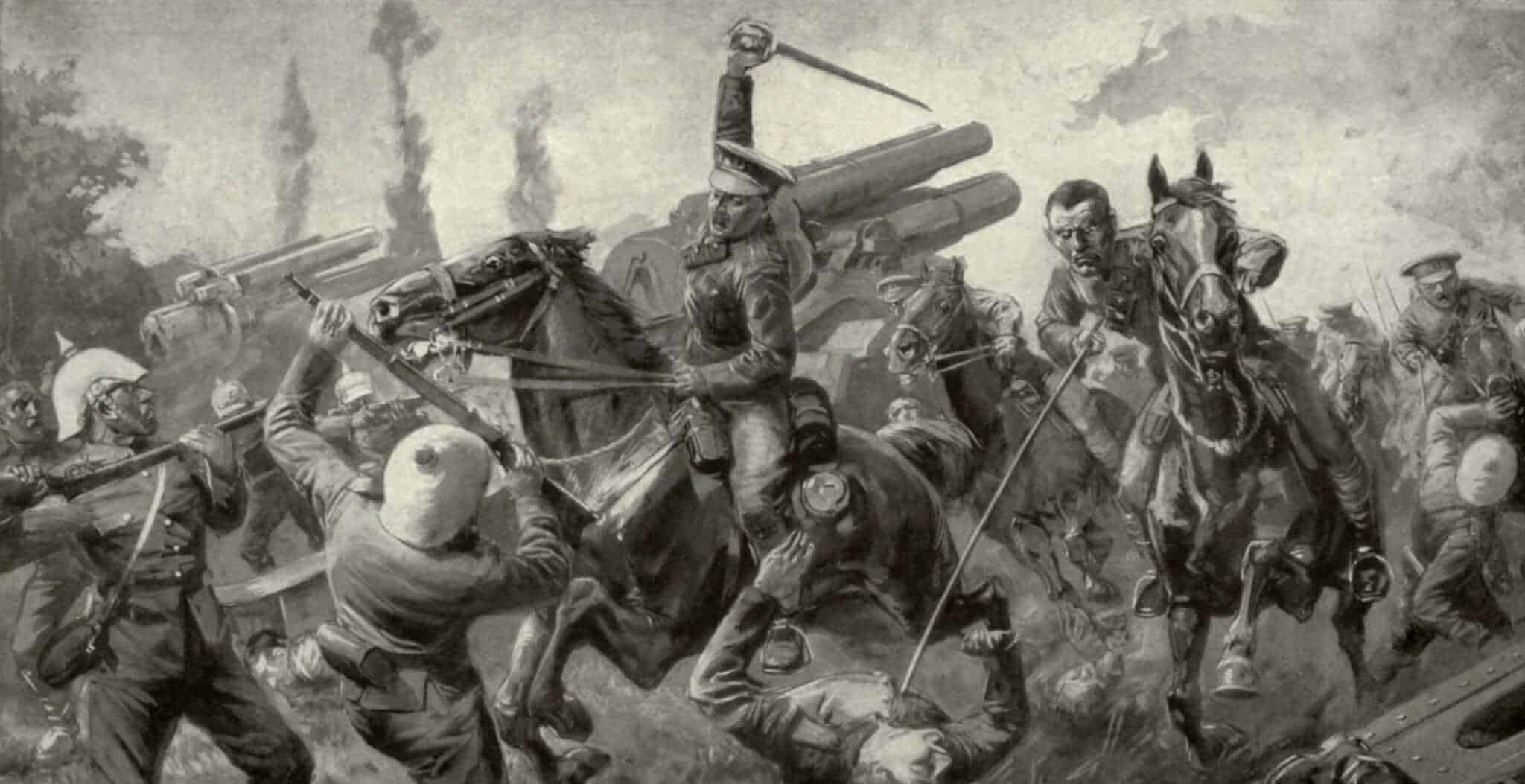
The period between 1914 and 1917 saw the rapid erosion of state authority, public confidence, and economic stability, creating conditions in which revolutionary movements could operate far more effectively than before.
Interesting World Events During the Time:
December 23, 1913: U.S. Fed created (Rothschild, Warburg, Schiff Take control)
June 28, 1914: Archduke Franz Ferdinand assassinated by a Serbian revolutionary
November 16, 1914: U.S. Fed operational
1914–1916: The U.S. remained officially neutral, though it traded heavily with Allied countries like Britain and France.
January 1915: J.P. Morgan & Co. was officially appointed by Britain and France as their exclusive purchasing agent in the United States, arranging loans and buying war supplies for the Allied powers.
This created a perpetual money machine for the bankers syndicated with Morgan, including National City Bank of New York (James Stillman / later Frank A. Vanderlip), First National Bank of New York (George F. Baker), Kuhn, Loeb & Co. (Jacob Schiff), Guaranty Trust Company (J.P. Morgan interests; Henry P. Davison), Bankers Trust (J.P. Morgan interests; Benjamin Strong).
The debt remained on British and French ledgers, owned to these American bankers. Europe was sucked dry, feeding the American economy.
However, the allies were reaching the end of their credit, and if they lost, the loans would default. This created a panic among bankers. They needed the U.S. to enter the war, which would open up the U.S. Treasury.
May 7, 1915: Germany sank the British passenger ship Lusitania, killing 128 Americans, which angered U.S. public opinion. (The Lusitania conspiracy theory claims British leaders, especially the Head of Navy, Winston Churchill, knowingly allowed the ship to be sunk to influence U.S. opinion and bring America into the war, but historians have not found definitive proof of deliberate sacrifice.)
November 7, 1916: Wilson was reelected President, defeating Charles Evans Hughes, campaigning on the slogan “He kept us out of war.” However, the bankers had funded his campaign on the promise that it was essential for U.S. to enter the war, or the economy would crash.
February 1917: The Zimmermann Telegram was intercepted — Germany secretly proposed a military alliance with Mexico against the United States. This shocked the American public. Arthur Zimmermann, German Foreign Secretary, was sending a telegram to German ambassador in Mexico, which was intercepted by the British. Although Germany denied the telegram, Arthur Zimmermann betrayed Germany and publicly admitted the telegram was real on March 3, 1917. This admission severely undermined the forgery claim.
April 2, 1917: This provided the moral pretext needed to sway public opinion. But that wasn't enough to recruit soldiers. To turn public apathy, the government, backed by bankers, launched an aggressive propaganda campaign led by the Committee of Public Information (Creel Committee).
The goal was to demonize the enemy and glorify the conflict. The media, already compromised by bankers, portrayed Germans as demonic 'Huns.' They ran stories of German soldiers bayoneting babies. These stories would be later proven complete fabrications invented by British Intelligence, and propagated by American press.
Hollywood was also leveraged to make movies demonizing the Kaizer as the 'Beast of Berlin.' It spurred young men to enlist and their families to buy war bonds. Acts were passed criminalizing criticism of war. With the public finally brought to line, Wilson asked Congress for a declaration of war.
April 6, 1917: Congress approved it. Americans were taxed more, and the money that they gave to the government through bonds and donations, including the money from the Treasury, went to Britain and France, who used it to pay back the loans taken from the bankers. Private debt was successfully converted into public debt. American soldiers were shipped off to die in a war started by bankers.
November 7, 1917: Bolsheviks seize power in Russia
March 3, 1918: Russia formally withdraws from the war when Allied victory is all but guaranteed (Treaty of Brest-Litovsk)
Military Catastrophe and Mass Casualties
When Russia entered World War I in August 1914 on behalf of Serbia, a Slavic, Orthodox Christian nation, it mobilized millions of soldiers to fight against Germany and Austria-Hungary.
However, Russia was poorly prepared for modern warfare. Its military suffered from severe structural weaknesses, including:
Inadequate weapons production
Shortages of rifles and ammunition
Weak transportation infrastructure
Inefficient command structure
The consequences were devastating. Between 1914 and early 1917:
Millions of Russian soldiers were killed, wounded, or captured
Entire armies were encircled and destroyed in battles such as Tannenberg (1914) and the Masurian Lakes
In some cases, new recruits were sent to the front without sufficient weapons, expected to use rifles from fallen soldiers.
These losses had a profound psychological and political impact. They weakened confidence in the Tsarist government and created widespread disillusionment.
Economic Collapse in Russia
The war effort placed enormous strain on Russia’s economy. Russia’s industrial system was not strong enough to sustain prolonged total war.
Major consequences included:
Inflation: The government printed large amounts of paper money to fund the war. This caused rapid inflation. The purchasing power of wages collapsed. Workers found it increasingly difficult to afford basic necessities.
Food shortages: Although Russia produced large amounts of grain, the war disrupted transportation networks. Railways were overloaded with military logistics. Food could not be delivered efficiently to cities.
Major urban centers such as Petrograd (formerly St. Petersburg) experienced severe shortages. Bread became scarce. Long lines formed outside bakeries. Food riots began to occur.
Industrial disruption: Factories struggled with:
Fuel shortages
Labor unrest
Supply chain breakdowns
Production declined. Unemployment increased. Urban living conditions deteriorated rapidly.
Political collapse and loss of confidence in Tsar Nicholas II
Tsar Nicholas II made a critical political mistake in 1915. He personally took command of the Russian army at the front. This had two major consequences:
First, he became directly associated with military failures. Second, he left the government in the capital under the authority of his wife, Empress Alexandra, and her controversial advisor Grigori Rasputin.

Who was Rasputin? A Siberian mystic. He gained influence because the Tsar’s son, Alexei, had hemophilia. A life-threatening bleeding disease. Rasputin appeared to help relieve his suffering. This made Alexandra trust him completely.
As a result, Rasputin gained enormous political influence. He influenced:
Government appointments
Minister selection
State decisions
Many ministers were incompetent. Government became chaotic. Rasputin was seen as:
Corrupt
Immoral
Manipulative
People believed Russia was being controlled by a mad mystic. This destroyed confidence in the monarchy. In 1916, Russian nobles murdered him. They believed they were saving the monarchy. But it was too late. The damage was already done.
The government appeared increasingly incompetent and disconnected from public suffering. By early 1917, many sectors of Russian society—including workers, soldiers, and political elites—had lost confidence in the Tsar.
The February Revolution and the Overthrow of the Tsar (1917)
In February 1917 (March 1917 in the modern calendar), protests broke out in Petrograd. These protests began as:
Bread riots
Worker strikes
They quickly escalated. Large numbers of workers joined demonstrations. Crucially, many soldiers refused to suppress the protests. Some soldiers joined the demonstrators instead.

This was a decisive turning point. Without military support, the Tsar could not maintain control. On March 2, 1917, Tsar Nicholas II abdicated the throne. This ended more than 300 years of Romanov dynasty rule.
Formation of the Provisional Government
After the Tsar’s abdication, political authority was transferred to a new body known as the Provisional Government. This government was composed primarily of:
Liberal politicians
Moderate socialists
Members of the educated political class
They promised major reforms, including:
Constitutional government
Civil liberties
Democratic elections
Their goal was to transform Russia into a modern democratic state. For the first time, Russia had the possibility of becoming a parliamentary democracy. However, the Provisional Government faced enormous challenges:
Continuing war
Economic collapse
Political instability
It chose to continue Russia’s participation in World War I, which proved highly unpopular.
What Happened to the Tsar and His Family?
The royal family was first placed under arrest in March 1917, shortly after Tsar Nicholas II abdicated. Here is the exact timeline:
Date: 15 March 1917 (Gregorian calendar)
Event: Nicholas II abdicated the throne during the February Revolution.
The new Provisional Government immediately put him under arrest in Alexander Palace, Tsarskoye Selo (near Petrograd, now St. Petersburg). At first, it was relatively mild house arrest.
They had servants
Could walk in the gardens
But were guarded and not free
His wife Alexandra and children were already there, so the whole family became prisoners together.
However, the Provisional Government feared:
Rescue attempts
Political unrest
So they moved the family far away to: Tobolsk, Siberia. Conditions became stricter, but still not brutal yet; not until the Bolsheviks came for them.
Lenin’s Situation in Exile
At the time of the Tsar’s overthrow, Vladimir Lenin was living in exile in Switzerland. He had been outside Russia for many years due to his revolutionary activities.
When he learned of the Tsar’s fall, Lenin immediately sought to return. He understood that the political crisis presented a rare opportunity.
However, traveling to Russia during wartime was extremely difficult. The most direct route required passing through Germany, which was at war with Russia.
Germany’s Decision to Allow Lenin’s Passage
The German government made a strategic decision to allow Lenin and his group to travel through German territory. This journey took place in April 1917.
Lenin and his associates were transported in what became known as a “sealed train.”
Germany’s motivation was geopolitical.

German leaders believed that Lenin’s revolutionary activities could:
Increase political instability inside Russia
Weaken Russia’s war effort
Possibly force Russia to withdraw from the war
From Germany’s perspective, Lenin represented a potential instrument of strategic disruption. Germany provided:
Safe transit across its territory
Logistical assistance for travel
This was approved by Zimmerman (The one who betrayed Germany later on). The main individual who proposed and helped arrange the plan was a Jew: Alexander Parvus (Israel Lazarevich Helphand)
He was:
A Marxist revolutionary
Working with German authorities
Acting as a political intermediary
Parvus convinced German officials that helping Lenin return to Russia could destabilize Russia.
This Marxist operated in German political and financial circles where the Warburg family (apprenticed by Rothschild) was influential, which is why their names sometimes appear together in secondary claims.
Max Warburg was senior partner at M.M. Warburg & Co. He served as an advisor to the German government during WWI, and participated in German financial and diplomatic planning.
It is interesting to note that the bankers were linked across enemy lines. Warburg = Germany, Rothschild = Britain, France. Rothschild, Warburg, Schiff = U.S.
Financial Support and Political Influence Operations
In addition to transportation, German authorities also provided financial support to revolutionary networks operating in Russia. This support was channeled indirectly through intermediaries (like Parvus) and political organizations.
Many conspiracies claim that Warburg played an important role in funding Lenin and his 'revolutionaries.'
The purpose was to 'assist' (or infiltrate) political forces that opposed Russia’s continued participation in the war. This financial assistance helped fund:
Revolutionary publications
Political organizing
Propaganda efforts
Historians continue to study the scale and significance of this support. However, it is well documented that German authorities saw revolutionary unrest in Russia as serving their military interests.
Critical Analysis
The role of Germany in facilitating Lenin’s return has been widely debated by historians.
Critique 1: Lenin’s return as a geopolitical intervention
Critics argue that Germany’s decision to transport Lenin into Russia was a calculated political operation. Germany was effectively inserting a revolutionary actor into enemy territory during wartime.
From this perspective, Lenin’s return was not simply the movement of a political exile, but part of a broader strategic effort to destabilize Russia. Some historians have described this as a form of early geopolitical warfare.
Critique 2: Foreign assistance as a contributing factor to Bolshevik success
Critics argue that German assistance provided the Bolsheviks with resources and opportunities that might not otherwise have existed.
These included:
Physical access to Russia at a critical moment
Financial resources
The ability to rapidly reenter political activity
This assistance occurred during a period when Russia’s political system was already weakened.
Critics argue that foreign involvement amplified internal instability.
Critique 3: Lenin as a political destabilizing force during wartime
From the German perspective, Lenin’s political program aligned with their military interests. Lenin called for:
Immediate end to the war
Withdrawal of Russia from the conflict
This position directly benefited Germany’s strategic situation. Some historians have therefore argued that Lenin functioned, intentionally or not, as a destabilizing force within Russia during a time of war.
Excerpts from the Documentary, Europa: The Last Battle: The Jew Alexander Kerensky was given 1 million dollars from the Jewish Wall Street Banker Jacob Schiff to immediately free all political prisoners and lift the bank on political exiles to permit them to return to Russia.
Who was Krensky? Kerensky was a Lawyer, a socialist politician, and a powerful public speaker. He opposed Tsar Nicholas II and supported democratic reform.
When the Tsar abdicated in March 1917, a temporary government formed. Kerensky joined it as Minister of Justice. He quickly rose in influence, and later became Minister of War. Then finally Prime Minister of Russia.
He became the most powerful man in Russia at age 36. He ruled Russia during its most fragile transition — and failed to save democracy.

The Bolshevik Revolution (October 1917)
By October 1917, Russia had experienced eight months of political instability following the fall of the Tsar. The Provisional Government, which had replaced the monarchy, faced growing crises:
Continuing Russia’s participation in World War I
Severe food shortages
Economic collapse
Loss of authority over workers and soldiers
At the same time, the Bolshevik Party, led by Vladimir Lenin, had been expanding its influence, particularly in key urban centers like Petrograd. Lenin believed the moment was ripe for decisive action.
The Nature of the October Seizure of Power
The Bolshevik takeover began on the night of October 24–25, 1917 (November 6–7 in the modern calendar). It was organized and executed by the Military Revolutionary Committee, a Bolshevik-controlled body operating within the Petrograd Soviet.

Rather than a spontaneous nationwide uprising, the operation involved planned, strategic occupation of critical infrastructure.
Bolshevik forces moved to seize:
Bridges
Railway stations
Telegraph and telephone exchanges
Government offices
Military headquarters
These locations were essential for controlling communications and transportation. Resistance was limited in many areas. The Provisional Government’s authority had already weakened significantly.
Opinion: This feels more like an invasion and a siege packaged as a 'Communist Revolution of the People' by the same cabal that funds wars. An hijacked ideology used to hoodwink the nation's people.
Excerpts from the Documentary, Europa: The Last Battle: Revolutionaries quickly flooded into any and all public offices. Anarchy began as criminals plundered houses and people were murdered and robbed.
Jacob Schiff was chairman of the Kuhn Loeb Bank and an assistant of the Rothschilds. He took care of the contacts between the revolutionary movement in Russia and the Jewish Masonic Order, B’nai B’rith.
On March 27th, 1917, the Jews, Jacob Schiff and Max Warburg sent Lev Davidovich Bronstein, better known as Trotsky, and his group of Jewish communists off to Russia to lead a Jewish revolution, with no less than 20 million in gold, today worth billions.
Some 90,000 exiles, including Jews and Masons, returned from all over the world to infiltrate Russia. Most of them changed their Jewish names to blend into the European society better.
Another bank who financed the revolution was the Swedish Jew Olaf Aschberg of the NIA bank in Stoclkholm. Olaf’s grandson, Robert Aschberg, is a former member of the Swedish Communist party and today leader of the Zionist anti-white organization called Expo in Sweden.
Trotsky recruited Russian Jews from the immigrant population of the lower east side of Manhattan and trained them as revolutionaries. Lenin, Marlo, Raddick, Kamenev returned from Switzerland. Stalin, Sverdlov, and Zinoview returned from Siberia.
Aleksandr Isayevich Solzhenitsyn, a Soviet and Russian Nobel-Prize-winning author and dissident who helped to raise global awareness of political repression in the Soviet Union, especially the Gulag prison system, said:
"You must understand, the leading Bolsheviks who took over Russia were not Russians. They hated Russians. They hated Christians. Driven by ethnic hatred, they tortured and slaughtered millions of Russians without a shred of human remorse. It cannot be overstated. Bolshevism committed the greatest human slaughter of all time. The fact that most of the world is ignorant and uncaring about this enormous crime is proof that the global media is in the hands of the perpetrators."
To put this into perspective, from the top, the Jews (despite being a minority) accounted for:
95% Members of the Bolshevik Central Government
92% Commanders of the main Gulags
78% Comissars
50% Generals of the Soviet Secret Police
40% High-ranking officers in the Soviet secret police
38.5% Senior posts in the Soviet security apparatus
Of the 22 ministers in the first Soviet government, 17 were Jews. The few are not themselves Jewish, often were Freemasons, had Jewish wives, and spoke Yiddish (Jewish language). We can’t know for a fact that Stalin was Jewish, but he spoke Yiddish and had three Jewish wives.
Some historians claim that Stalin was Georgian, and some say he was was a Georgian Jew. Los Angeles B’nai B’rith (Freemason) messenger, for example, stated that Stalin was a Jew. Stalin’s real name was allegedly Ioseph Vissarionovich Dzhugashvili.
Let's go back in time to get some context on Jewish enmity against Russians (a popular conspiracy theory):
The Khazars were a powerful, semi-nomadic Turkic-speaking people who established a major commercial empire (Khazaria) in the 6th–10th centuries AD, spanning modern southeastern Russia, the North Caucasus, and parts of Ukraine. (This was the same time the 'Tengu' myth started appearing in Japan)
In 800 AD, an ultimatum was delivered by the Rus and other surrounding nations impacted by robberies, abductions, and ritual murders that the Khazars must convert into Christianity, Islam, or Judaism.
The Khazarian king chose Judaism, but despite his promise, the oligarchs kept practicing ancient blood rituals. They melded these practices with the teachings of the Talmud (not as much focus on the Torah), forming a hybrid religion of the Khazarian Jews.
They fought extensive wars with the Arab Caliphate, which explains their hatred of the Arabs. In 965 AD, the Rus' prince Sviatoslav I of Kiev crushed the Khazar state, causing its collapse. The Russian conquest into the Khazar kingdom drove most of them out.
Unfortunately, the Khazars had a well-developed spy network and were able to escape across Europe, taking their vast fortunes of gold and silver. They infiltrated Europe and Slavic nations, and maybe Asia too, infecting many nations and city states.
Some claim they continued their “pagan-Judaism,” conducting sacrificial rituals in secret. They are said to also have plotted revenge against Russia and vowed to retake their homeland of Khazar (Ukraine).
Back to 1917: It was reported that Jews around the world celebrated when the Judeo-Bolsheviks seized power in Moscow. In fact, one of the first legislative acts passed by the Bolsheviks was the “anti-semetism act.” This law made it a criminal offense to defame Jews and Judaism. Even a joke about the Jews was classified as a ‘hate-crime’ punishable by 10 years in prison.
Another conspiracy: The Bolsheviks were actually created and deployed by the Jewish Khazarian Mafia (KM) as the essential part of their long planned revenge on the Russian Czar and the Russian people for breaking up Khazaria and exiling them. Many say this was the reason for the Bolshevik Holocaust (Genocide of approximately 30-60 million Russians).
"We cannot state that all Bolsheviks are Jews. But without Jews there would have been no Bolshevism. For a Jew there is nothing more insulting than the truth. The blood maddened Jewish terrorists murdered sixty-six million in Russia from 1918-1957.”
-Aleksandr Isayevich Solzhenitsyn
The Storming of the Winter Palace
The central symbolic event of the revolution was the capture of the Winter Palace, where members of the Provisional Government were located.

Bolshevik forces, including:
Armed workers (Red Guards)
Revolutionary soldiers
Sailors from the Kronstadt naval base
surrounded and entered the building.
The government ministers were arrested. The Provisional Government was effectively dissolved. This marked the transfer of political power into Bolshevik hands.
The events in Petrograd involved thousands of participants, but Russia was a vast country with over 150 million people. The seizure of power was concentrated primarily in the capital.
In many parts of Russia:
The transfer of power occurred gradually
Local authorities remained uncertain
Political loyalties were divided
This has led to debate among historians about the extent of popular participation. The Bolsheviks themselves presented the event as a revolution representing the will of workers and soldiers. Critics have argued it was primarily an organized takeover by a disciplined political minority (majority of whom were Jews).
Political Actions Taken by the Bolsheviks
After taking power, the Bolsheviks moved quickly to secure their position. They established a new government called:
The Council of People’s Commissars
This body was dominated by Bolshevik leaders (again, most of them were Jews). They issued decrees announcing:
Withdrawal from World War I (once U.S. joined the war and allied victory was guaranteed for the bankers)
Supposed redistribution of land, and soon, seizure
Transfer of political authority to Soviets (workers’ councils, in name only)
These measures were intended to consolidate support.
Clarification on 'redistribution' of land: Shortly after taking power, the Bolsheviks issued the Decree on Land. This decree:
Abolished private ownership of landed estates
Confiscated land from Nobles, Aristocrats, The Church, The Crown (Tsar’s family), and Large landlords.
These lands were declared 'property of the people' (again, in name only)
In reality, peasants had already begun seizing land spontaneously during 1917, even before the Bolsheviks took power. They occupied estates, forced out landlords, and divided land among village families.
The Bolsheviks did not start this process. They initially supported it and gave it official government backing to gain the trust of the people.
The land was:
Distributed to peasant communities
Managed locally by village councils
Peasants farmed it themselves. This was extremely popular among peasants. It helped the Bolsheviks gain rural support.
Initially, the peasants controlled the land. But later, under Soviet policy (especially under Stalin in the late 1920s–1930s): The government:
Took control of land again
Forced peasants into collective farms (collectivization)
So early redistribution was later reversed into state-controlled farming. Once power was consolidated into the Jewish-majority elite at the top, peasant support was no longer needed.
Dissolution of the Constituent Assembly
Before the Bolshevik takeover, elections had already been scheduled for a Constituent Assembly, which was intended to create a democratic constitution. These elections were held in November 1917. The results did not give the Bolsheviks a majority.
Another socialist party, the Socialist Revolutionaries, won more seats. When the Assembly met in January 1918, the Bolsheviks allowed it to convene briefly. They then ordered it dissolved.
Armed guards closed the assembly. It was never allowed to reconvene. Political authority remained with the Bolshevik government.
Following the consolidation of power, opposition political activity increasingly faced restrictions. Opposition parties were gradually:
Excluded from political authority
Suppressed
Prevented from organizing against the government
The Bolsheviks argued these measures were necessary to defend the revolution during a period of instability and civil conflict. Critics argued these actions eliminated political pluralism.
What this shows? Democracy was subdued by the Judeo-Bolshevik minority, which paved the way for an authoritarian 'communist' regime that transferred all power and wealth to a few elite at the top. Although it was labeled 'public or people's property,' it was all owned privately by an authoritarian few.
Creation of the Cheka (Secret Police)
In December 1917, the Bolsheviks established a security organization called the:
Cheka (Extraordinary Commission)
Its official purpose was to:
Combat counterrevolution
Prevent sabotage
Defend the new government
The Cheka had authority to:
Investigate political opposition
Arrest suspects
Conduct security operations
It operated outside normal judicial procedures. This marked the beginning of a new state security apparatus.
Critical Analysis
The October events have been interpreted differently by various historians.
Critique 1: Concentration of power in a single party
Critics argue that political power became concentrated within the Bolshevik Party leadership.
Instead of multiple political parties sharing power, decision-making authority was centralized.
This led to the emergence of a one-party state.
Critique 2: Limited role of broad electoral support
The dissolution of the Constituent Assembly has been cited as evidence that the Bolsheviks did not rely primarily on electoral legitimacy. Critics argue this represented a shift away from parliamentary democracy. The Bolsheviks argued that Soviets represented a more direct form of 'worker representation.'
Critique 3: Role of organized minority action
Some historians emphasize the organizational discipline of the Bolsheviks. Their centralized structure allowed them to act decisively during a period of state collapse.
Historian Orlando Figes described the October events as:
“Not a people's revolution, but a party seizure of power.”
This interpretation emphasizes the role of political organization rather than spontaneous mass uprising.
Excerpts from the Documentary, Europa: The Last Battle: David R. Francis, U.S. Ambassador to Russia said in January, 1918: “The Bolsheviks leaders here in Russia, most of whom are Jews and 90% are returned exiles care little for Russia or any other country but are internationalists and they are trying to start a world-wide social revolution.”
The Jewish role in the communist revolution was mentioned in many major Jewish publications, such as the Jewish Encyclopedia and the Universal Jewish Encyclopedia, and Encyclopaedia Judaica.
In fact, they were boasting about the essential role of the Jews in the Russian Revolution.
The Jewish Chronicle said: “There is much in the fact of Bolshevism itself, in the fact that so many Jews are Bolshevists, in the fact that the ideals of Bolshevism at many points are consonant with the finest ideals of Judaism.”
Civil War and Creation of Communist State (1918–1922)
After the Bolsheviks seized power in October 1917, their control over Russia was far from secure. Large parts of the country rejected Bolshevik authority, and competing political, military, and regional forces moved to challenge the new government.
The Russians considered the Bolshevik leadership as outsiders. By mid-1918, Russia descended into a full-scale civil war that would determine whether the Bolsheviks could retain power and establish a new state.
The Main Sides in the Civil War
A blood civil war broke out between the Bolshevik Red Army led by Trotsky and the Russian White Army led by Admiral Kolchak before the Jews could establish the Soviet powerhouse and set up their totalitarian system.
The conflict is often simplified as Reds vs Whites, but in reality it involved multiple groups.
The Reds (Bolsheviks): The Red Army, organized by Bolshevik leadership, fought to preserve the new Soviet government.

They were composed of:
Workers from major cities
Former Imperial Russian soldiers
Jewish political commissars enforcing ideological loyalty
The Bolshevik Red Army was led by Leon Trotsky (Jewish), who reorganized it into a centralized fighting force.
The Whites (anti-Bolshevik forces): The White forces were not a single unified group. They included:
Former Tsarist officers
Monarchists who wanted the Tsar restored
Liberals who wanted parliamentary democracy
Anti-communist socialists
The White Army was united mainly by opposition to Bolshevik rule, but divided in their goals.
The war also involved:
Nationalist movements seeking independence (Ukraine, Finland, Baltic states)
Peasant militias resisting Bolshevik control
Foreign military forces from Britain, France, the United States, and Japan
These foreign powers intervened for several reasons, including:
Preventing the spread of communism
Reopening the Eastern Front against Germany
Supporting anti-Bolshevik forces
These groups were NOT loyal to the Bolsheviks. Their main goal was independence, not necessarily restoring the Tsar or supporting communism.
1. Finland — against Bolsheviks (and succeeded)
Declared independence: December 1917
Civil war inside Finland (1918): Finnish Reds (socialists), supported by Bolsheviks vs Finnish Whites, supported by Germany
Result: Finnish Whites won → Finland became independent.
2. Baltic States (Estonia, Latvia, Lithuania) — against Bolsheviks
They fought both Bolshevik Red Army and German forces at different times. Supported by:
Britain (naval support)
Some local anti-communist militias
Result: All three became independent by 1920.
3. Ukraine — fought everyone (very complex)
Ukraine had multiple competing forces:
Ukrainian nationalists — wanted independence
Bolsheviks — wanted Ukraine inside Soviet system
White Army — wanted Ukraine inside unified Russia
Foreign support:
Germany supported Ukrainian nationalists in 1918
Later, Bolsheviks defeated most nationalist forces
Result: Ukraine became part of Soviet Union.
2. Peasant militias (“Green Armies”)
These were mostly anti-Bolshevik, but also anti-White. They fought:
Bolsheviks — because Bolsheviks seized their grain
Whites — because Whites wanted centralized authority
They wanted:
Local autonomy
Control over their own land
They had no unified leadership. Eventually, Bolsheviks crushed most peasant resistance.
3. Foreign military forces — mostly supported anti-Bolsheviks (Whites)
Foreign intervention came mainly on the side of White forces (Western Nations and their Banking Handlers needed a unstable society, not a stable centralized power that excluded them. Even though some of them helped Bolshevik revolution, they hadn't expected them to consolidate power so quickly).
Here is exact breakdown:
Britain — supported White Army and sent troops, weapons, money to Northern Russia (Arkhangelsk), Southern Russia, and Baltic region. Their goal was to defeat Bolshevik and restore anti-German Eastern Front earlier.
France — supported White Army and sent troops and military equipment. It mainly operated in Southern Russia and Black Sea region. Its goal was to restore ally against Germany and prevent communist expansion.
United States — supported White Army (limited involvement) and sent about 13,000 troops total to Northern Russia and Siberia. The official reason to protect military supplies and assist Czech Legion evacuation. It also aimed to prevent complete Bolshevik victory.
Japan — supported anti-Bolshevik forces in Siberia. Japan sent largest foreign force (70,000+ troops). It sought to expand influence in eastern Russia and support anti-Bolshevik forces. Japan stayed longer than other foreign countries.
Czech Legion — major anti-Bolshevik military force, which is very important but often overlooked. Czech Legion included former POWs and wanted independence for Czechoslovakia. It was initially neutral, but later fought Bolsheviks after conflict with them. They controlled large parts of Siberia for a time, supported indirectly by Allies. However, foreign intervention was limited and did not decisively defeat the Bolsheviks.
The White Army was advancing toward Yekaterinburg, where the royal family was imprisoned. The Bolsheviks feared:
The Whites would rescue the Tsar
He would become a symbol to rally counter-revolution
Even if Nicholas himself had little political power left, his existence alone was dangerous to Bolshevik control. The entire family was killed — including children. This is the most disturbing aspect.
They were taken to a basement in the Ipatiev House. Told they were being moved for safety.
Instead, they were shot by a firing squad. Some children survived initial gunfire because jewels sewn into their clothing acted like armor. They were then killed at close range. Bodies were secretly buried.
Note: In 1998, after the fall of the Soviet Union, remains were formally buried with state honors. In 2000, the Russian Orthodox Church declared the family saints.
Excerpts from the Documentary, Europa: The Last Battle: The Jewish chairman of the central executive committee, Jacob Severlov, sent a message to the Jew, Jacob Yurovsky, head of the local Cheka, where he communicated that he had received orders from Jacob Schiff to eliminate the Tsar and his entire family. Sverdlov ordered Yurovsky to carry out these orders.
In the Spring of 1918, the Tsar and his family were taken to Ekaterinburg in the Urals, where Jacob Yurovsky was given the mission to imprison, plan, and assassinate the Imperial Family.
Yurovsky brought the Tsar and his family to a house, that previous had belonged to a wealthy Jewish merchant named Ipatiev.
The Imperial Family was abruptly woken in the middle of the night on July 17th 1918, when Yurovsky told them to dress and brought them to the basement. They were supposedly told they were going to pose for a group photograph, but the Jewish assassins Yurovsky, Nikulin, Ermakov, Vaganov had other plans in mind.
Seconds later, Yurovsky then pulled out his revolver and aimed it straight at the Tsar’s head and fired. Nicholas died instantly. Next, he shot Czarina Alexandra as she made the sign of the cross. Olga, Tatiana, Maria, and Anastasia were shot next.

The daughters were stabbed to death after the initial gunfire. Their doctor and three servants were also killed in cold blood. Items that were related to the Imperial family were burned and destroyed. Nothing was saved for the family. Even their dogs were slaughtered.
News of the brutal murder of the Romanovs would send shockwaves throughout Russia and all of Europe. To some Jews though, the slaughter of the Romanov family was treasured as a Jewish ritual murder.
In selected Jewish shops, they sold greeting cards with images that were unavailable to the non-Jewish ‘goyim.’ The postcards carry the image of the Tzadik. This is the image of a rabbinical Jew with the Talmud (or Torah) in his hand and a fowl in the other. The head of the depicted fowl is clearly shown to be the Christian Tsar.
Below this image is an inscription in Hebrew: “This is a sacrificial animal. So is my cleansing. It will be my replacement and cleansing the victim.”
Bolshevik Methods to Maintain Control
The war between Russians (Whites) and the Bolsheviks (Reds) was extremely destructive. Between 1918 and 1922, millions died due to:
Combat
Famine
Disease
Executions
Economic collapse
Industrial production fell sharply. Agricultural output declined. Transportation systems broke down. Much of the country was left economically devastated.
Facing multiple enemies and internal instability, the Bolshevik government implemented emergency measures to secure power. These included political repression, centralized control, and the use of force against perceived enemies.
The Bolsheviks targeted individuals and groups they believed posed threats to the revolution.
These included:
Political opponents
Suspected counterrevolutionaries
Former officials of the Tsarist regime
Arrests and executions were carried out by state security forces. The Bolshevik leadership argued these actions were necessary to defend the revolution during wartime conditions.
The Bolsheviks established early forced labor camps to detain:
Political prisoners
Suspected opponents
Individuals accused of sabotage
These camps were intended to isolate opponents and utilize their labor. They were administered by the state security apparatus. These early camps later became part of a much larger system under subsequent Soviet leadership.
The Cheka, created in December 1917, expanded significantly during the Civil War.
It functioned as the government’s internal security force. Its responsibilities included:
Identifying opposition
Arresting suspects
Conducting investigations
It operated with broad authority during wartime.
The Red Terror (1918–1921)
The period of intensified repression became known as the Red Terror. It began formally in September 1918, after:
An assassination attempt on Lenin
The killing of a Bolshevik official
In response, the government announced expanded measures against perceived enemies.
The Red Terror involved:
Mass arrests
Political executions
Suppression of opposition activity
The Bolshevik leadership described these actions as defensive measures in a civil war environment.
“To do evil, a human being must first of all believe that what he’s doing is good.”
— The Gulag Archipelago
War Communism: Economic and Social Control
During the Civil War, the Bolsheviks introduced a system known as War Communism.
This involved:
Government control of industry
Forced requisition of grain from peasants
Centralized distribution of resources
These policies were designed to support the Red Army and urban populations. However, they also caused:
Economic disruption
Peasant resistance
Famine in some regions
Bolshevik Victory and Creation of a New State
By 1921–1922, the Bolsheviks defeated most major opposition forces. Their victory was due to several factors:
Centralized leadership
Control of key industrial regions
Better coordination than divided opposition
In 1922, the Bolsheviks formally established the: Union of Soviet Socialist Republics (USSR). This marked the creation of a new political state based on communist principles.
Critical Analysis
Historians and political analysts have long debated the nature and significance of Bolshevik repression during the Civil War.
Critique 1: Violence as part of revolutionary strategy
Critics argue that the Bolsheviks viewed repression as a legitimate political tool.
Marxist revolutionary theory emphasized class conflict.
Opponents were often described as: Class enemies
Critics argue this classification allowed harsh measures to be justified as necessary for revolutionary survival.
Critique 2: Suppression of political pluralism
The Bolsheviks gradually eliminated competing political parties. This resulted in:
Concentration of political authority
Absence of organized opposition
Critics argue this ended the possibility of a multi-party political system.
Critique 3: Institutionalization of state security and coercion
The expansion of internal security organizations created permanent state institutions designed to monitor and suppress opposition.
These institutions continued to exist after the Civil War. Some historians argue this established patterns that influenced later Soviet governance.
“The line separating good and evil passes not through states, nor between classes, nor between political parties either — but right through every human heart.”
— The Gulag Archipelago (1973)
Excerpts from the Documentary, Europa: The Last Battle: The Jewish writer Moritz Steinschneider invented the term ‘anti-semetic’ in 1860. The term would be used to silence all those that dared to expose jewish crimes. Because of the predominantly Jewish character of the regime, the very first piece of legislation approved by the communist regime was the anti-semitism act in 1917.
Anti-semetism was made a capital crime. An anti-communist was regarded as an anti-semite. Leon Trotsky also started using the word racist to browbeat all dissenters of communist ideology and to render debate impossible.
These words are still used to this day to bully any politically incorrect person into silence. Even more now than ever, they’re trying to make it punishable to question or criticize their actions by calling it ‘hate speech’ ‘fake news’ and ‘anti-semetic.’
Experts say, “Anti-semetism is used as a great blockade. When somebody’s called an anti-semite, it’s usually because they’ve asked some questions or made some comments about the Jewish behavior in some way, shape, or form. And because Jews don’t want to discuss that behavior, they call you an anti-semite for daring to question that Jews do anything bad ever. Anything you say about Jews, Israel, or Zionism, you are going to be called an anti-semite. This is the defense mechanism they use to cover up their crimes and to prevent analysis of the criminal action that has happened, which so often leads to a Jewish perpetrator.”
“Jewish (Talmudic) philosophy is an excuse to commit crimes. You put all your morals aside, and you can do anything.”
- Franz Seiler
Many people who follow the Talmud and adhere to its dictates believe that abusing children, raping women, killing goyim, enslaving goyim, stealing money, maiming babies, murdering children, stealing land is all fair under the Talmudic law.
They believe they are better than anyone else, and they act accordingly. We see the horror in the world generated by that insanity.
"They were taught to be ruthless. It was a virtue to be ruthless to the goyim. It could be that they’re cheating everyone economically, and that’s a good thing for them. It’s only a step further from that to executing a goyim."
Conspiracy Claims that Haunt the USSR
Broader "conspiratorial" critique: Many believe that Lenin and others who spearheaded the movement did not care about Marx's principles. They only wanted to use the utopian ideas of communism to bring down the Kingdom and transfer power to a different set of elite (Jews).
The reason for this was, all proponents of the ideology had Jewish connections:

The banking families (Rothschild, Warburg, and Schiff) had already taken over the U.S. Federal Reserve 4 years before the Bolshevik formation. Their funding was seen in the conception of 'communism' as well as the organization of the Bolsheviks.
Jacob Schiff (1885-1920): German-American banker who financed Japan in the 1905 war with Russia. Was also involved in Anti-Tsarist movements such as Alexander Kerensky’s regime.
Alexander Parvus aka Israel Lazarevich Helphand (1867-1924): German, of Russian-Lithuanian descent. Marxist politicians close to Trotsky and Lenin, and worked under Zimmerman (who betrayed Germany). He also joined The Young Turks movement.
Genrikh Yagoda (1891-1938): One of the biggest mass murderers in history. He slaughtered millions of non-Jews in the Bolshevik-ruled Russia. He was a key administrator of the early Gulag forced labor camp system.
Leon Trotsky (1879-1940): One of 1905 revolution leaders, after which he fled to New York and worked as a journalist for the publication “New World.” When the Tsar abdicated, he returned to Russia to join the Bolsheviks in their covert invasion.
In 1917, when some starving peasants asked Trotsky for help, the Jewish ‘revolutionary’ replied, “You are starving? This is not famine yet. When your woman starts eating her children, then you may come and say we are starving.”
“If for the sake of communism it is necessary for us to exterminate 9/10ths of the people, we must not hesitate.”
-Lenin
Considering these atrocities by the Bolshevik 'Red Army,' many have began questioning the reliability of Bolshevik testimony. It is even raising questions about the Nazi 'Extermination Camps' that were supposedly liberated by the Bolsheviks after the fall of Germany:
Examples:
Auschwitz-Birkenau
Treblinka
Sobibor
Belzec
Chelmno
Majdanek
These were mostly in Poland → 'liberated' by Soviets.

Levy Mordechai "Karl Marx" (Born to a family of Jewish ancestry—his father Heinrich Marx was born Jewish but converted to Lutheranism before Karl was born.)
Ilyich Ulyanov "Vladimir Lenin" (Had one Jewish grandparent—his maternal grandfather, Alexander Blank, was born Jewish and converted to Russian Orthodoxy.)
Ioseb Besarionis dze Jughashvili "Joseph Stalin" (There were later rumors that his real father might have been someone else, like a local merchant or priest, occasionally claimed to be Jewish)
Davidovich Bronstein "Leon Trotsky" (Born Jewish—his parents were Jewish farmers in Ukraine, and he was ethnically Jewish though later became an "atheist.")
Communist ideology began as a philosophical critique of capitalism. But in Russia, it evolved into:
Highly centralized political control
Justified by ideology
Enforced by violence
Critics argue the Russian Revolution represents: Not liberation, but replacement of one authoritarian system with another.
Philosopher Bertrand Russell wrote after visiting Soviet Russia:
“What exists is not proletarian rule, but rule over the proletariat.”


Comments