
.png)

Ancient Scripture: Rig Veda (Hymns 1.46 - 1.50: Part 10 of Mandala 1)
- A. Royden D'Souza

- Jun 25
- 18 min read
Maṇḍala 1 is the largest book of the Rig Veda, containing 191 hymns. It is a collection of songs from multiple seer families, and its themes cover a wide range of deities; Agni, Indra, the Ashvins, Varuna, Mitra, and many others. It opens, fittingly, with an invocation to Agni, the god of fire, who acts as the divine messenger between humans and gods.
Rig Veda: Hymn 1.46 – To the Aśvins
Seer (Ṛṣi): Praskaṇva Kāṇva
Deity (Devatā): Aśvins
Meter (Chandas): Gāyatrī (verses 1–13), Triṣṭubh (verse 14)

Verses
ए॒षो उ॒षा अपू॑र्व्य॒ व्यु॑च्छति प्रि॒या दि॒वः ।
स्तु॒षे वा॑मश्विना बृ॒हत् ॥१॥
eṣo uṣā apūrvyā vy ucchati priyā divaḥ |
stuṣe vām aśvinā bṛhat ||1||
This Uṣas, the ancient, beloved of Heaven, dawns forth. I sing to you, O Aśvins, a lofty hymn.
ये द॒स्रा सिन्धु॑मातरा मनोत॒रा र॑यी॒णाम् ।
धि॒या दे॒वा वसु॑विदा ॥२॥
ye dasrā sindhumātarā manotarā rayīṇām |
dhiyā devā vasuvidā ||2||
O Wonder-workers, sons of the river (mother), thoughtful bestowers of riches, by your thought, O gods, you find good things.
वा॒मश्वि॑ना वसू॒यवो॑ नि॒धिं न॑ उप॒सेदु॑षे ।
उ॒तो नो॑ वसु॒मा रथः॑ ॥३॥
vām aśvinā vasūyavo nidhiṃ na upaseduṣe |
uto no vasumā rathaḥ ||3||
Desiring wealth, O Aśvins, we approach your treasure for the worshipper. And your chariot is laden with goods for us.
वा॒मश्वि॑ना वसू॒यवो॑ वि॒दुषा॑ रथ॒मा ग॑तम् ।
यो वां॒ सन्तं॑ नि॒धिं नरा॑ ॥४॥
vām aśvinā vasūyavo viduṣā ratham ā gatam |
yo vāṃ santaṃ nidhiṃ narā ||4||
Desiring wealth, O Aśvins, come with your chariot to the wise one. That treasure which is yours, O Heroes.
ता वा॑मु॒क्षा व॑हन्ति॒ रथे॒ या॒तं न॑ उप॒सेदु॑षे ।
उ॒तो नो॑ वसु॒मा रथः॑ ॥५॥
tā vām ukṣā vahanti rathe yātaṃ na upaseduṣe |
uto no vasumā rathaḥ ||5||
Those bulls carry you two on the chariot; come to us, to the worshipper. And your chariot is laden with goods for us.
अर्व॑न्ता॒ या रथो॑ वां वी॒रा ये अश्वि॑ना ।
ता नो॒ मृळा॑त ई॒दृशे॑ ॥६॥
arvantā yā ratho vāṃ vīrā ye aśvinā |
tā no mṛḻāta īdṛśe ||6||
The steeds and the chariot that are yours, O Aśvins, the heroes—may they be gracious to us at such a time as this.
इ॒मं स्तोम॑मश्विना यु॒वं नो॑ अर्वन्ता धत्त॒मू॒तये॑ ।
उ॒तो नो॑ वसु॒मा रथः॑ ॥७॥
imaṃ stomam aśvinā yuvaṃ no arvantā dhattam ūtaye |
uto no vasumā rathaḥ ||7||
This praise, O Aśvins, and your steeds, place upon us for our aid. And your chariot is laden with goods for us.
अर्व॑न्ता॒ या रथो॑ वां वी॒रा ये अश्वि॑ना ।
ता नो॒ मृळा॑त ई॒दृशे॑ ॥८॥
arvantā yā ratho vāṃ vīrā ye aśvinā |
tā no mṛḻāta īdṛśe ||8||
The steeds and the chariot that are yours, O Aśvins, the heroes—may they be gracious to us at such a time as this.
स्तु॒हि श्रु॒तं वि॑पश्चितं॒ हरी॑ यस्य॑ रा॒जथः॑ ।
उ॒तो नो॑ वसु॒मा रथः॑ ॥९॥
stuhi śrutaṃ vipaścitaṃ harī yasya rājathaḥ |
uto no vasumā rathaḥ ||9||
Praise the famous, wise one, whose two bay horses you harness. And your chariot is laden with goods for us.
स्तु॒हि श्रु॒तं वि॑पश्चितं॒ हरी॑ यस्य॑ रा॒जथः॑ ।
ता नो॑ वहन्तु॒ वाजि॑ना ॥१०॥
stuhi śrutaṃ vipaścitaṃ harī yasya rājathaḥ |
tā no vahantu vājinā ||10||
Praise the famous, wise one, whose two bay horses you harness. May they, the swift ones, carry us.
अर्व॑न्ता॒ या रथो॑ वां वी॒रा ये अश्वि॑ना ।
ता नो॒ मृळा॑त ई॒दृशे॑ ॥११॥
arvantā yā ratho vāṃ vīrā ye aśvinā |
tā no mṛḻāta īdṛśe ||11||
The steeds and the chariot that are yours, O Aśvins, the heroes—may they be gracious to us at such a time as this.
ये वां॒ हरी॒ ये च॑र्व॒न्तौ ये चा॒श्वा अश्वि॑ना ।
तेभि॑रा या॑तं निष्कृ॒तम् ॥१२॥
ye vāṃ harī ye carvantau ye cāśvā aśvinā |
tebhir ā yātaṃ niṣkṛtam ||12||
Those two bay horses of yours, and the other steeds, O Aśvins—with them come to the prepared offering.
इ॒मं स्तोम॑मश्विना यु॒वं नो॑ अर्वन्ता धत्त॒मू॒तये॑ ।
उ॒तो नो॑ वसु॒मा रथः॑ ॥१३॥
imaṃ stomam aśvinā yuvaṃ no arvantā dhattam ūtaye |
uto no vasumā rathaḥ ||13||
This praise, O Aśvins, and your steeds, place upon us for our aid. And your chariot is laden with goods for us.
अर्व॑न्ता॒ या रथो॑ वां वी॒रा ये अश्वि॑ना ।
ता नो॒ मृळा॑त ई॒दृशे॑ ॥१४॥
arvantā yā ratho vāṃ vīrā ye aśvinā |
tā no mṛḻāta īdṛśe ||14||
The steeds and the chariot that are yours, O Aśvins, the heroes—may they be gracious to us at such a time as this.
What Does This Hymn Say?
This hymn is a rhythmic, repetitive call to the Aśvins, built around refrains that revolve like a prayer wheel. The opening line announces the dawn (Uṣas) breaking, a fitting backdrop for the twin horsemen who arrive with the first light. The seer then launches into a series of invocations that circle back on each other.
Two refrains dominate: “uto no vasumā rathaḥ” (and your chariot is laden with goods for us) and “tā no mṛḻāta īdṛśe” (may they be gracious to us at such a time as this). Verses 3, 4, 5, 7, 9, and 13 echo the chariot’s treasure; verses 6, 8, 11, and 14 plead for grace.
The Aśvins are called Wonder‑workers (dasra), sons of the river, heroes, wise, and famous. Their chariot is drawn by bulls or swift bay horses, and they come to the “wise one” who sings to them. The repeated phrase “desiring wealth” (vasūyavaḥ) reveals the worshipper’s intent: the Aśvins are the source of treasure, and the hymn is a welcome mat for their arrival.
The hymn does not advance a narrative; it accumulates presence. Each verse adds another layer of invitation until the Aśvins feel fully present in the sacrifice.
Understanding the Aśvins: The Chariot of Treasure and Grace
Praskaṇva Kāṇva’s first Aśvin hymn continues the Kaṇva clan’s deep devotion to these dawn‑riding twins. The hymn is notable for its musicality—refrains interlock, creating a sense of wheels turning. This is entirely appropriate for the Aśvins, whose primary attribute is motion.
The epithet “sindhumātarā” (sons of the river) is a reminder that the Aśvins are closely tied to the waters and to the dawn sky where the river of light flows. They are also “manotarā rayīṇām” (thoughtful bestowers of riches), implying that their gifts are not blind but intelligently given. The worshipper’s “dhiyā” (thought) matches their own, creating a connection of mind.
The constant refrain about the chariot laden with goods reinforces the idea that the Aśvins are the bringers of every desirable thing—wealth, healing, long life, and victory. The seer’s approach is confident: he is the “wise one” who knows their treasure and how to access it.
The hymn is thus a manual for summoning the twins: praise them, name their steeds, invoke their treasure‑chariot, and ask for grace. The dawn‑lit backdrop of the opening verse sets the whole scene, bathing the ritual in fresh, early light.

Hymn 1.47 – To the Aśvins
Seer (Ṛṣi): Praskaṇva Kāṇva
Deity (Devatā): Aśvins
Meter (Chandas): Gāyatrī (verses 1–9), Triṣṭubh (verse 10)

Verses
आ वां॒ रथं॑ पुरु॒वारं॑ सन॒द्युव॑म् ।
अश्वि॑ना॒ वाजि॑ना यु॒वम् ॥१॥
ā vāṃ rathaṃ puruvāraṃ sanadyuvam |
aśvinā vājinā yuvam ||1||
Your chariot, rich in treasures, ever young—you two, O Aśvins, swift ones.
आ वां॒ रथं॑ पुरु॒वारं॑ सन॒द्युव॑म् ।
अश्वि॑ना॒ वाजि॑ना यु॒वम् ॥२॥
ā vāṃ rathaṃ puruvāraṃ sanadyuvam |
aśvinā vājinā yuvam ||2||
Your chariot, rich in treasures, ever young—you two, O Aśvins, swift ones.
आ वां॒ रथं॑ पुरु॒वारं॑ सन॒द्युव॑म् ।
अश्वि॑ना॒ वाजि॑ना यु॒वम् ॥३॥
ā vāṃ rathaṃ puruvāraṃ sanadyuvam |
aśvinā vājinā yuvam ||3||
Your chariot, rich in treasures, ever young—you two, O Aśvins, swift ones.
आ वां॒ रथो॒ अर्व॑णे॒ह शं योर॑रा॒वभिः॑ ।
अश्वि॑ना व॒र्तिर॑स्म॒दा ग॑तम् ॥४॥
ā vāṃ ratho arvaṇeha śaṃ yor arārāvabhiḥ |
aśvinā vartir asmad ā gatam ||4||
Your chariot comes here with swiftness, with blessings of well‑being and peace. O Aśvins, turn your course toward us.
उ॒त नो॑ वसु॒मा रथो॑ अर्व॒न्नेह शं योर॑रा॒वभिः॑ ।
अश्वि॑ना व॒र्तिर॑स्म॒दा ग॑तम् ॥५॥
uta no vasumā ratho arvann eha śaṃ yor arārāvabhiḥ |
aśvinā vartir asmad ā gatam ||5||
And your chariot, laden with goods, comes here with swiftness, with blessings of well‑being and peace. O Aśvins, turn your course toward us.
आ वां॒ रथो॒ अर्व॑णे॒ह शं योर॑रा॒वभिः॑ ।
अश्वि॑ना व॒र्तिर॑स्म॒दा ग॑तम् ॥६॥
ā vāṃ ratho arvaṇeha śaṃ yor arārāvabhiḥ |
aśvinā vartir asmad ā gatam ||6||
Your chariot comes here with swiftness, with blessings of well‑being and peace. O Aśvins, turn your course toward us.
अर्व॑न्ता॒ या रथो॑ वां वी॒रा ये अश्वि॑ना ।
ता नो॒ मृळा॑त ई॒दृशे॑ ॥७॥
arvantā yā ratho vāṃ vīrā ye aśvinā |
tā no mṛḻāta īdṛśe ||7||
The steeds and the chariot that are yours, O Aśvins, the heroes—may they be gracious to us at such a time as this.
अर्व॑न्ता॒ या रथो॑ वां वी॒रा ये अश्वि॑ना ।
ता नो॒ मृळा॑त ई॒दृशे॑ ॥८॥
arvantā yā ratho vāṃ vīrā ye aśvinā |
tā no mṛḻāta īdṛśe ||8||
The steeds and the chariot that are yours, O Aśvins, the heroes—may they be gracious to us at such a time as this.
इ॒मं स्तोम॑मश्विना यु॒वं नो॑ अर्वन्ता धत्त॒मू॒तये॑ ।
उ॒तो नो॑ वसु॒मा रथः॑ ॥९॥
imaṃ stomam aśvinā yuvaṃ no arvantā dhattam ūtaye |
uto no vasumā rathaḥ ||9||
This praise, O Aśvins, and your steeds, place upon us for our aid. And your chariot is laden with goods for us.
अर्व॑न्ता॒ या रथो॑ वां वी॒रा ये अश्वि॑ना ।
ता नो॒ मृळा॑त ई॒दृशे॑ ॥१०॥
arvantā yā ratho vāṃ vīrā ye aśvinā |
tā no mṛḻāta īdṛśe ||10||
The steeds and the chariot that are yours, O Aśvins, the heroes—may they be gracious to us at such a time as this.
What Does This Hymn Say?
This hymn is a concise, mantra‑like repetition of a single core image: the Aśvins’ chariot arriving with treasures, blessings, and grace. The opening three verses are identical, chanting the same line three times as if to conjure the chariot into the ritual space: “Your chariot, rich in treasures, ever young—you two, O Aśvins, swift ones.”
Verses 4–6 then add the blessings that come with that chariot: well‑being (śam) and peace (yoḥ), and ask the Aśvins to turn their course toward us. Verses 7–8 and 10 echo the refrain from the previous hymn (1.46), asking the steeds and chariot to be gracious. Verse 9 requests that the praise and the steeds be placed upon us for aid, again with the chariot’s treasure‑load.
The hymn is essentially a single sustained note—a call for the Aśvins’ presence that rings out through repetition. The word “sanadyuvam” (ever young) captures the Aśvins’ ageless, ever‑renewing vitality, while “puruvāram” (rich in treasures) defines their generous nature.
Understanding the Aśvins: The Ever‑Young Treasure‑Chariot
Hymn 1.47 continues Praskaṇva’s devotion to the Aśvins with an even tighter focus on their chariot. The triple repetition at the start is rare in the Rig Veda and gives the hymn a spell‑like quality. In the ritual, such repetition would align the breath, the pressing stones, and the chant, building a palpable sense of the divine chariot drawing near.
The combination of “śam” (well‑being) and “yoḥ” (peace, safety) in verses 4–6 is a comprehensive blessing. These two words cover physical health and the absence of danger, the two great gifts the Aśvins, as divine physicians, are famous for.
The repeated refrain “tā no mṛḻāta īdṛśe” (may they be gracious to us at such a time as this) adds urgency: the grace is needed now, at this very moment of the sacrifice.
The hymn also demonstrates the Kaṇva clan’s characteristic style: intimate, repetitive, and built around a few key words that acquire ever‑deepening resonance. The Aśvins’ chariot becomes not just a vehicle but a container of all good things, and the hymn itself becomes a chariot that carries the worshipper’s prayer to the gods.

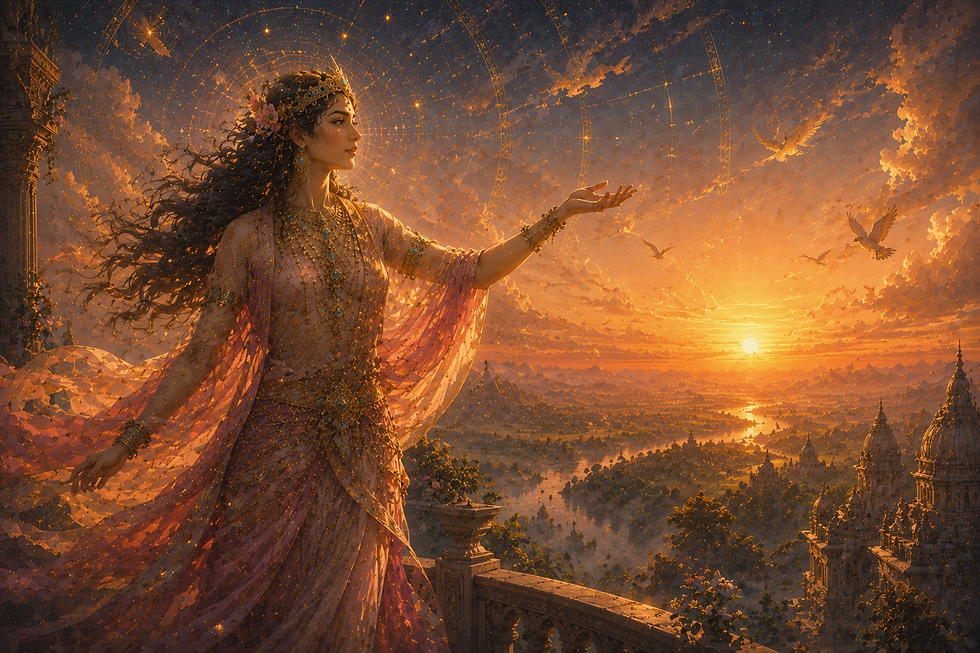
Hymn 1.48 – To Uṣas
Seer (Ṛṣi): Praskaṇva Kāṇva
Deity (Devatā): Uṣas (Dawn)
Meter (Chandas): Gāyatrī (verses 1–15), Triṣṭubh (verse 16)
Verses
उ॒षो भ॒द्रेभि॒रा ग॑हि दि॒वश्चि॑द्रोच॒नादधि॑ ।
वह॑न्त्वरु॒णप्स॑व॒ उप॑ त्वा सो॒मिनो॑ गृ॒हम् ॥१॥
uṣo bhadrebhir ā gahi divaś cid rocanād adhi |
vahantv aruṇapsava upa tvā somino gṛham ||1||
O Dawn, come with blessings, from the luminous realm of Heaven. Let the red‑coloured (steeds) carry you to the home of the Soma‑presser.
उषो॑ ये ते प्र यामा॑नि ये च मध्या॑नि यानि ते ।
तेभि॑रा या॑हि वि॒श्वतो॑ वि॒प्रेभि॒ः सोम॒पीत॑ये ॥२॥
uṣo ye te pra yāmāni ye ca madhyāni yāni te |
tebhir ā yāhi viśvato viprebhiḥ somapītaye ||2||
O Dawn, with your foremost journeys, and your middle ones, and those that are yours—with them all, come from every side, with the inspired seers, for the drinking of Soma.
उषो॑ ये ते प्र यामा॑नि ये च मध्या॑नि यानि ते ।
तेभि॑रा या॑हि वि॒श्वतो॑ वि॒प्रेभि॒ः सोम॒पीत॑ये ॥३॥
uṣo ye te pra yāmāni ye ca madhyāni yāni te |
tebhir ā yāhi viśvato viprebhiḥ somapītaye ||3||
O Dawn, with your foremost journeys, and your middle ones, and those that are yours—with them all, come from every side, with the inspired seers, for the drinking of Soma.
वह॑न्त्वरु॒णप्स॑व॒ उप॑ त्वा सो॒मिनो॑ गृ॒हम् ।
उषः॑ स्तो॒मेभि॑राश्विना ॥४॥
vahantv aruṇapsava upa tvā somino gṛham |
uṣaḥ stomebhir āśvinā ||4||
Let the red‑coloured (steeds) carry you to the home of the Soma‑presser. O Dawn, with the songs of the Aśvins.
वह॑न्त्वरु॒णप्स॑व॒ उप॑ त्वा सो॒मिनो॑ गृ॒हम् ।
उषः॑ स्तो॒मेभि॑राश्विना ॥५॥
vahantv aruṇapsava upa tvā somino gṛham |
uṣaḥ stomebhir āśvinā ||5||
Let the red‑coloured (steeds) carry you to the home of the Soma‑presser. O Dawn, with the songs of the Aśvins.
वह॑न्त्वरु॒णप्स॑व॒ उप॑ त्वा सो॒मिनो॑ गृ॒हम् ।
उषः॑ स्तो॒मेभि॑राश्विना ॥६॥
vahantv aruṇapsava upa tvā somino gṛham |
uṣaḥ stomebhir āśvinā ||6||
Let the red‑coloured (steeds) carry you to the home of the Soma‑presser. O Dawn, with the songs of the Aśvins.
अर्व॑न्ता॒ या रथो॑ वां वी॒रा ये अश्वि॑ना ।
ता नो॒ मृळा॑त ई॒दृशे॑ ॥७॥
arvantā yā ratho vāṃ vīrā ye aśvinā |
tā no mṛḻāta īdṛśe ||7||
The steeds and the chariot that are yours, O Aśvins, the heroes—may they be gracious to us at such a time as this.
अर्व॑न्ता॒ या रथो॑ वां वी॒रा ये अश्वि॑ना ।
ता नो॒ मृळा॑त ई॒दृशे॑ ॥८॥
arvantā yā ratho vāṃ vīrā ye aśvinā |
tā no mṛḻāta īdṛśe ||8||
The steeds and the chariot that are yours, O Aśvins, the heroes—may they be gracious to us at such a time as this.
उषो॑ ये ते प्र यामा॑नि ये च मध्या॑नि यानि ते ।
तेभि॑रा या॑हि वि॒श्वतो॑ वि॒प्रेभि॒ः सोम॒पीत॑ये ॥९॥
uṣo ye te pra yāmāni ye ca madhyāni yāni te |
tebhir ā yāhi viśvato viprebhiḥ somapītaye ||9||
O Dawn, with your foremost journeys, and your middle ones, and those that are yours—with them all, come from every side, with the inspired seers, for the drinking of Soma.
वह॑न्त्वरु॒णप्स॑व॒ उप॑ त्वा सो॒मिनो॑ गृ॒हम् ।
उषः॑ स्तो॒मेभि॑राश्विना ॥१०॥
vahantv aruṇapsava upa tvā somino gṛham |
uṣaḥ stomebhir āśvinā ||10||
Let the red‑coloured (steeds) carry you to the home of the Soma‑presser. O Dawn, with the songs of the Aśvins.
उषो॑ ये ते प्र यामा॑नि ये च मध्या॑नि यानि ते ।
तेभि॑रा या॑हि वि॒श्वतो॑ वि॒प्रेभि॒ः सोम॒पीत॑ये ॥११॥
uṣo ye te pra yāmāni ye ca madhyāni yāni te |
tebhir ā yāhi viśvato viprebhiḥ somapītaye ||11||
O Dawn, with your foremost journeys, and your middle ones, and those that are yours—with them all, come from every side, with the inspired seers, for the drinking of Soma.
वह॑न्त्वरु॒णप्स॑व॒ उप॑ त्वा सो॒मिनो॑ गृ॒हम् ।
उषः॑ स्तो॒मेभि॑राश्विना ॥१२॥
vahantv aruṇapsava upa tvā somino gṛham |
uṣaḥ stomebhir āśvinā ||12||
Let the red‑coloured (steeds) carry you to the home of the Soma‑presser. O Dawn, with the songs of the Aśvins.
अर्व॑न्ता॒ या रथो॑ वां वी॒रा ये अश्वि॑ना ।
ता नो॒ मृळा॑त ई॒दृशे॑ ॥१३॥
arvantā yā ratho vāṃ vīrā ye aśvinā |
tā no mṛḻāta īdṛśe ||13||
The steeds and the chariot that are yours, O Aśvins, the heroes—may they be gracious to us at such a time as this.
उषो॑ ये ते प्र यामा॑नि ये च मध्या॑नि यानि ते ।
तेभि॑रा या॑हि वि॒श्वतो॑ वि॒प्रेभि॒ः सोम॒पीत॑ये ॥१४॥
uṣo ye te pra yāmāni ye ca madhyāni yāni te |
tebhir ā yāhi viśvato viprebhiḥ somapītaye ||14||
O Dawn, with your foremost journeys, and your middle ones, and those that are yours—with them all, come from every side, with the inspired seers, for the drinking of Soma.
वह॑न्त्वरु॒णप्स॑व॒ उप॑ त्वा सो॒मिनो॑ गृ॒हम् ।
उषः॑ स्तो॒मेभि॑राश्विना ॥१५॥
vahantv aruṇapsava upa tvā somino gṛham |
uṣaḥ stomebhir āśvinā ||15||
Let the red‑coloured (steeds) carry you to the home of the Soma‑presser. O Dawn, with the songs of the Aśvins.
अर्व॑न्ता॒ या रथो॑ वां वी॒रा ये अश्वि॑ना ।
ता नो॒ मृळा॑त ई॒दृशे॑ ॥१६॥
arvantā yā ratho vāṃ vīrā ye aśvinā |
tā no mṛḻāta īdṛśe ||16||
The steeds and the chariot that are yours, O Aśvins, the heroes—may they be gracious to us at such a time as this.
What Does This Hymn Say?
This hymn is an exquisite dawn‑song, alternating between invocations to Uṣas and refrains borrowed from the Aśvin hymns. Two primary lines weave through the entire piece: “uṣo ye te pra yāmāni…” (O Dawn, with your foremost journeys…) and “vahantv aruṇapsava upa tvā somino gṛham” (Let the red‑coloured steeds carry you to the home of the Soma‑presser). The Aśvin refrain “arvantā yā ratho vām…” also appears at intervals.
The overall effect is a tapestry in which Uṣas, the Dawn, is summoned with the same loving, repetitive intensity as the Aśvins. Her journeys—foremost, middle, and all—are invited from every direction, accompanied by inspired seers, to drink Soma. The red‑coloured (aruṇa) steeds that carry her are the crimson rays of early morning, and the “home of the Soma‑presser” is both the sacrificial altar and the poet’s heart.
The mixing of the Aśvin refrain into a Uṣas hymn is deliberate: the Aśvins and Uṣas are inseparable at dawn. She opens the doors; they ride through. The hymn thus prepares the ritual space for both goddess and twin gods, weaving their arrival into a single, luminous event.
Understanding Uṣas: The Dawn Who Drinks Soma
Praskaṇva Kāṇva’s Hymn 1.48 is one of the most beautiful Uṣas hymns in the Rig Veda, and it reveals a little‑known dimension of the goddess: she is not merely a cosmic phenomenon but a participant in the Soma ritual. She is invited to “drink Soma” (somapītaye), an invitation normally reserved for male warrior‑gods like Indra or the Aśvins. This suggests that Uṣas is a full divine person, capable of receiving the sacred draught and bestowing blessings in return.
The repetition of “viprebhiḥ” (with the inspired seers) aligns the human poets with Uṣas’s own journeys. The seers travel with her, their words mingling with the dawn light as it spreads across the sky. The “foremost, middle, and other” journeys are the successive stages of dawn’s unfolding—the first glimmer, the full flush of rose, and the final blaze of gold before sunrise.
The refrain about the Aśvins’ steeds and chariot being gracious ties the hymn back to the previous two, creating a small dawn‑cycle. The worshipper, at the morning pressing of Soma, first calls Uṣas, then the Aśvins, and finally the sun itself. Hymn 1.48 is the centerpiece, the moment when darkness yields to rose‑red light and the sacrifice awakens.
Hymn 1.49 – To Uṣas
Seer (Ṛṣi): Praskaṇva Kāṇva
Deity (Devatā): Uṣas
Meter (Chandas): Gāyatrī (verses 1–4)

Verses
उषो॑ भ॒द्रेभि॒रा ग॑हि दि॒वश्चि॑द्रोच॒नादधि॑ ।
वह॑न्त्वरु॒णप्स॑व॒ उप॑ त्वा सो॒मिनो॑ गृ॒हम् ॥१॥
uṣo bhadrebhir ā gahi divaś cid rocanād adhi |
vahantv aruṇapsava upa tvā somino gṛham ||1||
O Dawn, come with blessings, from the luminous realm of Heaven. Let the red‑coloured (steeds) carry you to the home of the Soma‑presser.
उषो॑ ये ते प्र यामा॑नि ये च मध्या॑नि यानि ते ।
तेभि॑रा या॑हि वि॒श्वतो॑ वि॒प्रेभि॒ः सोम॒पीत॑ये ॥२॥
uṣo ye te pra yāmāni ye ca madhyāni yāni te |
tebhir ā yāhi viśvato viprebhiḥ somapītaye ||2||
O Dawn, with your foremost journeys, and your middle ones, and those that are yours—with them all, come from every side, with the inspired seers, for the drinking of Soma.
उषो॑ ये ते प्र यामा॑नि ये च मध्या॑नि यानि ते ।
तेभि॑रा या॑हि वि॒श्वतो॑ वि॒प्रेभि॒ः सोम॒पीत॑ये ॥३॥
uṣo ye te pra yāmāni ye ca madhyāni yāni te |
tebhir ā yāhi viśvato viprebhiḥ somapītaye ||3||
O Dawn, with your foremost journeys, and your middle ones, and those that are yours—with them all, come from every side, with the inspired seers, for the drinking of Soma.
वह॑न्त्वरु॒णप्स॑व॒ उप॑ त्वा सो॒मिनो॑ गृ॒हम् ।
उषः॑ स्तो॒मेभि॑राश्विना ॥४॥
vahantv aruṇapsava upa tvā somino gṛham |
uṣaḥ stomebhir āśvinā ||4||
Let the red‑coloured (steeds) carry you to the home of the Soma‑presser. O Dawn, with the songs of the Aśvins.
What Does This Hymn Say?
This very short, four‑verse hymn is a compact repetition of the key verses from Hymn 1.48. It opens with verse 1, which is identical to 1.48.1: the invitation to Uṣas to come from heaven’s luminous realm with blessings, carried by red steeds to the Soma‑presser’s home.
Verses 2 and 3 repeat the “foremost, middle, and other journeys” formula, inviting her from every side with inspired seers for Soma‑drinking. Verse 4 repeats the red‑steeds line and closes with “with the songs of the Aśvins.”
The hymn functions as a shorter, more intense version of the previous dawn‑song, perhaps for a different ritual moment. There is no new material; instead, the seer distills the essence of his Uṣas invocation into a brief, powerful litany.
Understanding Uṣas: The Repeated Invocation
Hymn 1.49 is best understood as a ritual “condensation” of Hymn 1.48. In Vedic practice, certain hymns could be repeated in shorter forms for different liturgical needs. This four‑verse version keeps the heart of the longer poem: the red steeds, the journeys, the Soma‑drinking, and the Aśvin connection.
The word “aruṇapsavaḥ” (red‑coloured steeds) is one of the most beautiful epithets in the Rig Veda for the dawn‑rays. The colour “aruṇa” is the particular crimson‑gold of early morning, the moment before the sun appears. By repeating this word, the hymn paints the sky in words, inviting the visual experience of dawn into the ritual enclosure.
The joining of Uṣas and the Aśvins in the final line confirms that this is a morning hymn for the early Soma pressing. Uṣas opens the gate, the Aśvins ride through, and the sacrifice reaches its full vitality. Praskaṇva’s dawn‑cycle is now complete, and the next hymn will turn to the sun itself, the fruit of dawn’s labour.
Hymn 1.50 – To Sūrya
Seer (Ṛṣi): Praskaṇva Kāṇva
Deity (Devatā): Sūrya (the Sun)
Meter (Chandas): Gāyatrī (verses 1–13)

Verses
उदु॒ त्यं जा॒तवे॑दसं दे॒वं व॑हन्ति के॒तवः॑ ।
दृ॒शे विश्वा॑य॒ सूर्य॑म् ॥१॥
ud u tyaṃ jātavedasaṃ devaṃ vahanti ketavaḥ |
dṛśe viśvāya sūryam ||1||
His rays bear upward the god, Jātavedas, the Sun, for all to see.
अप॒ त्ये ता॒यवो॑ यथा॒ नक्ष॑त्राण्यक्तुभिः ।
सूरा॑य वि॒श्वच॑क्षसे ॥२॥
apa tye tāyavo yathā nakṣatrāṇy aktubhiḥ |
sūrāya viśvacakṣase ||2||
Like thieves, the stars withdraw with their darknesses before the Sun, the all‑seeing.
अदृ॑श्यन्त॒स्य के॒तवो॑ अ॒रश्मा॑सो॒ जना॑ अनु ।
भ्राज॑न्तो अ॒ग्नयो॑ यथा ॥३॥
adṛśyantasya ketavo araśmāso janā anu |
bhrājanto agnayo yathā ||3||
His rays are seen, shining like fires, among the peoples, though he himself is unseen.
स्वप्न॑न्तं॒ सूर्यं॑ जनाः प्रति॑पश्यन्त के॒तुभिः॑ ।
दृ॒शे विश्वा॑य॒ सूर्य॑म् ॥४॥
svapnantaṃ sūryaṃ janāḥ pratipaśyanta ketubhiḥ |
dṛśe viśvāya sūryam ||4||
The people see the Sun, who sleeps not, through his rays, for all to see.
तरणि॑र्वि॒श्वद॑र्शतो ज्योति॒ष्कृद॑सि सूर्य ।
विश्व॒मा भा॑सि रोच॒नम् ॥५॥
taraṇir viśvadarśato jyotiṣkṛd asi sūrya |
viśvam ā bhāsi rocanam ||5||
O Sun, swift, all‑seeing, maker of light, you illuminate the whole luminous realm.
प्र॒त्यङ्दे॒वानां॒ विशः॑ प्र॒त्यङ्ङुदे॑षि॒ मानु॑षान् ।
प्र॒त्यङ्विश्वं॒ स्व॑र्दृ॒शे ॥६॥
pratyaṅ devānāṃ viśaḥ pratyaṅṅ udeṣi mānuṣān |
pratyaṅ viśvaṃ svar dṛśe ||6||
Facing the clans of the gods, facing the human tribes, facing all, you rise to the sun‑light for seeing.
येना॑ पावक॒ चक्ष॑सा भुर॒ण्यन्तं॒ जना॑ अनु ।
त्वं व॑रुण॒ पश्य॑सि ॥७॥
yenā pāvaka cakṣasā bhuraṇyantaṃ janā anu |
tvaṃ varuṇa paśyasi ||7||
With that purifying eye, O Varuṇa, you watch the busy people.
वि द्यामे॑षि॒ रज॑स्पृ॒थ्वह॒र्मिमा॑नो अ॒क्तुभिः॑ ।
पश्य॒ञ्जन्मा॑नि सूर्य ॥८॥
vi dyām eṣi rajas pṛthv ahar mimāno aktubhiḥ |
paśyañ janmāni sūrya ||8||
You travel across the sky, the broad atmosphere, measuring the day with your darknesses, beholding all births, O Sūrya.
स॒प्त त्वा॑ ह॒रितो॒ रथे॒ वह॑न्ति देव सूर्य ।
शो॒चिष्के॑शं विचक्षण ॥९॥
sapta tvā harito rathe vahanti deva sūrya |
śociṣkeśaṃ vicakṣaṇa ||9||
Seven bay horses carry you in your chariot, O god Sūrya, brilliant‑haired, far‑seeing.
अयु॑क्त स॒प्त शु॒ण्ड्यवः॒ सूरो॒ रथ॑स्य न॒प्त्यः॑ ।
ताभिः॑ स्याम वि॒श्वच॑क्षसे ॥१०॥
ayukta sapta śuṇḍyavaḥ sūro rathasya naptyaḥ |
tābhiḥ syāma viśvacakṣase ||10||
The Sun has yoked the seven fair daughters of the chariot. With them may we be for the all‑seeing one.
उद्व॒यं तम॑स॒स्परि॒ पश्य॑न्तो॒ ज्योति॒रुत्त॑रम् ।
दे॒वं दे॑व॒त्रा सूर्य॒मग॑न्म॒ ज्योति॑रुत्त॒मम् ॥११॥
ud vayaṃ tamasas pari paśyanto jyotir uttaram |
devaṃ devatrā sūryam aganma jyotir uttamam ||11||
Looking upward, from the darkness to the higher light, we have come to the god among the gods, Sūrya, the highest light.
उ॒द्यन्न॒द्य मि॑त्रमह आ॒रोह॒न्नुत्त॑रां॒ दिव॑म् ।
हृ॒द्रोगं॒ मम॑ सूर्य हरि॒माणं॑ च नाशय ॥१२॥
udyann adya mitramaha ārohann uttarāṃ divam |
hṛdrogam mama sūrya harimāṇaṃ ca nāśaya ||12||
Rising today, O you of Mitra‑like splendour, ascending the highest Heaven, O Sūrya, destroy my heart’s sickness and my yellow (jaundice).
शुक्रं॑ हरि॒मत॑श्च व॒यं प्रा॒तर्यु॑जः परा ।
हरि॑माणं च नाशय ॥१३॥
śukraṃ harimataś ca vayaṃ prātaryujaḥ parā |
harimāṇaṃ ca nāśaya ||13||
The bright (colour) and the yellow‑hued—we who are yoked at dawn (drive them) away. Destroy my yellow (jaundice).
What Does This Hymn Say?
This is a magnificent hymn to the rising Sun, and the closing poem of Praskaṇva Kāṇva’s cycle. It moves from cosmic vision to personal healing plea, integrating the sun’s physical radiance with its spiritual and medicinal powers.
Verses 1–4 describe the rising sun: his rays bear him up, the stars fade like thieves, the rays shine like fires among the people. The sun himself is “asleep‑not” (svapnantam)—ever wakeful, ever watching. Verse 5 calls him the swift, all‑seeing maker of light who illuminates the luminous realm.
Verses 6–7 bring in Varuṇa, the sovereign of Ṛta, whose eye is the sun. The sun faces gods and humans alike, watching the busy world with his purifying eye. Verse 8 describes the sun’s daily journey across sky and atmosphere, measuring the day and beholding all births.
Verses 9–10 describe his chariot: seven bay horses, or seven fair daughters of the chariot, carry the brilliant‑haired sun. The imagery is both cosmic and ritual—the chariot is the sacrifice, and the worshipper hopes to be part of that journey.
Verse 11 is one of the most famous lines in the Rig Veda, often recited at sunrise: “Looking upward, from the darkness to the higher light, we have come to the god among the gods, Sūrya, the highest light.” It is a declaration of spiritual ascent.
Verses 12–13 then shift to a personal plea: destroy my heart‑sickness and my yellow jaundice. The sun’s bright, healthy colour is contrasted with the sickly yellow hue of disease. The rising sun banishes darkness and illness alike. The final line is a confident command: “Destroy my yellow.”
Understanding Sūrya: The All‑Seeing Healer and the Highest Light
Hymn 1.50 is Praskaṇva’s climax. After the dawns (1.48–1.49) and the Aśvins (1.46–1.47), the sun itself rises in full glory, and the seer’s voice soars.
Sūrya and Varuṇa: The hymn identifies Sūrya with Varuṇa’s eye. Varuṇa, the all‑seeing sovereign of cosmic law, watches the world through the sun. This gives Sūrya a moral dimension: he is not merely the physical sun but the witness of all deeds, the source of truth as well as light.
The Famous Verse 11: “ud vayaṃ tamasas pari… jyotir uttamam” is a mantra of ascent. It moves the worshipper from the darkness of ignorance, night, and death into the supreme light. This verse is often used in Vedic rituals of morning prayer and has echoes in later Upaniṣadic thought, where the journey from darkness to light becomes a metaphor for spiritual liberation.
Healing Power: The personal plea at the end (verses 12–13) shows Sūrya as a healer. The disease “harimāṇam” (jaundice, a yellowing of the skin) is specifically mentioned. The sun’s golden health drives out the sickly yellow.
This links Sūrya to the Aśvins, the divine physicians, whose presence in the earlier hymns now finds its fulfillment in the full‑risen sun. The worshipper, “yoked at dawn” (prātaryujaḥ), sends away both the bright and yellow‑hued illnesses, leaving only the pure radiance of Sūrya.
The Close of the Cycle: With this hymn, Praskaṇva’s cycle (1.44–1.50) ends exactly where it began: with light. He started with Agni, the earthly flame (1.44–1.45), moved through the Aśvins (1.46–1.47), welcomed Uṣas (1.48–1.49), and now rests in the full glory of Sūrya.
It is a perfect ritual arc: from the kindled fire through the dawn to the blazing noon, the Kaṇva morning sacrifice is complete. The voice of Praskaṇva fades as the sun climbs the sky, having sung the world awake.


Comments