
.png)

Ikshvaku King: The Tale of Sage Kukshi
- A. Royden D'Souza

- Nov 5, 2025
- 5 min read
Early Treta Yuga
Long after the age of the first Manu, Vaivasvata, when the world was still young and dharma had only begun to stabilize after the great deluge, there arose the mighty Ikṣvāku, eldest son of Manu, and founder of the Sūrya-vaṃśa — the Solar Dynasty.

Ikṣvāku ruled from Ayodhyā, the “unconquerable city,” shining like the sun whose lineage he bore. His sons and grandsons spread across the earth, establishing kingdoms, codifying dharma, and upholding the laws of Manu.
Among Ikṣvāku’s many sons was Vikukṣi, who later came to be known by another name — Kukshi. Though remembered in later texts primarily as a link in the royal line, his story, preserved in fragments, is one of exile, redemption, and divine approval — a story that set the pattern for generations of righteous kings to follow.
The Hunt for the Sacred Offering
King Ikṣvāku once resolved to perform a grand śrāddha-yajña — a sacred offering to the ancestors. For this ritual, the purest and most virtuous meat of wild animals was required.
He called his son and said,
“Vikukṣi, my son, go into the forest and bring back the choicest flesh of the deer — that which is pure for sacrifice and pleasing to the Pitṛs (ancestors). Bring it before sunset, for the sacred rite must be performed at dusk.”
The prince bowed and departed with his bow and arrows, his retinue following him into the vast Dandaka forests.

He was strong and swift, and soon many deer and antelopes fell to his skill. By the time the sun began to lower, he had gathered enough meat for the sacrifice. But as he returned, exhaustion and hunger overcame him.
Seeing a tender portion of the hunt — a haunch of deer — he thought, “It is still pure; if I take but a little, none will know, and I shall regain my strength.”
He ate a small portion, unaware that even the slightest consumption of the sacrificial offering rendered it impure for ritual use.
The Sage’s Judgment and the Prince’s Banishment
When Vikukṣi returned, he presented the remainder of the meat to his father’s court. The king, as was custom, called his royal priest, Vasiṣṭha, the sage of the Solar line, to sanctify the offering.
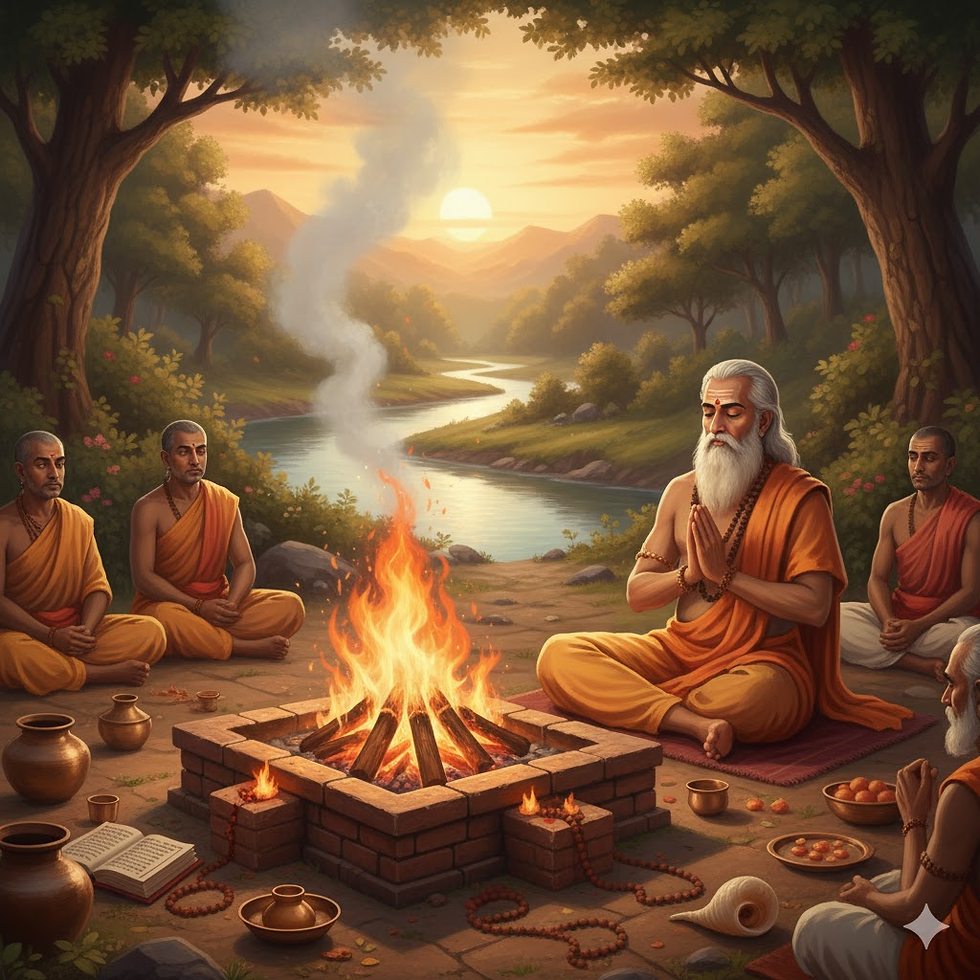
Vasiṣṭha, with his divine insight, immediately perceived what had transpired. He said:
“O King, this offering cannot be used. Your son, before bringing it to the altar, has tasted of it. The offering has been defiled by consumption, and it no longer bears sanctity.”
Ikṣvāku’s face darkened. To have a sacred rite polluted by even the smallest act of impurity was an affront to dharma. Yet his anger was not merely ritual — it was moral. The sacrifice to the ancestors was a sacred duty, and Vikukṣi’s failure symbolized weakness before temptation.
In stern voice, Ikṣvāku said,
“You have disobeyed the sanctity of sacrifice and failed in restraint. Leave this kingdom until you have atoned.”
Thus, Vikukṣi was banished from Ayodhyā, stripped of his princely privileges. He departed quietly, his head bowed, leaving behind the palace and the royal city for the solitude of the forests.
Sage Kukshi: The Years of Exile
In the wilderness, Vikukṣi wandered alone. But exile became his teacher. Freed from the duties of royalty, he turned inward and began living the life of an ascetic.

He built a small hermitage on the banks of the Sarayū River. There, he lived on fruits and roots, performing penance and contemplating the errors of pride and indulgence.
Legends say that he was guided by the sage Vasiṣṭha himself, who visited him secretly and instructed him in the ways of penance and purification. The guru’s compassion balanced the king’s wrath, for Vasiṣṭha saw in Vikukṣi a spirit capable of reform.
Through long austerity, the prince attained purity of heart. His repentance pleased the gods, and even the spirits of the ancestors forgave him.
The Restoration
When years had passed, King Ikṣvāku grew old and weary. Having ruled long and well, he desired to renounce the throne and retreat into the forest to spend his remaining years in meditation.
He remembered his son, who had once erred but had shown humility and remorse.
Vasiṣṭha, who had watched Vikukṣi’s transformation, interceded:
“O King, your son has expiated his sin through austerity. He is now purified in body and mind. His fall was brief, but his rise is eternal. He is worthy to inherit your throne.”
Ikṣvāku, moved, summoned his son back to Ayodhyā. When Vikukṣi returned, he was no longer the impulsive youth who had erred; he was composed, gentle, and radiant with the inner strength of discipline.

The king embraced him and said,
“You fell once, my son, but rose by your own merit. Rule this land as one who knows the cost of error and the value of forgiveness.”
Upon ascending the throne, Vikukṣi took the name “Kukshi,” meaning “the one who was purified by the offering,” or according to some traditions, “he who was once of the belly (Kukshi) of sacrifice” — symbolizing rebirth through trial.
Reign and Legacy
As king, Kukshi ruled with wisdom born of humility. He restored the land’s prosperity, upheld dharma, and patronized the sages and ascetics who dwelt in the forests.

It is said that under his reign, Ayodhyā glowed again with the brilliance of righteousness. The festivals of the sun were renewed, and the fire of sacrifice burned pure and steady.
In later years, Kukshi performed many yajñas and restored the sanctity of the offerings he once defiled, as if to cleanse not only his own karma but that of his people.
He fathered a son named Vikukṣi II, or in some texts, Śaśāda, who continued the line of the Ikṣvākus. Through this lineage descended great kings such as Sagara, Bhagiratha, Raghu, Daśaratha, and Rāma — all tracing their sacred line back through Kukshi, the prince who erred, repented, and rose.
Symbolism and Meaning
Kukshi’s story, though brief in the Purāṇas, carries deep moral weight. It embodies the cycle of human frailty and redemption — that a single misstep, when met with humility and penance, can become the foundation for greatness.
His tale also marks an early instance of the Guru–Śiṣya dynamic between king and sage. Vasiṣṭha’s role as both the chastiser and redeemer shows that divine compassion coexists with divine law.
In a broader sense, Kukshi’s exile mirrors the soul’s journey — from ignorance (avidyā) through suffering (tapas) to wisdom (jñāna).
In later generations, when young princes were trained in dharma, the story of Kukshi was often recited. It reminded them that royalty without restraint is ruin, but humility in error leads to wisdom.
Bards would close the tale with the verse:
“He who falls, yet rises through repentance, Shines brighter than one who never fell. For the dust of the earth clings not forever to the heart that remembers light.”
Sources:
Vishṇu Purāṇa, Book IV, Chapters 2–3
Bhāgavata Purāṇa 9.6.1–5
Rāmāyaṇa, Bāla Kāṇḍa 70–71
Harivaṃśa Purāṇa 1.6–1.9
Commentaries of Śrīdhara Svāmin and Devadatta on the Solar Line


Comments